Impact of a community-based package of interventions on child development in Zambia: a cluster-randomised controlled trial
- PMID: 28588962
- PMCID: PMC5321359
- DOI: 10.1136/bmjgh-2016-000104
Impact of a community-based package of interventions on child development in Zambia: a cluster-randomised controlled trial
Abstract
Background: Community-based programmes are a critical platform for improving child health and development. We tested the impact of a community-based early childhood intervention package in rural Zambia.
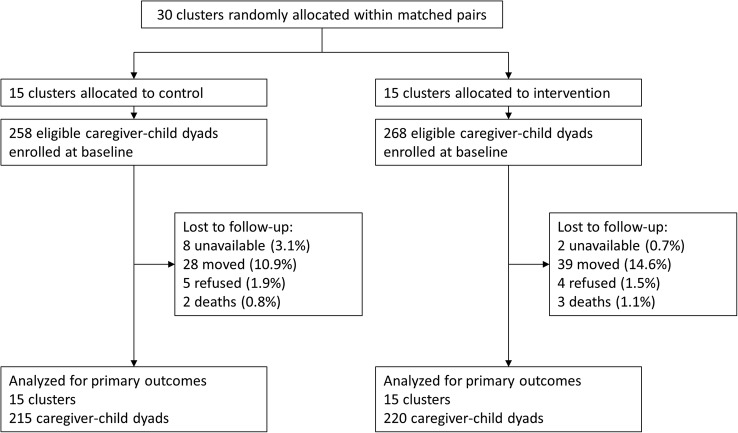
Methods: We conducted a non-blinded cluster randomised controlled trial in Southern Province, Zambia. 30 clusters of villages were matched based on population density and distance from the nearest health centre, and randomly assigned to intervention (15 clusters and 268 caregiver-child dyads) or control (15 clusters and 258 caregiver-child dyads). Caregivers were eligible if they had a child aged 6-12 months at baseline. In intervention clusters, health workers screened children for infections and malnutrition, and invited caregivers to attend fortnightly group meetings covering a nutrition and child development curriculum. 220 intervention and 215 control dyads were evaluated after 1 year. The primary outcomes were stunting and INTERGROWTH-21st neurodevelopmental assessment (NDA) scores. Weight-for-age and height-for-age z-scores based on WHO growth standards were also analysed. Secondary outcomes were child illness symptoms, dietary intake and caregiver-child interactions based on self-report. Impact was estimated using intention-to-treat analysis.
Results: The intervention package was associated with a 0.12 SD increase in weight-for-age (95% CI -0.14 to 0.38), a 0.15 SD increase in height-for-age (95% CI -0.18 to 0.48) and a reduction in stunting (OR 0.68; 95% CI 0.36 to 1.28), whereas there was no measurable impact on NDA score. Children receiving the intervention package had fewer symptoms, a more diverse diet and more caregiver interactions.
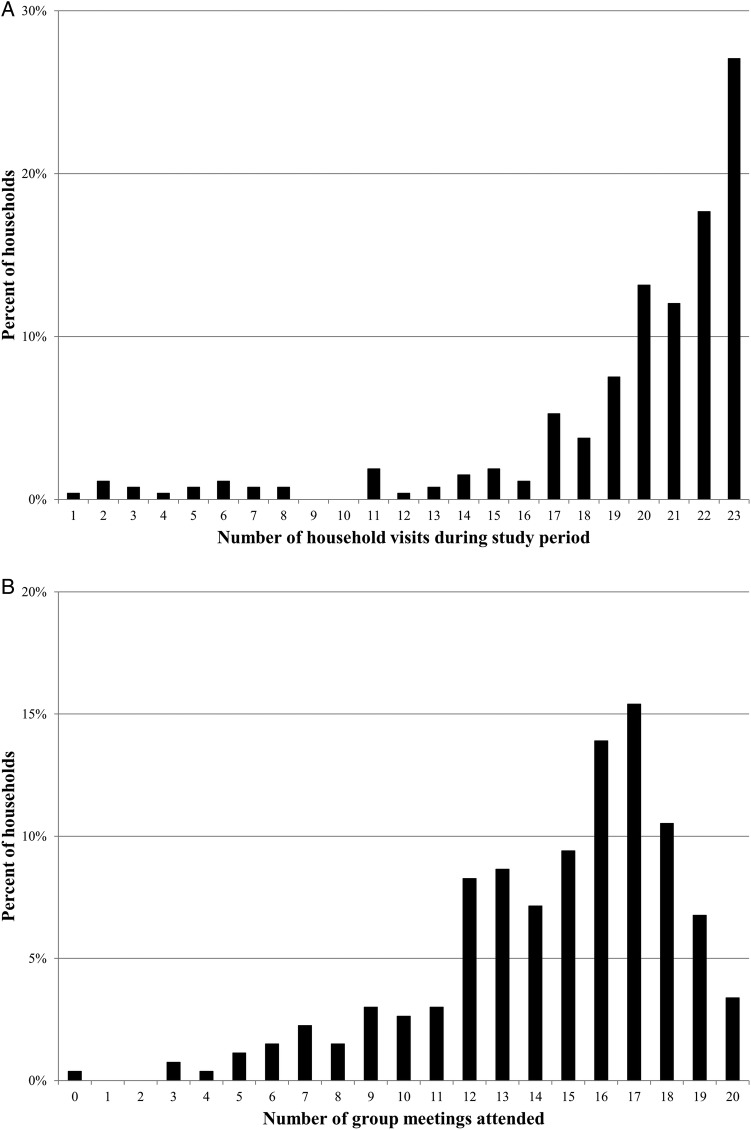
Conclusions: In settings like Zambia, community-based early childhood programmes appear to be feasible and appreciated by caregivers, as evidenced by high rates of uptake. The intervention package improved parenting behaviours and had a small positive, though statistically insignificant, impact on child development. Given the short time frame of the project, larger developmental impact is likely if differential parenting behaviours persist.
Trial registration number: NCT02234726; Results.
Conflict of interest statement
Competing interests: None declared.
Figures
References
Associated data
Grants and funding
LinkOut - more resources
Full Text Sources
Other Literature Sources
Medical