


Increased mortality in women: sex differences in burn outcomes
- PMID: 28589152
- PMCID: PMC5457798
- DOI: 10.1186/s41038-017-0083-y
Increased mortality in women: sex differences in burn outcomes
Abstract
Background: There is increasing evidence that sex differences may influence responses after thermal injury and affect clinical outcomes. The objective of this study was to evaluate the relationships between sex, thermal injury, body size, and inpatient mortality in burn patients.
Methods: Medical records of adults with >20% total body surface area (TBSA) burn injury admitted to two American Burn Association (ABA)-verified burn centers between 2008 and 2014 were retrospectively reviewed. Injury details and baseline characteristics, including body size as estimated by body surface area (BSA) and body mass index (BMI) were recorded, along with details of the hospital course. The primary outcome of inpatient mortality was compared between sexes.
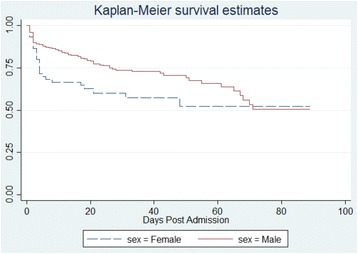
Results: Out of 334 subjects, 60 were women (18%). Median TBSA was 33% (IQR 25-49) in this cohort, with 19% full thickness burns and 30% inhalation injury. Despite no significant difference in age, presence of inhalation injury, TBSA, or depth of burn, women had significantly higher rates of inpatient mortality (45 vs. 29%, P = 0.01). BSA was significantly lower in women vs. men (P < 0.001), but this difference was not more pronounced among non-survivors. There was no difference in BMI between men and women non-survivors. Although not significant (P = 0.28), women succumbed to their injuries sooner than men (day 4 vs. 10 post-injury).
Conclusions: Women are less likely to survive burn injuries and die sooner than men with similar injuries. Body size does not appear to modulate this effect. Burn centers should be aware of the higher mortality risk in women with large burns.
Keywords: Burn; Gender; Mortality; Outcome; Sex; Survival.
Figures
References
-
- Tobiasen J, Hiebert JH, Edlich RF. Prediction of burn mortality. Surg Gynecol Obstet. 1982;154(5):711–4. - PubMed
LinkOut - more resources
Full Text Sources
Other Literature Sources
