


Streptomyces asenjonii sp. nov., isolated from hyper-arid Atacama Desert soils and emended description of Streptomyces viridosporus Pridham et al. 1958
- PMID: 28589342
- PMCID: PMC5559561
- DOI: 10.1007/s10482-017-0886-7
Streptomyces asenjonii sp. nov., isolated from hyper-arid Atacama Desert soils and emended description of Streptomyces viridosporus Pridham et al. 1958
Abstract
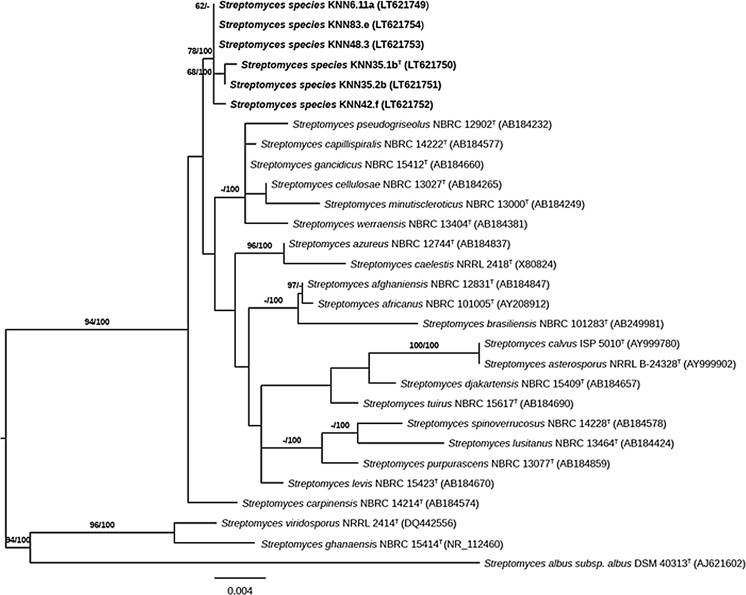
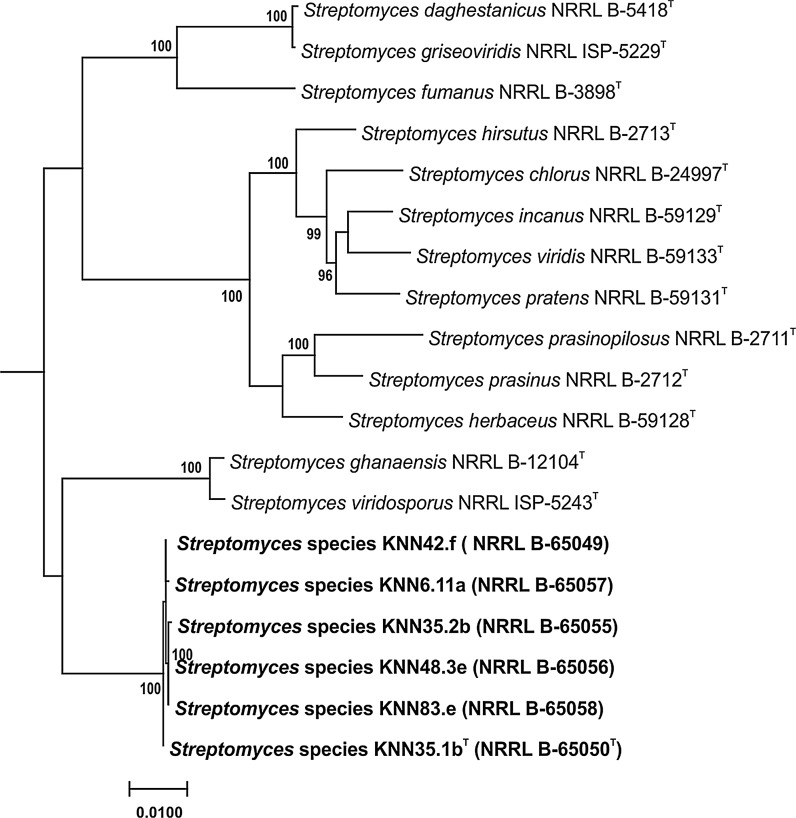
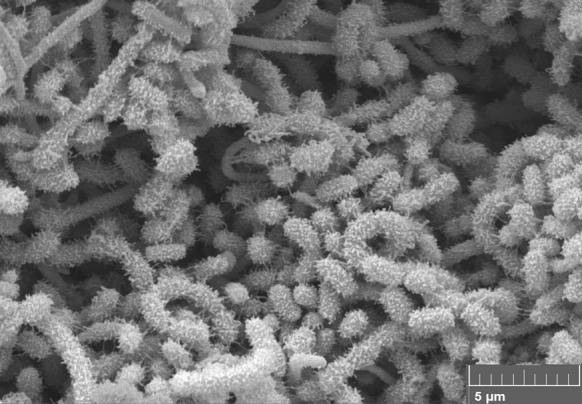
A polyphasic study was undertaken to establish the taxonomic status of Streptomyces strains isolated from hyper-arid Atacama Desert soils. Analysis of the 16S rRNA gene sequences of the isolates showed that they formed a well-defined lineage that was loosely associated with the type strains of several Streptomyces species. Multi-locus sequence analysis based on five housekeeping gene alleles showed that the strains form a homogeneous taxon that is closely related to the type strains of Streptomyces ghanaensis and Streptomyces viridosporus. Representative isolates were shown to have chemotaxonomic and morphological properties consistent with their classification in the genus Streptomyces. The isolates have many phenotypic features in common, some of which distinguish them from S. ghanaensis NRRL B-12104T, their near phylogenetic neighbour. On the basis of these genotypic and phenotypic data it is proposed that the isolates be recognised as a new species within the genus Streptomyces, named Streptomyces asenjonii sp. nov. The type strain of the species is KNN35.1bT (NCIMB 15082T = NRRL B-65050T). Some of the isolates, including the type strain, showed antibacterial activity in standard plug assays. In addition, MLSA, average nucleotide identity and phenotypic data show that the type strains of S. ghanaensis and S. viridosporus belong to the same species. Consequently, it is proposed that the former be recognised as a heterotypic synonym of the latter and an emended description is given for S. viridosporus.
Keywords: Atacama Desert; Hyper-arid; Polyphasic taxonomy; Streptomyces.
Conflict of interest statement
Conflict of interest
The authors declare that they have no conflicts of interest.
Ethical statement
This article does not contain any studies with human participants and/or animals performed any of the authors. Formal consent is not required in this study.
Figures
References
MeSH terms
Substances
LinkOut - more resources
Full Text Sources
Other Literature Sources
Molecular Biology Databases
