


25-Hydroxyvitamin D3 and its C-3 epimer are elevated in the skin and serum of Skh-1 mice supplemented with dietary vitamin D3
- PMID: 28589636
- PMCID: PMC5629121
- DOI: 10.1002/mnfr.201700293
25-Hydroxyvitamin D3 and its C-3 epimer are elevated in the skin and serum of Skh-1 mice supplemented with dietary vitamin D3
Abstract
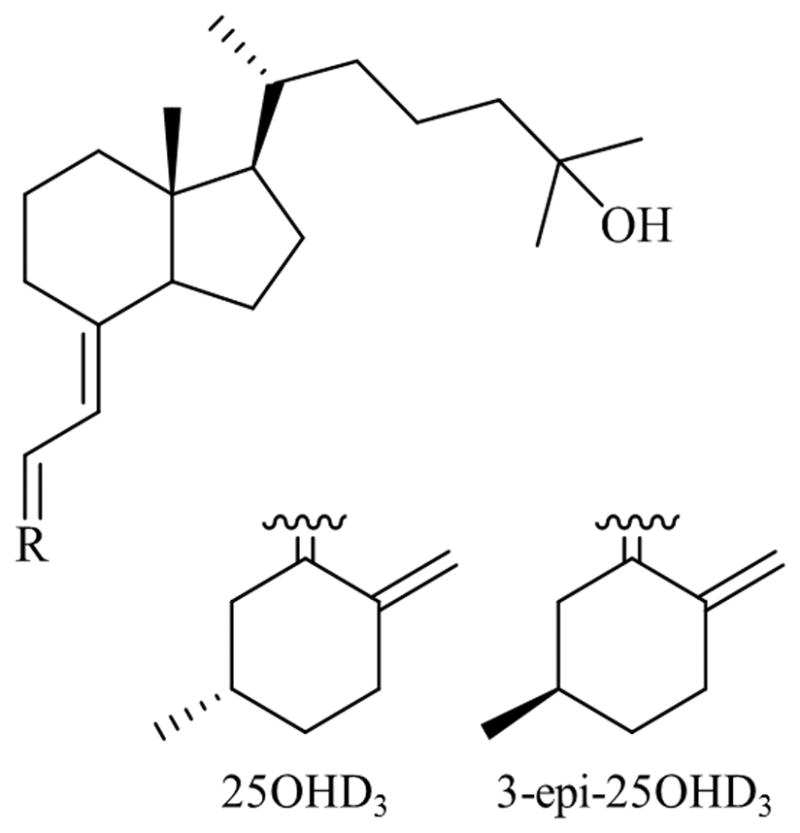
Scope: UV exposure is a risk factor for keratinocyte carcinoma (KC) while critical for endogenous vitamin D production. We investigated dietary modulation of skin and serum 25-hydroxyvitamin D3 (25OHD3 ) and its C-3 epimer (C3epi) in a mouse model of KC. C3epi is an under-investigated metabolite of vitamin D with respect to its biological implications.
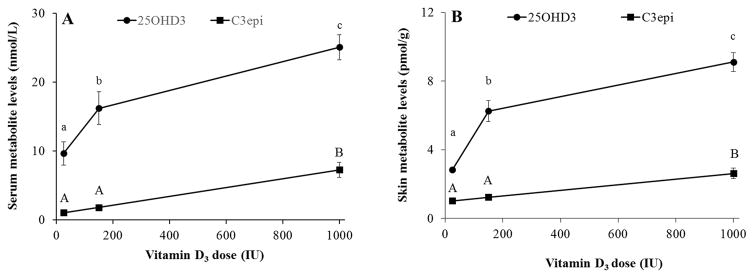
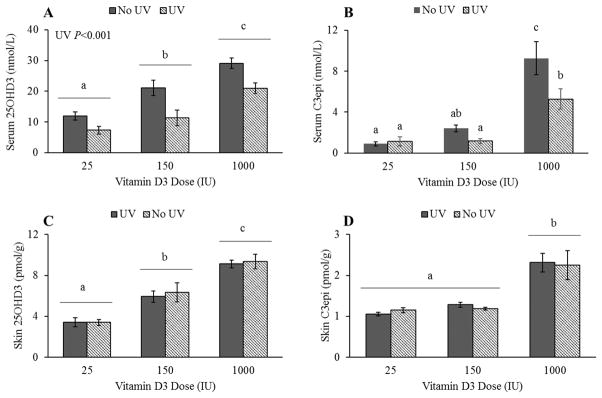
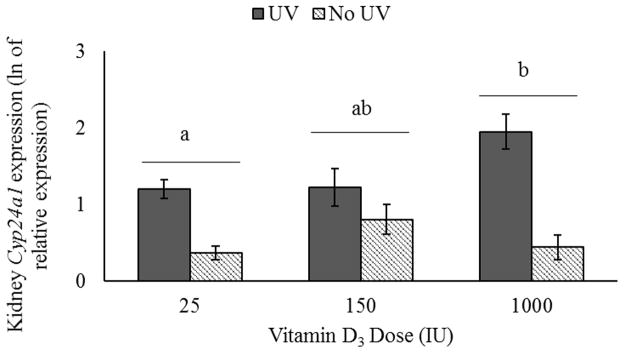
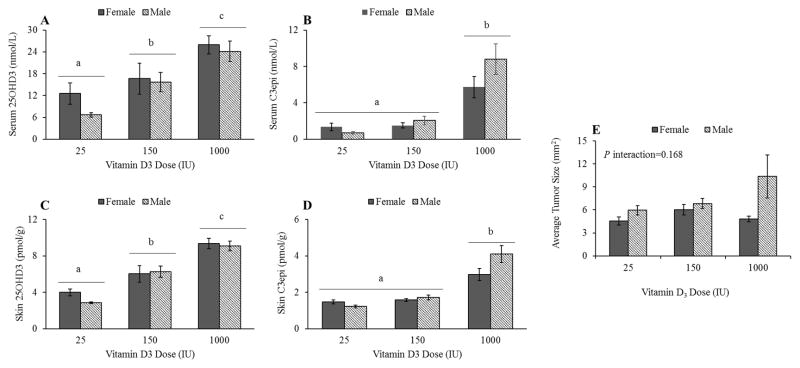
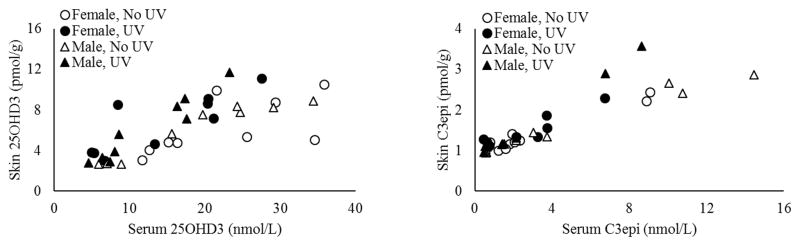
Methods and results: Male and female Skh-1 mice were supplemented with 25, 150 or 1000 IU/kg diet vitamin D3 for 25 weeks, with some exposed to UV light. Skin and serum vitamin D metabolites were quantitated using HPLC-MS/MS (n = 3 per dose/sex/UV treatment). Serum and skin 25OHD3 and C3epi significantly increased with dose (P<0.0001), but with different response patterns. UV exposure significantly attenuated serum, but not skin, levels of both metabolites (P<0.001, P = 0.0287), while up-regulating expression of renal Cyp24a1 (P < 0.01). A dose by sex interaction trended toward significance with serum and skin levels of C3epi, wherein male mice attained higher levels of C3epi with higher dietary vitamin D3 . This reflected a similar, but non-significant pattern in average tumor size.
Conclusion: The complex relationship between vitamin D and KC requires further investigation. This study provides insight into modulation of local and systemic vitamin D status with dietary supplementation.
Keywords: 3-epi-25-hydroxyvitamin D; Keratinocyte carcinoma; Skin cancer; Vitamin D.
© 2017 WILEY-VCH Verlag GmbH & Co. KGaA, Weinheim.
Conflict of interest statement
The authors claim no conflict of interest.
Figures
References
-
- The American Cancer Society. Skin Cancer: Basal and Squamous Cell. 2013.
-
- Chen J, Fleisher A, Smith E, Kancler C, et al. Cost of Nonmelanoma Skin Cancer Treatment in the United States. Dermatologic Surg. 2001;27:1035–1038. - PubMed
-
- Oberyszyn TM. Non-melanoma skin cancer: importance of gender, immunosuppressive status and vitamin D. Cancer Lett. 2008;261:127–36. - PubMed
Publication types
MeSH terms
Substances
Grants and funding
LinkOut - more resources
Full Text Sources
Other Literature Sources
Miscellaneous
