


Radiologic findings as a determinant and no effect of macrolide resistance on clinical course of Mycoplasma pneumoniae pneumonia
- PMID: 28592263
- PMCID: PMC5463359
- DOI: 10.1186/s12879-017-2500-z
Radiologic findings as a determinant and no effect of macrolide resistance on clinical course of Mycoplasma pneumoniae pneumonia
Abstract
Background: With the emergence of macrolide resistance, concerns about the efficacy of macrolides for the treatment of Mycoplasma pneumoniae (MP) pneumonia in children have been raised. This study aimed to determine the effect of macrolide resistance on the outcome of children who were hospitalized with MP pneumonia.
Methods: Between 2010 and 2015, we performed culture of MP from nasopharyngeal samples obtained from children who were hospitalized with pneumonia at five hospitals in Korea. Macrolide resistance was determined by the analysis of 23S rRNA gene transition and the minimal inhibitory concentrations of four macrolides. Medical records were reviewed to analyze the clinical response to treatment with macrolides.
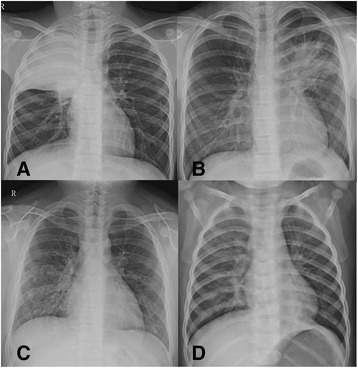
Results: MP was detected in 116 (4.8%) of the 2436 children with pneumonia. MP pneumonia was prevalent in 2011 and 2015. Of the 116 patients with MP pneumonia, 82 (70.7%) were macrolide-resistant. There were no differences in the age distribution, total duration of fever, and chest x-ray patterns between the macrolide-susceptible and macrolide-resistant groups. After macrolide initiation, mean days to defervescence were longer in the macrolide-resistant group than in macrolide-susceptible group (5.7 days vs. 4.1 days, P = 0.021). However, logistic regression analysis revealed that the presence of extrapulmonary signs (P = 0.039), homogeneous lobar consolidation (P = 0.004), or parapneumonic effusion (P < 0.001) were associated with fever duration of ≥7 days after the initiation of macrolides, regardless of macrolide resistance.
Conclusions: This study demonstrated that fever duration in MP pneumonia was determined by the radiologic findings of chest x-ray, not by the presence of macrolide resistance. The results highlight the need for future studies to assess therapeutic benefit from macrolides in the treatment of children with MP pneumonia.
Keywords: Macrolides; Mycoplasma pneumoniae; Pneumonia; Radiologic findings; Resistance.
Figures

References
-
- Eun BW, Kim NH, Choi EH, Lee HJ. Mycoplasma pneumoniae in Korean children: the epidemiology of pneumonia over an 18-year period. J Inf Secur. 2008;56:326–331. - PubMed
-
- Kim NH, Lee JA, Eun BW, Shin SH, Chung EH, Park KW, et al. Comparison of polymerase chain reaction and the indirect particle agglutination antibody test for the diagnosis of Mycoplasma pneumoniae pneumonia in children during two outbreaks. Pediatr Infect Dis J. 2007;26:897–903. doi: 10.1097/INF.0b013e31812e4b81. - DOI - PubMed
MeSH terms
Substances
LinkOut - more resources
Full Text Sources
Other Literature Sources
Medical
