


Identification of siderophore producing and cynogenic fluorescent Pseudomonas and a simple confrontation assay to identify potential bio-control agent for collar rot of chickpea
- PMID: 28593521
- PMCID: PMC5462660
- DOI: 10.1007/s13205-017-0761-2
Identification of siderophore producing and cynogenic fluorescent Pseudomonas and a simple confrontation assay to identify potential bio-control agent for collar rot of chickpea
Abstract
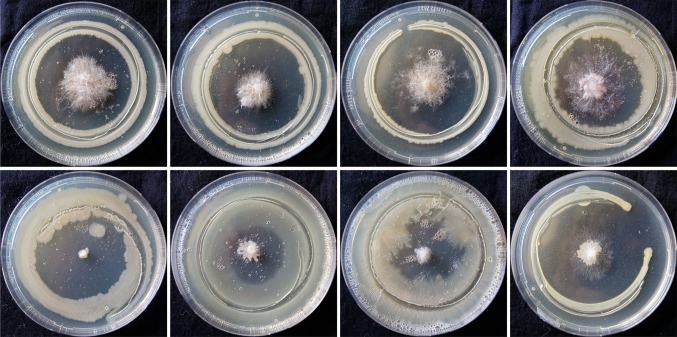
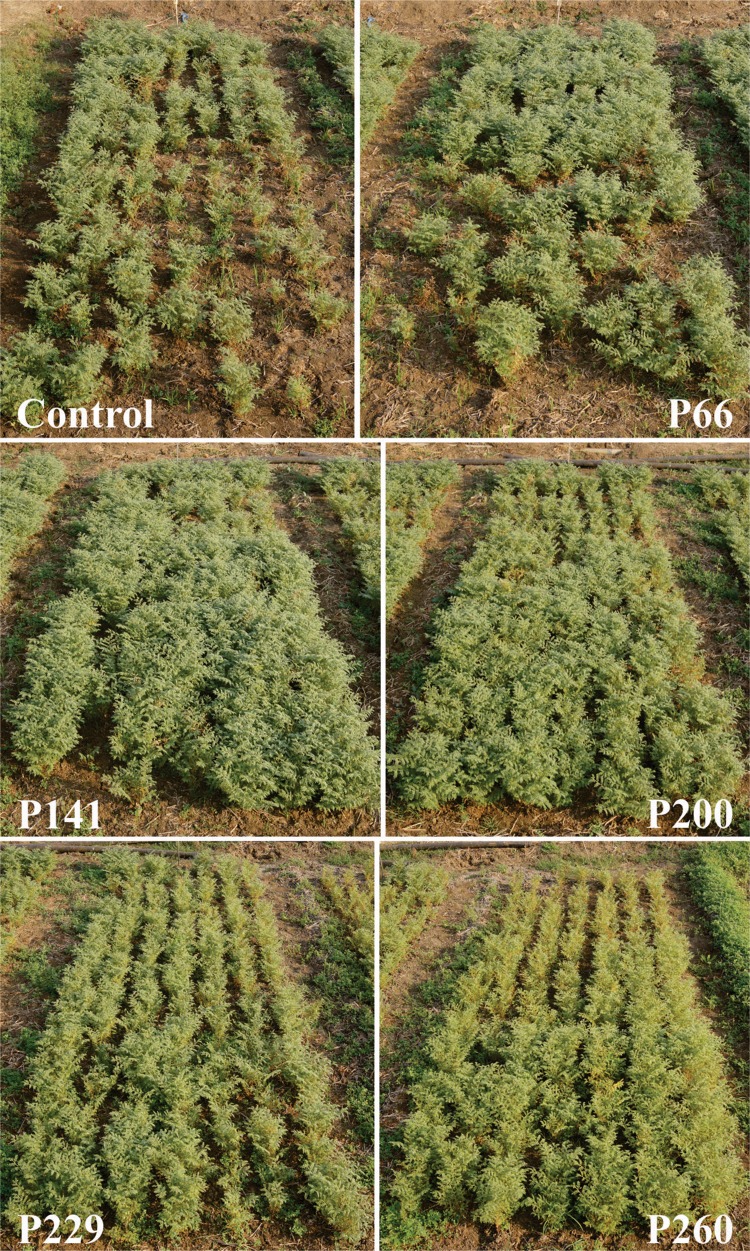
In soil, plant roots coexist with bacteria and fungi that produce siderophores capable of sequestering the available iron. Microbial cyanogenesis has been demonstrated in many species of fungi and in a few species of bacteria (e.g., Chromobacterium and Pseudomonas). Fluorescent Pseudomonas isolates P29, P59, P144, P166, P174, P187, P191 and P192 were cyanogenic and produced siderophores in the presence of a strong chelater 8-Hydroxyquinoline (50 mg/l). A simple confrontation assay for identifying potential antagonists was developed. Fluorescent Pseudomonas isolates P66, P141, P144, P166 and P174 were antagonistic against both Rhizoctonia solani and Sclerotium rolfsii. Vigorous plant growth was observed following seed bacterization with P141, P200 and P240. In field experiments, seed bacterization with selected bacterial isolates resulted in reduced collar rot (S. rolfsii) incidence.
Keywords: Collar rot; Confrontation assays; Fluorescent Pseudomonads; HCN; Siderophores.
Conflict of interest statement
The authors declare that they have no conflict of interest in the publication.
Figures
References
-
- Arnow LE. Colorimetric determination of the components of 3, 4-dihydroxyphenylalanine-tyrosine mixtures. J Biol Chem. 1937;118:531–537.
-
- Dennis C, Webster J. Antagonistic properties of species-groups of Trichoderma: I. Production of non-volatile antibiotics. Trans Br Mycol Soc. 1971;57:25–IN3.
LinkOut - more resources
Full Text Sources
Other Literature Sources
