Review
. 2017 Jul;24(4):289-299.
doi: 10.1097/MOH.0000000000000350.

Regulation of the hematopoietic stem cell lifecycle by the endothelial niche

Affiliations
Review

Regulation of the hematopoietic stem cell lifecycle by the endothelial niche

Pradeep Ramalingam et al. Curr Opin Hematol. 2017 Jul.

Abstract

Purpose of review: Hematopoietic stem cells (HSCs) predominantly reside either in direct contact or in close proximity to the vascular endothelium throughout their lifespan. From the moment of HSC embryonic specification from hemogenic endothelium, endothelial cells (ECs) act as a critical cellular-hub that regulates a vast repertoire of biological processes crucial for HSC maintenance throughout its lifespan. In this review, we will discuss recent findings in endothelial niche-mediated regulation of HSC function during development, aging and regenerative conditions.

Recent findings: Studies employing genetic vascular models have unequivocally confirmed that ECs provide the essential instructive cues for HSC emergence during embryonic development as well as adult HSC maintenance during homeostasis and regeneration. Aging of ECs may impair their ability to maintain HSC function contributing to the development of aging-associated hematopoietic deficiencies. These findings have opened up new avenues to explore the therapeutic application of ECs. ECs can be adapted to serve as an instructive platform to expand bona fide HSCs and also utilized as a cellular therapy to promote regeneration of the hematopoietic system following myelosuppressive and myeloablative injuries.

Summary: ECs provide a fertile niche for maintenance of functional HSCs throughout their lifecycle. An improved understanding of the EC-HSC cross-talk will pave the way for development of EC-directed strategies for improving HSC function during aging.


Conflict of interest statement

Conflicts of interest

The authors declare no conflict of interests.

Figures

Figure 1
Figure 1. VEGFR3 and intravital VEcadherin identify distinct immunophenotypic arteriole and sinusoidal BMEC niches
Mice expressing a Vegfr3::YFP BAC transgene reporter were intravitally-labeled using an EC-specific antibody (VEcadherin). A) Representative flow cytometry contour plots of enzymatically-dissociated and hematopoietic lineage+ cell-depleted whole bone marrow, stained with antibodies raised against CD45, TER119, CD31, VEcadherin, and Endomucin. Gating strategies (dashed line) and percentage of parent populations are indicated. Note: VEGFR3highVEcadherinhighCD31+ sinusoid bone marrow endothelial cells (BMECs) (green) and VEGFR3low/−VEcadherinlowCD31+ arteriole BMECs (red) can be distinguished using intravital VEcadherin staining in combination with hematopoietic exclusion (lineageCD45TER119). B) Representative histogram of Endomucin stained VEGFR3highVEcadherinhighCD31+ sinusoid BMECs (green) and VEGFR3low/−VEcadherinlowCD31+ arteriole BMECs (red). (C) Representative confocal images of femoral trabecular and diaphysis regions demonstrating VEGFR3VEcadherin+CD31+Endomucin+ (yellow arrow) and VEGFR3low/−VEcadherin+CD31+Endomucin (white arrow) arteriole BMECs. Scale bar = 100 μm.
Figure 2
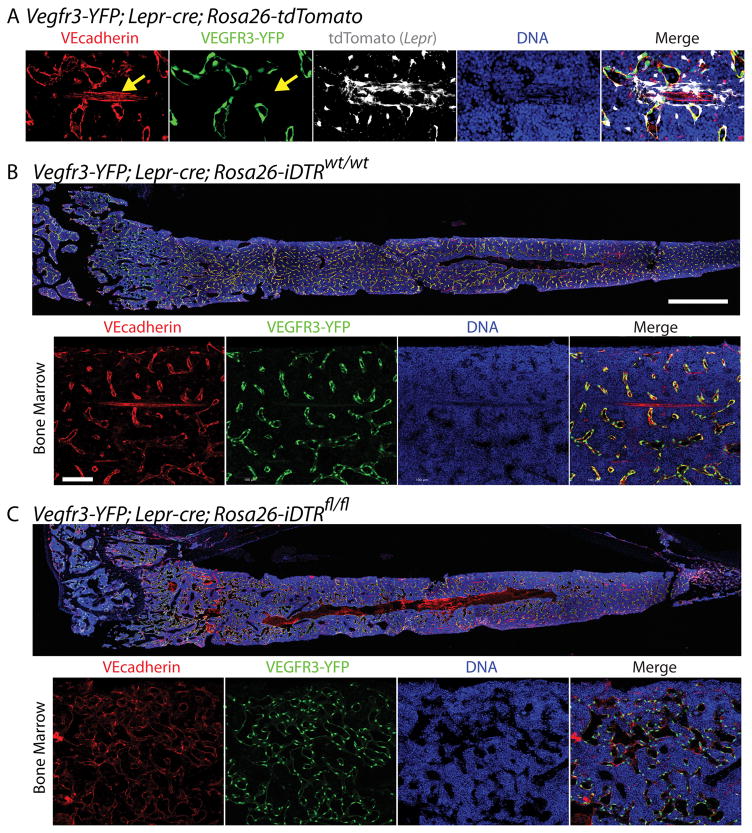
Figure 2. Perivascular LEPR+ cells support arteriole and sinusoidal BMECs
Mice expressing Vegfr3-YFP; Lepr-cre transgenes were crossed with mice carrying either a Rosa26-expressing loxP-STOP-loxP tdTomato reporter or a Rosa26-expressing loxP-STOP-loxP inducible Diphtheria Toxin Receptor (iDTR) cell ablation cassette and intravitally-labeled with an Alex Fluor 647-conjugated antibody against VEcadherin. A) Representative confocal images of VEGFR3+VEcadherin+ sinusoid bone marrow endothelial cells (BMECs) (white arrow), VEGFR3VEcadherin+ arteriole BMECs (yellow arrow), and sinusoid/arteriole BMEC-invested tdTOMATO+ Lepr-expressing cells (merged image). Scale bar = 50 μm. B–C) Representative confocal images of (B) wild type (wt) or (C) homozygous Rosa26-iDTR (flanked by loxP; fl) Vegfr3-YFP; Lepr-cre mice following diphtheria toxin administration. Dashed box indicates magnification. Note: Vascular BMECs appear dilated following LEPR cell ablation. Scale bar = 500 μm and 100 μm, respectively.
Figure 3
Figure 3. Physiological aging alters BMEC function
Endothelium from young and aged mice were intravitally-labeled using an Alex Fluor 647-conjugated antibody against VEcadherin. A) Representative confocal images of femoral trabecular region from young and aged mice. Scale bar = 200 μm. B) Quantification of hematopoietic lineage-depleted, CD45TER119VEcadherin+CD31+ BMECs from young and aged mice. Note: All quantifications were performed on enzymatically-disassociated and lineage+ cell-depleted femurs and gated on CD45TER119VEcadherin+CD31+ populations. Error bars represent mean ± SEM. Pairwise two-tailed comparisons using Student’s t-test were performed to determine significance. * P<0.05; ** P<0.01; *** P<0.001.

References

    1. Carmeliet P, Jain RK. Molecular mechanisms and clinical applications of angiogenesis. Nature. 2011;473(7347):298–307. - PMC - PubMed
    1. Aird WC. Phenotypic heterogeneity of the endothelium: I. Structure, function, and mechanisms. Circulation research. 2007;100(2):158–73. - PubMed
    1. Aird WC. Endothelium in health and disease. Pharmacological reports : PR. 2008;60(1):139–43. - PubMed
    1. Kliche K, Jeggle P, Pavenstadt H, Oberleithner H. Role of cellular mechanics in the function and life span of vascular endothelium. Pflugers Archiv : European journal of physiology. 2011;462(2):209–17. - PubMed
    1. Butler JM, Kobayashi H, Rafii S. Instructive role of the vascular niche in promoting tumour growth and tissue repair by angiocrine factors. Nature reviews Cancer. 2010;10(2):138–46. - PMC - PubMed