


Yolk removal generates hatching asynchrony in snake eggs
- PMID: 28596606
- PMCID: PMC5465057
- DOI: 10.1038/s41598-017-03355-y
Yolk removal generates hatching asynchrony in snake eggs
Abstract
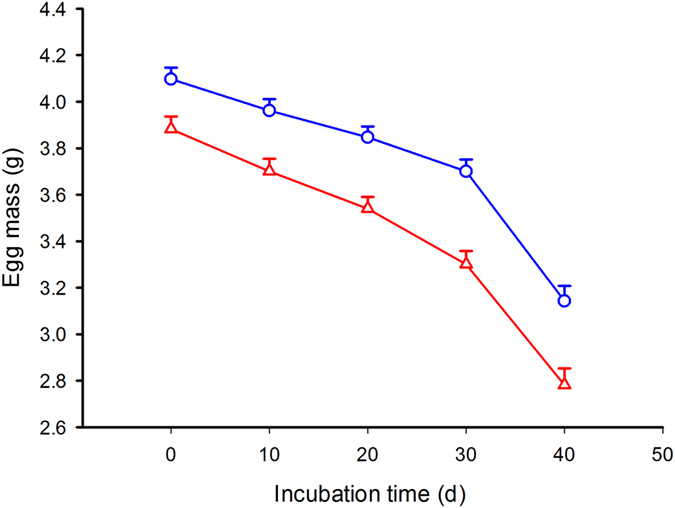
Hatching synchrony is wide-spread amongst egg-laying species and is thought to enhance offspring survival, notably by diluting predation risks. Turtle and snake eggs were shown to achieve synchronous hatching by altering development rates (where less advanced eggs may accelerate development) or by hatching prematurely (where underdeveloped embryos hatch concurrently with full-term embryos). In Natricine snakes, smaller eggs tend to slow down metabolism throughout incubation in order to hatch synchronously with larger eggs. To explore the underlying mechanism of this phenomenon we experimentally manipulated six clutches, where half of the eggs were reduced in mass by removing 7.2% of yolk, and half were used as the control. The former experienced higher heart rates throughout the incubation period, hatched earlier and produced smaller hatchlings than the latter. This study supports the idea that developmental rates are related to egg mass in snake eggs and demonstrates that the relationship can be influenced by removing yolk after egg-laying. The shift in heart rates however occurred in the opposite direction to expected, with higher heart rates in yolk-removed eggs resulting in earlier hatching rather than lower heart rates resulting in synchronous hatching, warranting further research on the topic.
Conflict of interest statement
The authors declare that they have no competing interests.
Figures


References
-
- Warkentin KM, Caldwellgo MS. Assessing Risk: Embryos, Information, and Escape Hatching. Cognitive Ecology II. 2009;177:177–200. doi: 10.7208/chicago/9780226169378.003.0010. - DOI
-
- Frechette B, Coderre D. Oviposition strategy of the green lacewing Chrysoperla rufilabris (Neuroptera: Chrysopidae) in response to extraguild prey availability. European Journal of Entomology. 2000;97(4):507–510. doi: 10.14411/eje.2000.078. - DOI
-
- Bradbury IR, Campana SE, Bentzen P, Snelgrove PV. Synchronized hatch and its ecological significance in rainbow smelt Osmerus mordax in St. Mary’s Bay, Newfoundland. Limnology and Oceanography. 2004;49:2310–2315. doi: 10.4319/lo.2004.49.6.2310. - DOI
Publication types
MeSH terms
Substances
LinkOut - more resources
Full Text Sources
Other Literature Sources
