


Parents make the difference: a randomized-controlled trial of a parenting intervention in Liberia
- PMID: 28596863
- PMCID: PMC5269617
- DOI: 10.1017/gmh.2015.12
Parents make the difference: a randomized-controlled trial of a parenting intervention in Liberia
Abstract
Background: The objective of this study was to evaluate the impact of a brief parenting intervention, 'Parents Make the Difference'(PMD), on parenting behaviors, quality of parent-child interactions, children's cognitive, emotional, and behavioral wellbeing, and malaria prevention behaviors in rural, post-conflict Liberia.
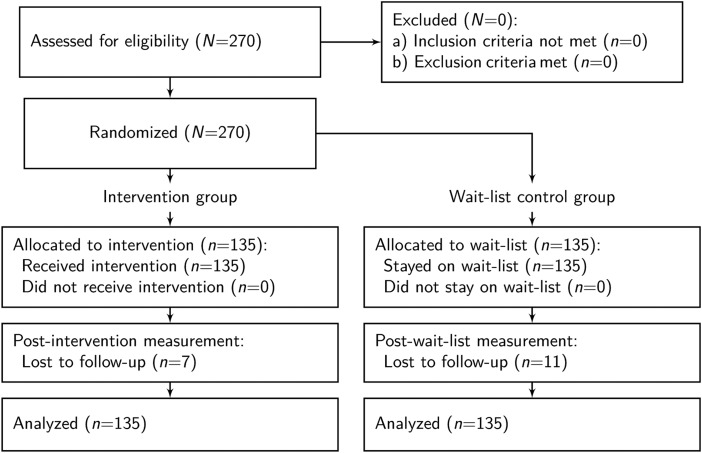
Methods: A sample of 270 caregivers of children ages 3-7 were randomized into an immediate treatment group that received a 10-session parent training intervention or a wait-list control condition (1:1 allocation). Interviewers administered baseline and 1-month post-intervention surveys and conducted child-caregiver observations. Intent-to-treat estimates of the average treatment effects were calculated using ordinary least squares regression. This study was pre-registered at ClinicalTrials.gov (NCT01829815).
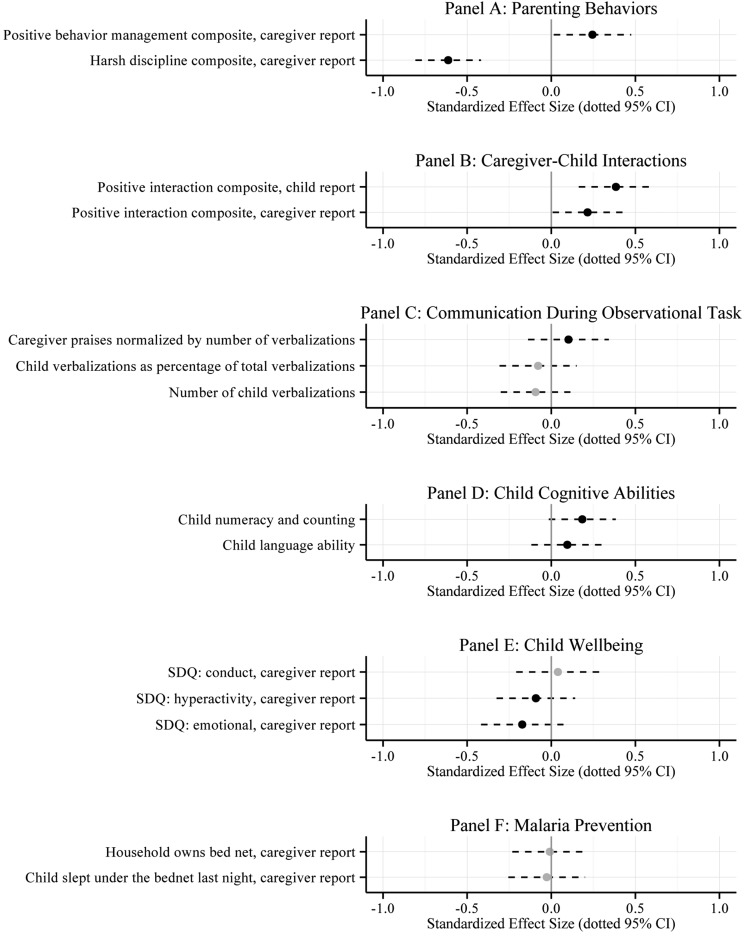
Results: The program led to a 55.5% reduction in caregiver-reported use of harsh punishment practices (p < 0.001). The program also increased the use of positive behavior management strategies and improved caregiver-child interactions. The average caregiver in the treatment group reported a 4.4% increase in positive interactions (p < 0.05), while the average child of a caregiver assigned to the treatment group reported a 17.5% increase (p < 0.01). The program did not have a measurable impact on child wellbeing, cognitive skills, or household adoption of malaria prevention behaviors.
Conclusions: PMD is a promising approach for preventing child abuse and promoting positive parent-child relationships in low-resource settings.
Keywords: Abuse prevention; Africa; Liberia; family-based intervention; global mental health; parenting.
Figures
References
-
- Aboud FE, Shafique S, Akhter S (2009). A responsive feeding intervention increases children's self-feeding and maternal responsiveness but not weight gain. The Journal of Nutrition 139, 1738–1743. - PubMed
-
- Akinsulure-Smith AM, Smith HE (2012). Evolution of family policies in post-conflict Sierra Leone. Journal of Child and Family Studies 21, 4–13.
-
- Akmatov MK (2011). Child abuse in 28 developing and transitional countries – results from the multiple indicator cluster surveys. International Journal of Epidemiology 40, 219–227. - PubMed
-
- Bakermans-Kranenburg MJ, Van IJzendoorn MH, Pijlman FT, Mes-man J, Juffer F (2008). Experimental evidence for differential susceptibility: dopamine d4 receptor polymorphism (DRD4 VNTR) moderates intervention effects on toddlers’ externalizing behavior in a randomized controlled trial. Developmental Psychology 44, 293. - PubMed
-
- Bavolek SJ, Comstock CM, McLaughlin JA (1983). The Nurturing Program: a Validated Approach to Reducing Dysfunctional Family Interactions. Final Report, Project (1R01MH34862).
Associated data
LinkOut - more resources
Full Text Sources
Other Literature Sources
Medical