


Applications of the epidemiological modelling outputs for targeted mental health planning in conflict-affected populations: the Syria case-study
- PMID: 28596877
- PMCID: PMC5314753
- DOI: 10.1017/gmh.2016.4
Applications of the epidemiological modelling outputs for targeted mental health planning in conflict-affected populations: the Syria case-study
Abstract
Background: Epidemiological models are frequently utilised to ascertain disease prevalence in a population; however, these estimates can have wider practical applications for informing targeted scale-up and optimisation of mental health services. We explore potential applications for a conflict-affected population, Syria.
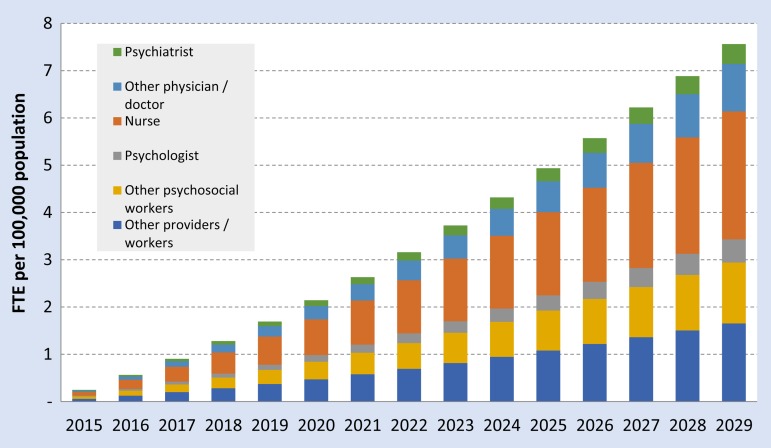
Methods: We use prevalence estimates of major depression and post-traumatic stress disorder (PTSD) in conflict-affected populations as inputs for subsequent estimations. We use Global Burden of Disease (GBD) methodology to estimate years lived with a disability (YLDs) for depression and PTSD in Syrian populations. Human resource (HR) requirements to scale-up recommended packages of care for PTSD and depression in Syria over a 15-year period were modelled using the World Health Organisation mhGAP costing tool. Associated avertable burden was estimated using health benefit analyses.
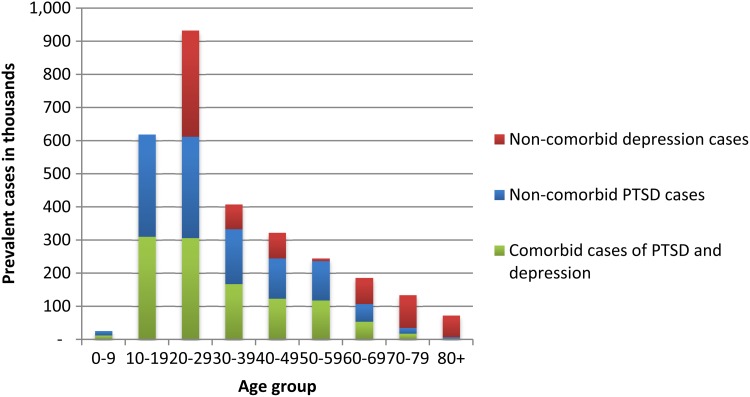
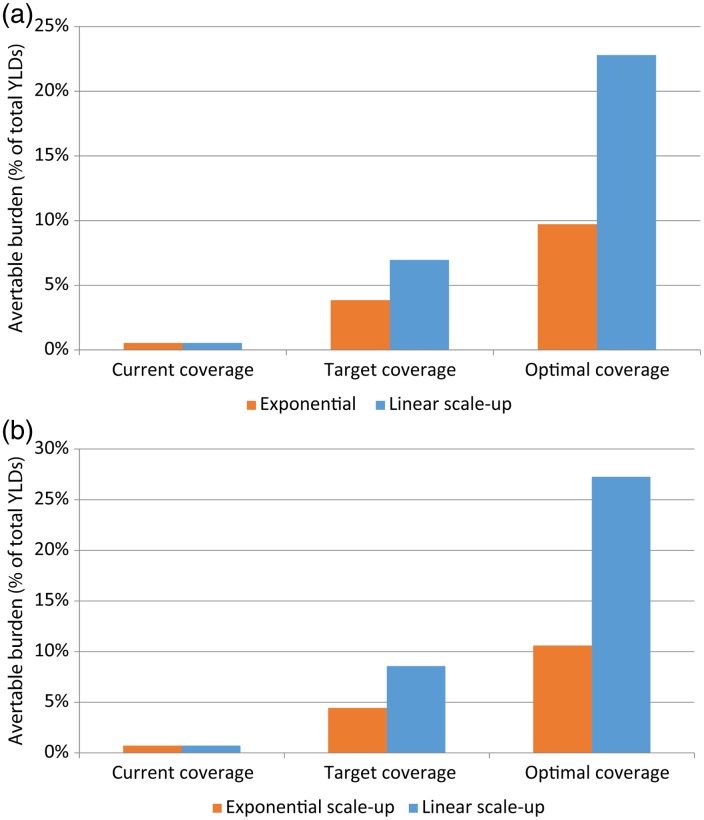
Results: The total number of cases of PTSD in Syria was estimated at approximately 2.2 million, and approximately 1.1 million for depression. An age-standardised major depression rate of 13.4 (95% UI 9.8-17.5) YLDs per 1000 Syrian population is estimated compared with the GBD 2010 global age-standardised YLD rate of 9.2 (95% UI 7.0-11.8). HR requirements to support a linear scale-up of services in Syria using the mhGAP costing tool demonstrates a steady increase from 0.3 FTE in at baseline to 7.6 FTE per 100 000 population after scale-up. Linear scale-up over 15 years could see 7-9% of disease burden being averted.
Conclusion: Epidemiological estimates of mental disorders are key inputs into determining disease burden and guiding optimal mental health service delivery and can be used in target populations such as conflict-affected populations.
Keywords: Conflict; depression; global mental health; policy & systems; post-traumatic stress disorder; service planning.
Figures

References
-
- American Psychiatric Association (2000). Diagnostic and Statistical Manual of Mental Disorders (DSM-IV-TR). American Psychiatric Association: Washington, DC.
-
- Andrews G, Sanderson K, Corry J, Lapsley HM (2000). Using epidemiological data to model efficiency in reducing the burden of depression. Journal of Mental Health Policy and Economics 3, 175–186. - PubMed
LinkOut - more resources
Full Text Sources
Other Literature Sources