


Non-high-density lipoprotein fractions are strongly associated with the presence of metabolic syndrome independent of obesity and diabetes: a population-based study among Iranian adults
- PMID: 28596946
- PMCID: PMC5463311
- DOI: 10.1186/s40200-017-0306-6
Non-high-density lipoprotein fractions are strongly associated with the presence of metabolic syndrome independent of obesity and diabetes: a population-based study among Iranian adults
Abstract
Background: Non-HDL-C as a valuable predictor of premature atherosclerosis, coronary events like first Myocardial infarction and cardiovascular mortality has a high accuracy of measurement both in fasting and non-fasting individuals. Metabolic syndrome (MetS) can promote the development of diabetes mellitus, endothelial dysfunction and atherosclerosis. A common pathway for cross linking of metabolic abnormalities and non-HDL-C has been suggested. In this study we aimed to describe the potential association between non-HDL cholesterol fractions and metabolic syndrome.
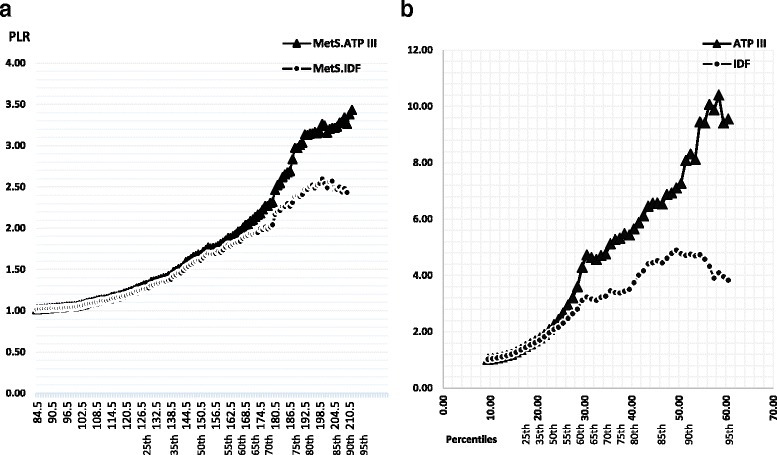
Methods: Data of third national surveillance of the risk factors of non-communicable diseases (SuRFNCD-2007) were analyzed. We defined metabolic syndrome (MetS) according to the Adult Treatment Panel III (ATPIII) and International Diabetes Federation (IDF) criteria for 2125 subjects aging 25-64 years. The receiver operating characteristic (ROC) curves were used to determine the optimal cut-points for the diagnosis of MetS. The curves were depicted for non-high-density lipoprotein cholesterol (non-HDL-C) and difference of total non-HDL-C and LDL-C (Differential cholesterol or Diff-C) as predictors of MetS. Logistic regression was also performed in a complex sample analysis scheme.
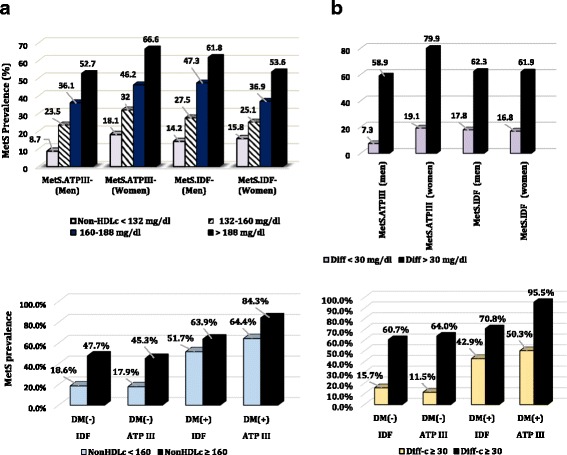
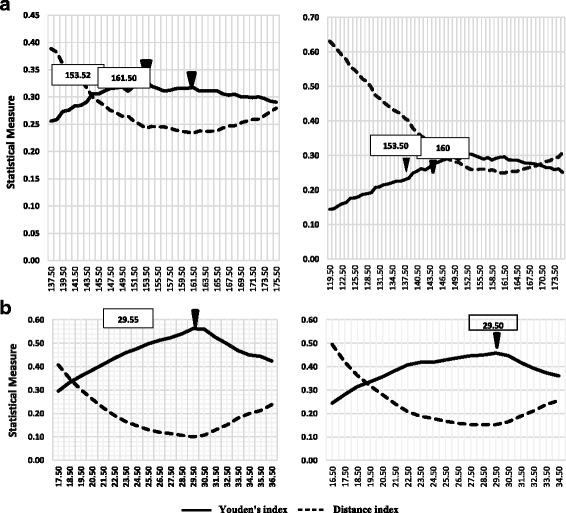
Results: The area under the curve (AUC) with 95% Confidence intervals of total non-HDL-C was computed. Values were 0.693 (0.670-0.715) for IDF-defined MetS and 0.719 (0.697-0.740) for ATPIII criteria. The optimal non-HDL-C cut-point we recommend for both criteria is 153.50 mg/dl (sensitivity: 75.7%, specificity: 57.2%, with ATPIII; sensitivity: 73.2%, specificity: 57.1%, with IDF). Using IDF criteria, the accuracy of predictors were greater in non-diabetic subjects. AUC of Diff-C in DM (-) vs. DM (+) were 0.786 (0.765-0.807) vs. 0.627(0.549-0.705). Adults with high non-HDL-C were 4.42 times more likely to have ATPIII-defined MetS (≥190 vs. < 190 mg/dL). Elevated Diff-C corresponded to increased risk of the MetS (ORs: 10.71 and 26.29 for IDF and ATP III criteria, respectively. All P-values <0.001).
Conclusions: A significant robust association exists between non-HDL-C and MetS whether applying conventional or new thresholds.
Keywords: Cut-points; Diabetes mellitus; Metabolic syndrome; Non-HDL cholesterol; SuRFNCD-2007.
Figures

References
-
- Cobbaert C, Jukema JW, Zwinderman AH, et al. Modulation of lipoprotein (a) atherogenicity by high density lipoprotein cholesterol levels in middle-aged men with symptomatic coronary artery disease and normal to moderately elevated serum cholesterol. Regression growth evaluation Statin study (REGRESS) study group. J Am Coll Cardiol. 1997;30:1491. doi: 10.1016/S0735-1097(97)00353-7. - DOI - PubMed
LinkOut - more resources
Full Text Sources
Other Literature Sources
