


Taming interfacial electronic properties of platinum nanoparticles on vacancy-abundant boron nitride nanosheets for enhanced catalysis
- PMID: 28598418
- PMCID: PMC5472761
- DOI: 10.1038/ncomms15291
Taming interfacial electronic properties of platinum nanoparticles on vacancy-abundant boron nitride nanosheets for enhanced catalysis
Abstract
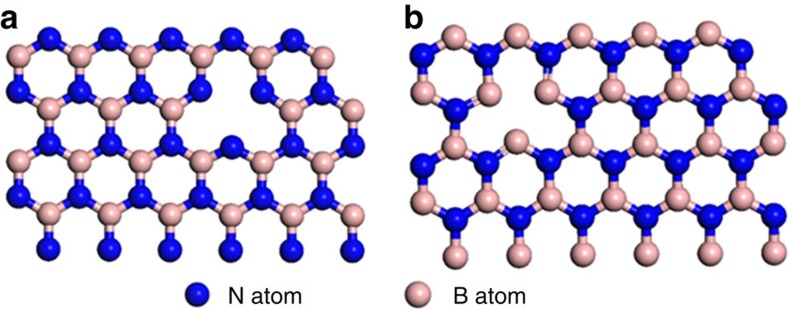
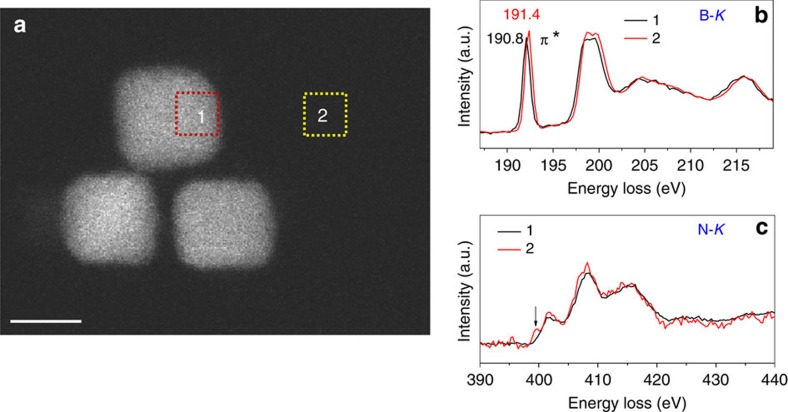
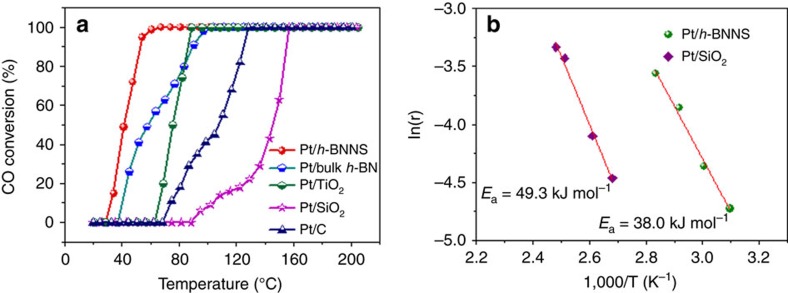
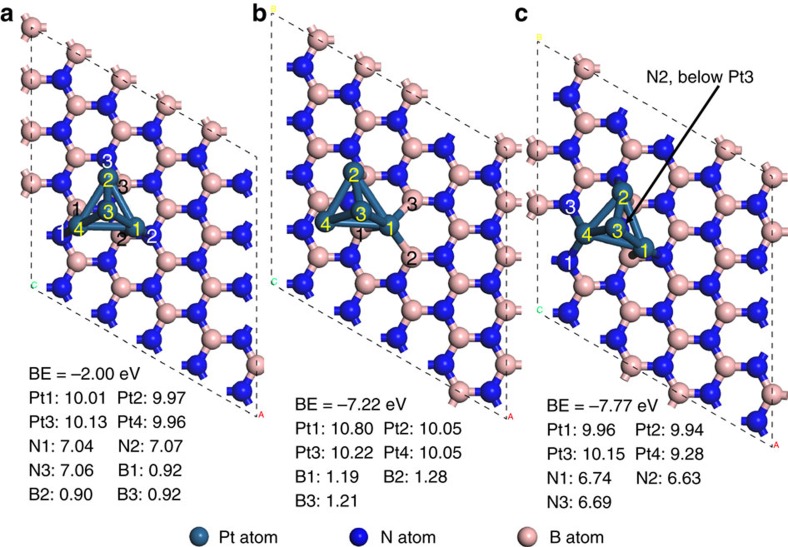
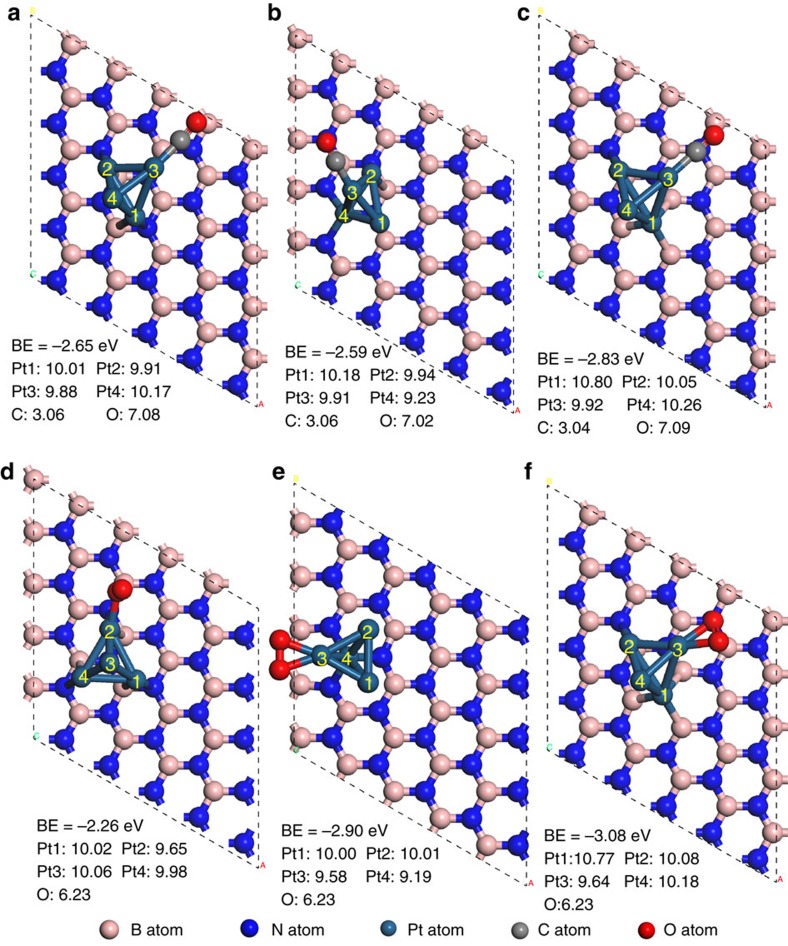
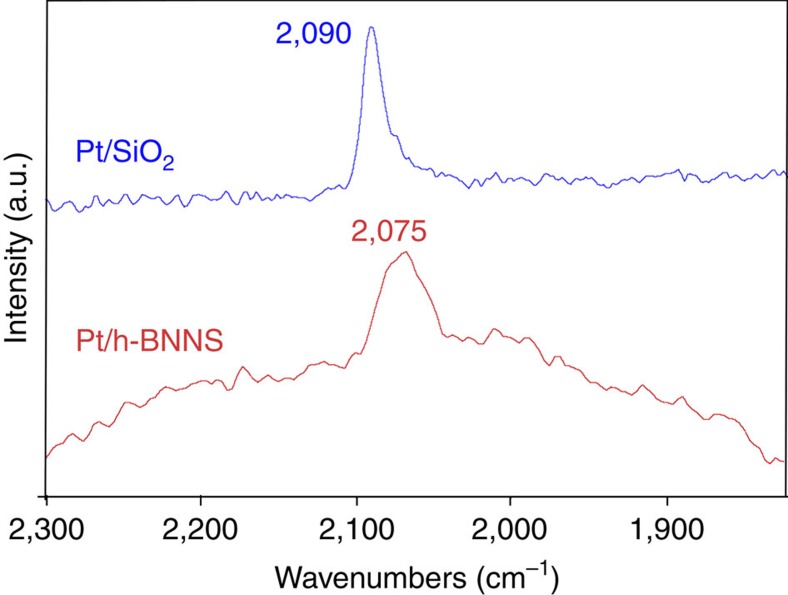
Taming interfacial electronic effects on Pt nanoparticles modulated by their concomitants has emerged as an intriguing approach to optimize Pt catalytic performance. Here, we report Pt nanoparticles assembled on vacancy-abundant hexagonal boron nitride nanosheets and their use as a model catalyst to embrace an interfacial electronic effect on Pt induced by the nanosheets with N-vacancies and B-vacancies for superior CO oxidation catalysis. Experimental results indicate that strong interaction exists between Pt and the vacancies. Bader charge analysis shows that with Pt on B-vacancies, the nanosheets serve as a Lewis acid to accept electrons from Pt, and on the contrary, when Pt sits on N-vacancies, the nanosheets act as a Lewis base for donating electrons to Pt. The overall-electronic effect demonstrates an electron-rich feature of Pt after assembling on hexagonal boron nitride nanosheets. Such an interfacial electronic effect makes Pt favour the adsorption of O2, alleviating CO poisoning and promoting the catalysis.
Conflict of interest statement
The authors declare no competing financial interests.
Figures
References
-
- Chen G. X. et al. Interfacial electronic effects control the reaction selectivity of platinum catalysts. Nat. Mater. 15, 564–569 (2016). - PubMed
-
- Bai Y. et al. Controllably interfacing with metal: a strategy for enhancing CO oxidation on oxide catalysts by surface polarization. J. Am. Chem. Soc. 136, 14650–14653 (2014). - PubMed
-
- Li Q. et al. New approach to fully ordered fct-fept nanoparticles for much enhanced electrocatalysis in acid. Nano Lett. 15, 2468–2473 (2015). - PubMed
-
- Zhang S., Metin O., Su D. & Sun S. H. Monodisperse AgPd alloy nanoparticles and their superior catalysis for the dehydrogenation of formic acid. Angew. Chem. Int. Ed. 52, 3681–3684 (2013). - PubMed
-
- Porter N. S., Wu H., Quan Z. W. & Fang J. Y. Shape-control and electrocatalytic activity-enhancement of Pt-based bimetallic nanocrystals. Acc. Chem. Res. 46, 1867–1877 (2013). - PubMed
Publication types
LinkOut - more resources
Full Text Sources
Other Literature Sources
