. 2017 Jun 9:8:15810.
doi: 10.1038/ncomms15810.

Diversity spurs diversification in ecological communities

Affiliations

Diversity spurs diversification in ecological communities

Vincent Calcagno et al. Nat Commun. .

Abstract

Diversity is a fundamental, yet threatened, property of ecological systems. The idea that diversity can itself favour diversification, in an autocatalytic process, is very appealing but remains controversial. Here, we study a generalized model of ecological communities and investigate how the level of initial diversity influences the possibility of evolutionary diversification. We show that even simple models of intra- and inter-specific ecological interactions can predict a positive effect of diversity on diversification: adaptive radiations may require a threshold number of species before kicking-off. We call this phenomenon DDAR (diversity-dependent adaptive radiations) and identify mathematically two distinct pathways connecting diversity to diversification, involving character displacement and the positive diversity-productivity relationship. Our results may explain observed delays in adaptive radiations at the macroscale and diversification patterns reported in experimental microbial communities, and shed new light on the dynamics of ecological diversity, the diversity-dependence of diversification rates, and the consequences of biodiversity loss.


Conflict of interest statement

The authors declare no competing financial interests.

Figures
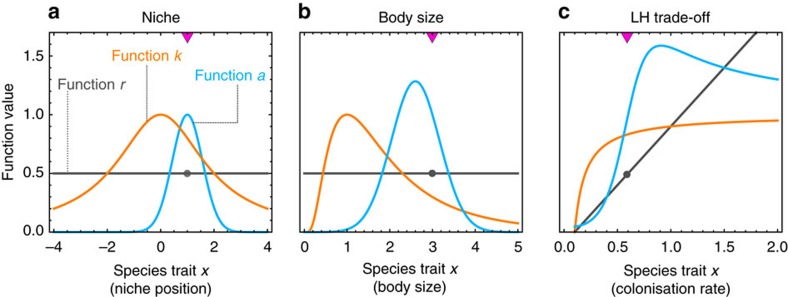
Figure 1
Figure 1. Specific functions corresponding to the three ecological scenarios.
Functions r, k and a are shown for the niche (a), body-size (b), and life-history (LH) trade-off (c) scenarios. For simplicity we depicted a situation with one resident species (with trait value xi; purple triangles and dots). Functions r and k are the intrinsic growth-rate and carrying capacity of a species, respectively, as a function of its trait value. Note that there is an intermediate k optimum in the niche and body-size scenarios, but not in the LH-trade-off scenario. For function a we represented a(xi, xj), that is, the impact that the resident species has on other species depending on their trait values. Note that a is symmetric and less than one in the niche scenario, but asymmetric and possibly greater than one in the body-size and LH-trade-off scenarios.
Figure 2
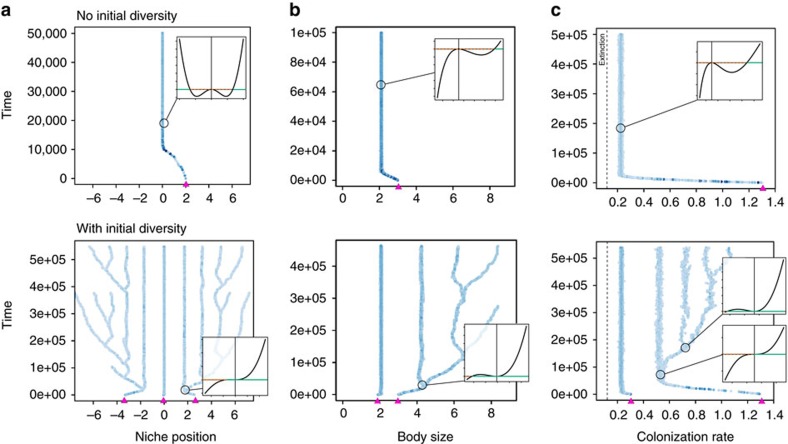
Figure 2. Instances of diversity-dependent adaptive radiation (DDAR) in evolutionary simulations.
Stochastic simulations are shown for the three ecological scenarios (ac; Fig. 1). Trait values are plotted through evolutionary time, darker shades of blue indicate greater relative abundance. In the three panels, adaptive radiation did not occur if starting with only one species (top), but did occur, for the same parameters, if starting with more than one species (bottom). The initial species and their trait values are shown as purple triangles on the x-axes. Fitness landscapes are shown as inserts. The trait value of the focal species (circle) is located by the vertical line, and the invasion fitness of mutants around this value is plotted (Methods section). The horizontal line corresponds to zero fitness; trait values with positive fitness (solid line) can invade, others cannot (dashed line).
Figure 3
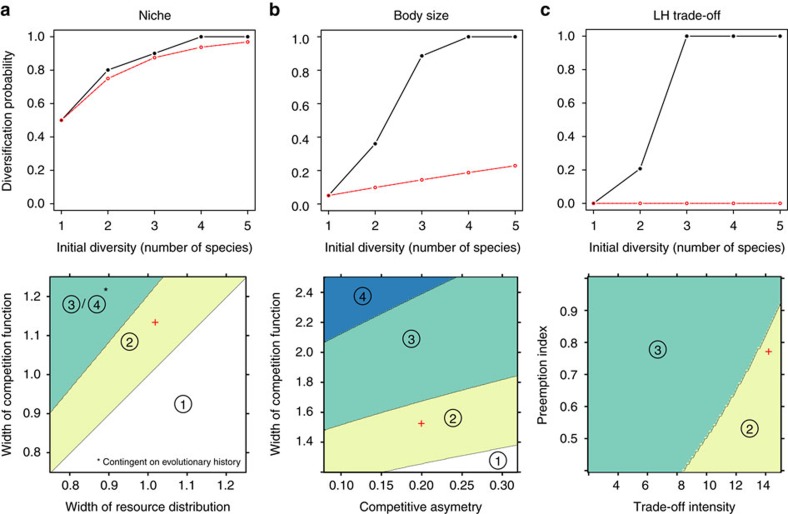
Figure 3. Diversification likelihood increases with diversity.
The likelihood of adaptive radiation (fraction of parameter space conducive to adaptive radiation) is shown as a function of initial diversity under the three ecological scenarios (ac; top). Red dotted lines represent the null expectation if the per-species probability of diversification remained constant regardless of initial diversity. Also shown is the minimum initial diversity needed to observe an adaptive radiation, as a function of parameter values, under the three ecological scenarios (ac; bottom). ‘1’ indicates parameter combinations such that one-species evolution results in a classical radiation, ‘2’ those such that adaptive radiation is impossible starting from one species, but is possible starting with two species or more (DDAR), and so on. In the niche scenario, there were alternative evolutionary attractors for three and four species, that differed in evolutionary stability. Hence for a given parameter combination, the minimum initial diversity further depends on historical contingencies, such as the initial trait values of species and the sequence of mutations that occur. Red crosses indicate the parameter combinations used in Fig. 2.
Figure 4
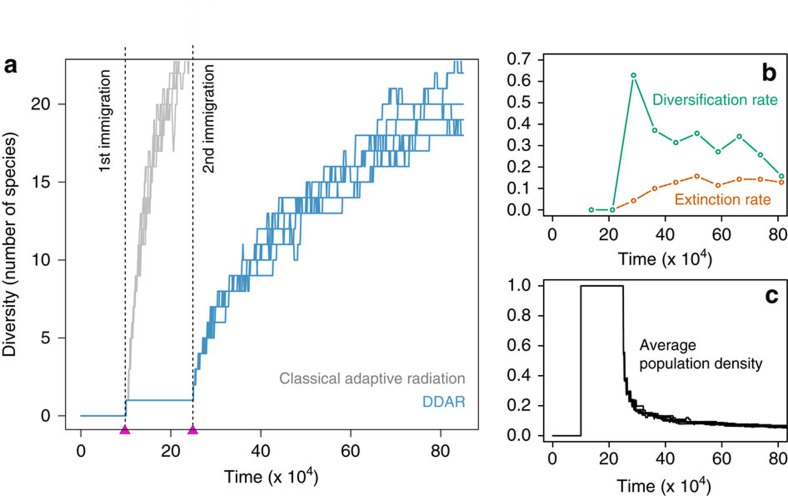
Figure 4. Impact of DDAR on the dynamics of diversity.
The number of species is shown as a function of time (a), in simulations starting from an empty community, under the niche scenario. Two sequential species colonizations were assumed (arrows). In a classical radiation (niche width sa=0.9), diversification starts after the first colonization (grey), whereas in the case of DDAR (sa=1.1) it cannot start until the second colonization (blue). Note that in this case the DDAR curve saturates faster as the competition function is broader, and fewer species can be packed. Seven replicate simulations are shown in both cases. (b) shows the average diversification (solid line) and extinction (dashed line) rates as a function of time in the case of DDAR. (c) shows the average population density as a function of time in the case of DDAR.
Figure 5
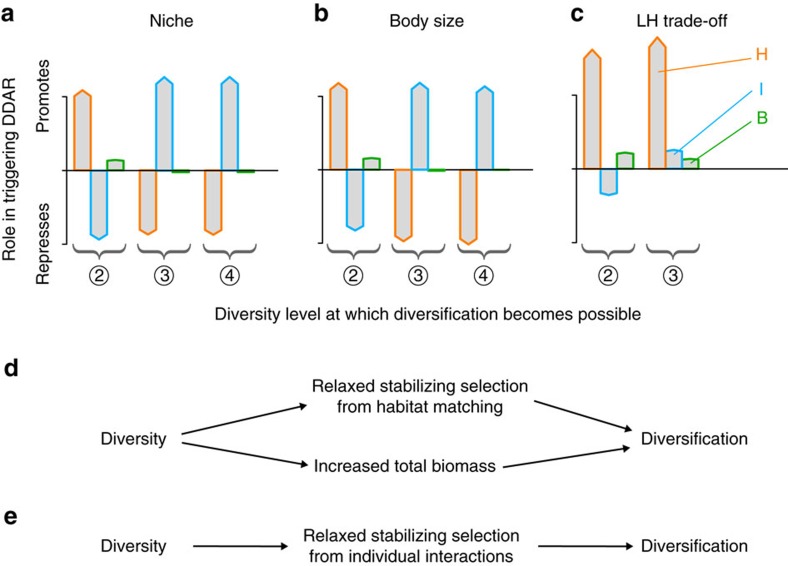
Figure 5. Selective causes of DDAR.
Vertical bars represent, under the three ecological scenarios (ac), the relative contribution (positive or negative) of each component (Hi, Ii and B; equation (1)) in causing bifurcations from ESS to evolutionary diversification as initial diversity increases. We showed separately bifurcations occurring at each diversity level, that is, those that occurred between one and two species, between two and three species, and between three and four species (corresponding to different regions in parameter space; Fig. 3). Synthetic diagrams summarize how diversity positively impacts diversification, at low diversity levels (d) and at high-diversity levels (e).
Figure 6
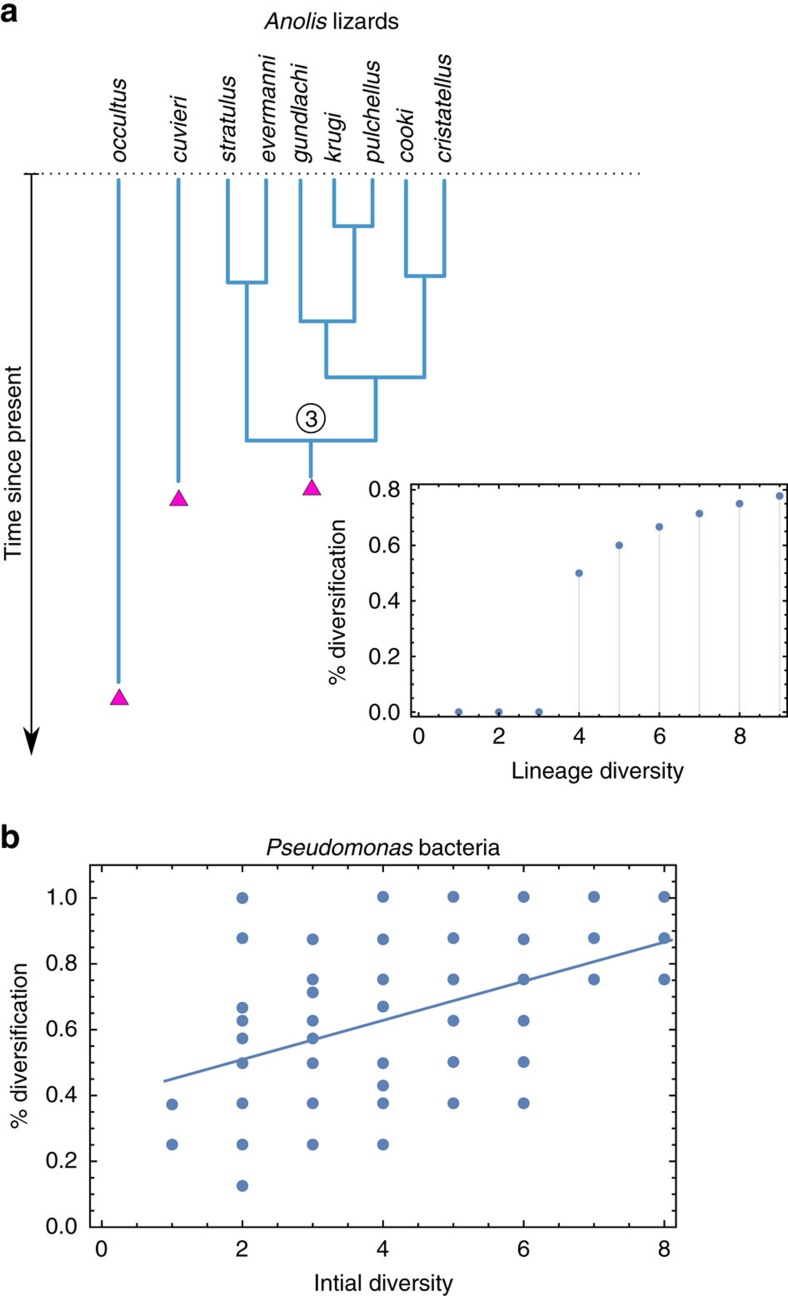
Figure 6. DDAR can explain patterns at the macro and micro scales.
The adaptive radiation of Anolis lizards in Puerto Rico (a) presents an initial lag. Under the maximum clade credibility phylogenetic tree, diversification did not start until the third colonization event or possibly, depending on species set and molecular markers, the second (Supplementary Fig. 2). Data from ref. . Experimental evolution of the bacteria Pseudomonas fluorescens F113 (b) indicates that greater initial diversity (number of strains) promotes evolutionary diversification (fraction of evolved genotypes). The line represents a significant linear regression on diversity (P=0.0013). Data from.

References

    1. Hooper D. U. et al. Effects of biodiversity on ecosystem functioning: a consensus of current knowledge. Ecol. Monogr. 75, 3–35 (2005).
    1. McCann K. S. The diversity-stability debate. Nature 405, 228–233 (2000). - PubMed
    1. Ives A. R. & Carpenter S. R. Stability and diversity of ecosystems. Science 317, 58–62 (2007). - PubMed
    1. Loreau M. & Mazancourt C. Biodiversity and ecosystem stability: a synthesis of underlying mechanisms. Ecol. Lett. 16, 106–115 (2013). - PubMed
    1. Schluter D. The Ecology of Adaptive Radiation OUP Oxford (2000).

Publication types

LinkOut - more resources