. 2017 Jun 9;12(6):e0178773.
doi: 10.1371/journal.pone.0178773. eCollection 2017.

Comparative mitochondrial genome analysis of Daphnis nerii and other lepidopteran insects reveals conserved mitochondrial genome organization and phylogenetic relationships

Affiliations

Comparative mitochondrial genome analysis of Daphnis nerii and other lepidopteran insects reveals conserved mitochondrial genome organization and phylogenetic relationships

Yu Sun et al. PLoS One. .

Abstract

In the present study, the complete sequence of the mitochondrial genome (mitogenome) of Daphnis nerii (Lepidoptera: Sphingidae) is described. The mitogenome (15,247 bp) of D.nerii encodes13 protein-coding genes (PCGs), 22 transfer RNA genes (tRNAs), two ribosomal RNA genes (rRNAs) and an adenine (A) + thymine (T)-rich region. Its gene complement and order is similar to that of other sequenced lepidopterans. The 12 PCGs initiated by ATN codons except for cytochrome c oxidase subunit 1 (cox1) gene that is seemingly initiated by the CGA codon as documented in other insect mitogenomes. Four of the 13 PCGs have the incomplete termination codon T, while the remainder terminated with the canonical stop codon. This mitogenome has six major intergenic spacers, with the exception of A+T-rich region, spanning at least 10 bp. The A+T-rich region is 351 bp long, and contains some conserved regions, including 'ATAGA' motif followed by a 17 bp poly-T stretch, a microsatellite-like element (AT)9 and also a poly-A element. Phylogenetic analyses based on 13 PCGs using maximum likelihood (ML) and Bayesian inference (BI) revealed that D. nerii resides in the Sphingidae family.


Conflict of interest statement

Competing Interests: The authors have declared that no competing interests exist.

Figures

Fig 1
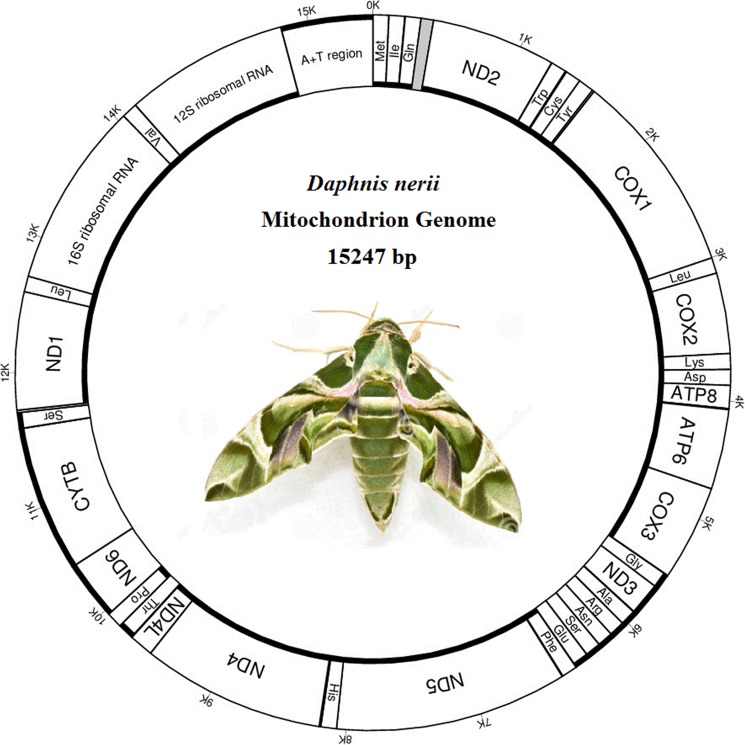
Fig 1. Map of the mitogenome of D.nerii.
The tRNA genes are labeled according to the IUPAC-IUB single-letter amino acids: cox1, cox2 and cox3 refer to the cytochrome c oxidase subunits; cob refers to cytochrome b; nad1-nad6 refer to NADH dehydrogenase components; rrnL and rrnS refer to ribosomal RNAs.
Fig 2
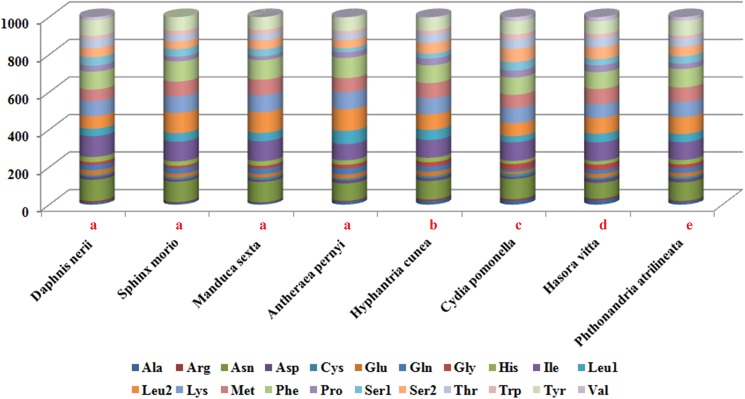
Fig 2. Comparison of codon usage within the mitochondrial genome of members of the Lepidoptera.
Lowercase letters (a, b, c, d and e) above species name represent the superfamily to which the species belongs (a: Bombycoidea, b: Noctuoidea, c: Tortricoidea, d: Hesperioidea, e: Geometroidea).
Fig 3
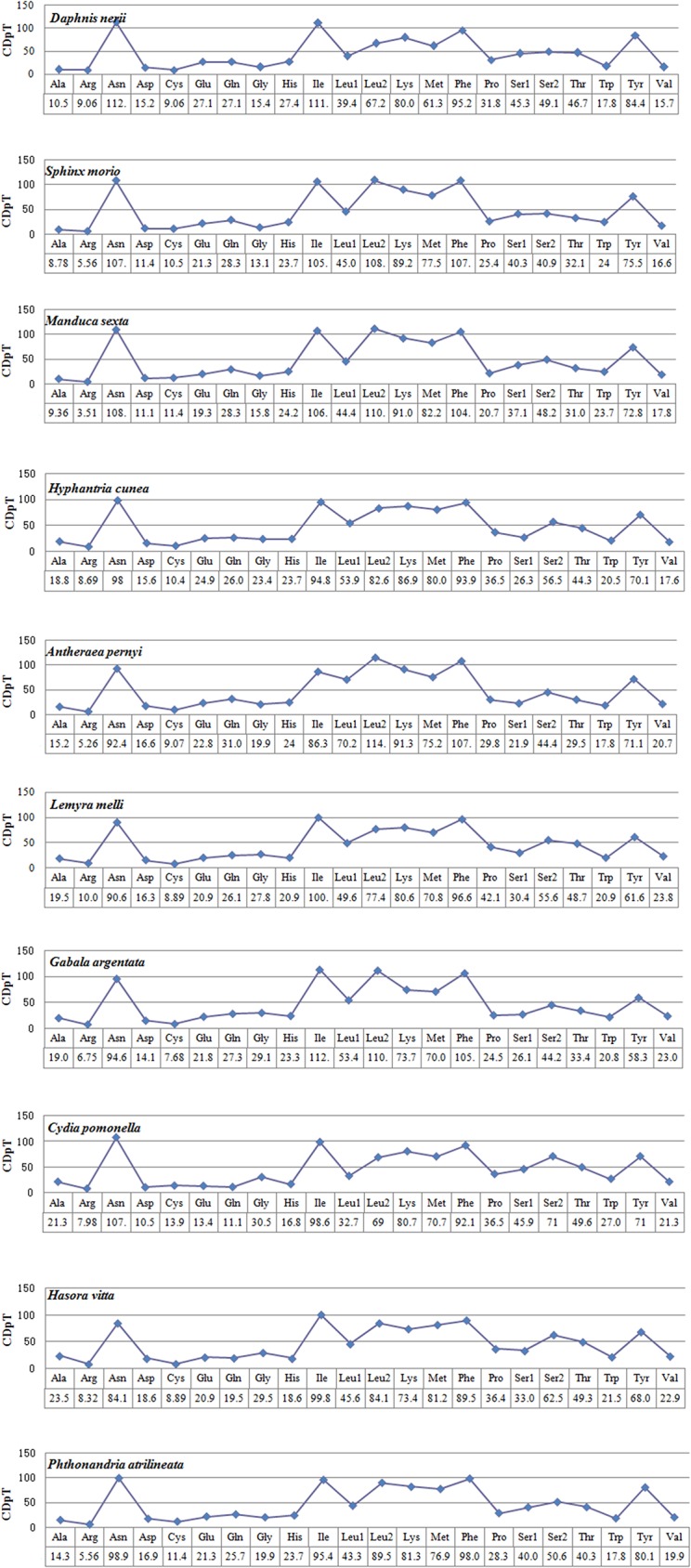
Fig 3. Codon distribution in members of the Lepidoptera.CDspT = codons per thousand codons.
Fig 4
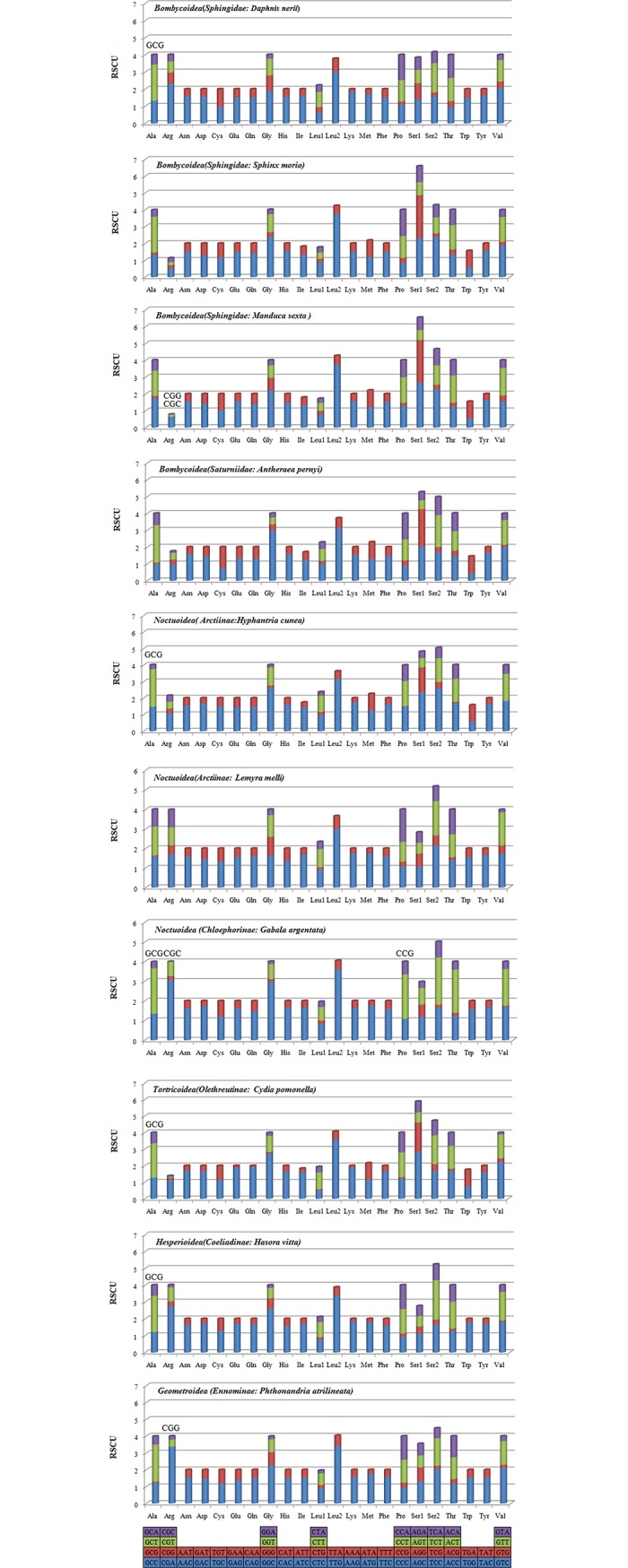
Fig 4. The Relative Synonymous Codon Usage (RSCU) of the mitochondrial genome of six superfamilies in the Lepidoptera.
Codon families are plotted on the X axis. Codons indicated above the bar are not present in the mitogenome.
Fig 5
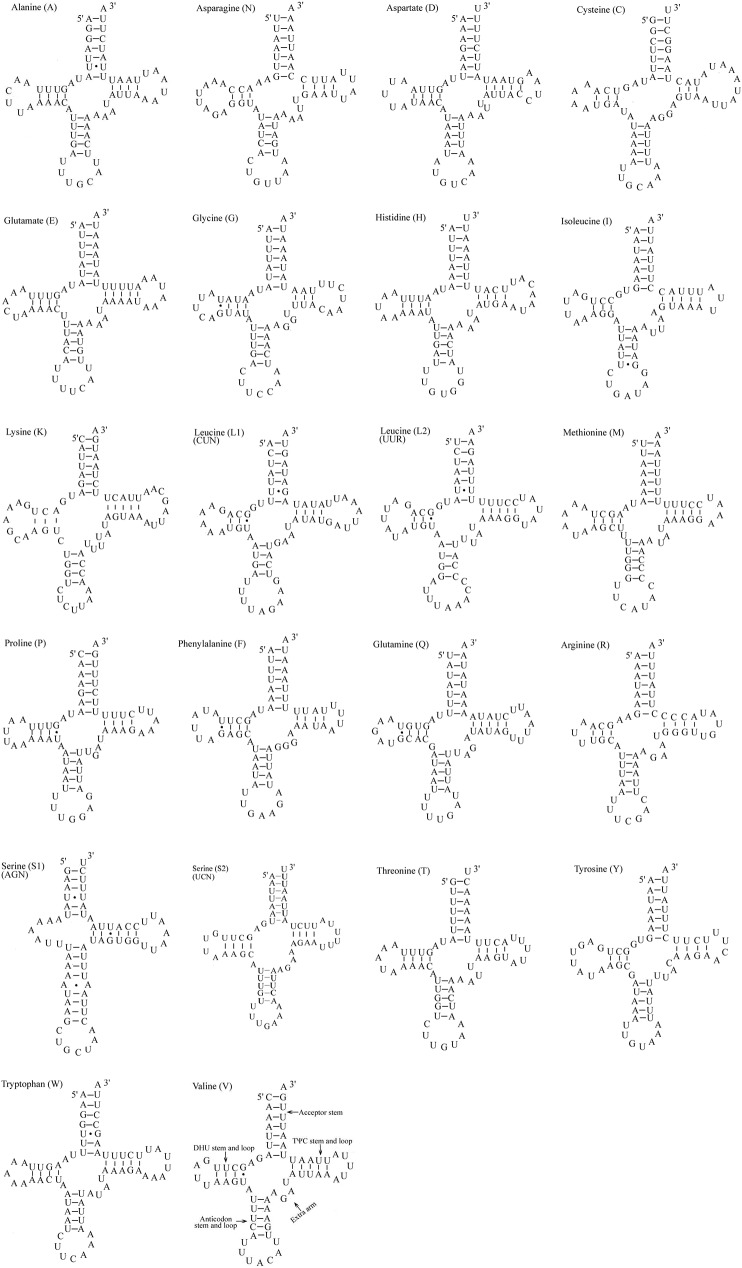
Fig 5. Putative secondary structures of the 22 tRNA genes of the D.nerii mitogenome.
Fig 6
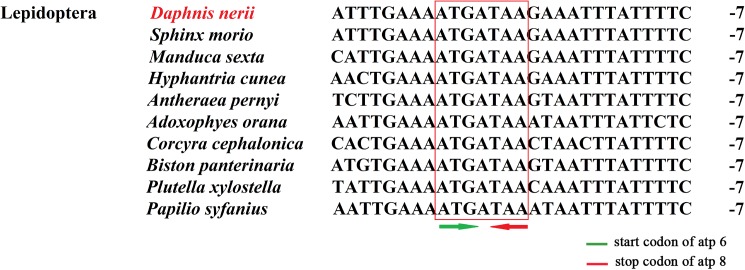
Fig 6. Alignment of overlapping region between atp8 and atp6 across Lepidoptera and other insects.
The numbers on the right refer to intergenic nucleotides.
Fig 7
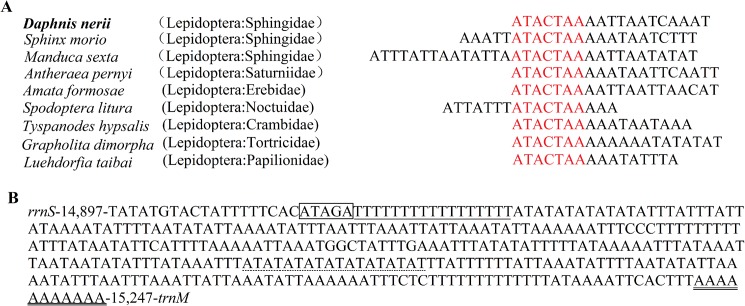
Fig 7
(A) Alignment of the intergenic spacer region between trnS2 (UCN) and nad1 of several Lepidopteran insects. The shaded ‘ATACTAA’ motif is conserved across the Lepidoptera order. (B) Features present in the A+T-rich region of D.nerii. The sequence is shown in the reverse strand. The ATATG motif is shaded. The poly-T stretch is underlined while the poly-A stretch is double underlined. The single microsatellite T/A repeats sequence are indicated by dotted underlining.
Fig 8
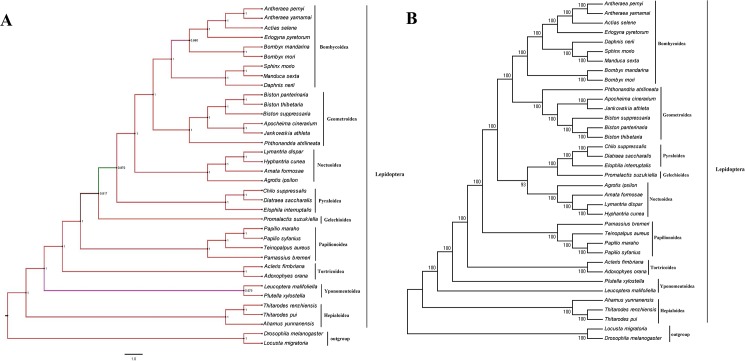
Fig 8
Tree showing the phylogenetic relationships among Lepidopteran insects, constructed using (A) Bayesian inference (BI). (B) Maximum Likelihood method (ML). Bootstrap values (1000 repetitions) of the branches are indicated. Drosophila melanogaster (U37541.1) and Locustamigratoria (NC_001712) were used as outgroups.

References

    1. Moore A, Miller RH. Daphnis nerii (Lepidoptera: Sphingidae), a New Pest of Oleander on Guam, Including Notes on Plant Hosts and Egg Parasitism. Proc Hawaiian Entomol Soc. 2008;40:67–70.
    1. Boore JL. Animal mitochondrial genomes. Nucleic acids research. 1999;27(8):1767–80. PubMed Central PMCID: PMC148383. - PMC - PubMed
    1. Babbucci M, Basso A, Scupola A, Patarnello T, Negrisolo E. Is it an ant or a butterfly? Convergent evolution in the mitochondrial gene order of Hymenoptera and Lepidoptera. Genome biology and evolution. 2014;6(12):3326–43. PubMed Central PMCID: PMC4466343. doi: 10.1093/gbe/evu265 - DOI - PMC - PubMed
    1. Cameron SL. Insect mitochondrial genomics: implications for evolution and phylogeny. Annual review of entomology. 2014;59:95–117. doi: 10.1146/annurev-ento-011613-162007 - DOI - PubMed
    1. Jiang ST, Hong GY, Yu M, Li N, Yang Y, Liu YQ, et al. Characterization of the complete mitochondrial genome of the giant silkworm moth, Eriogyna pyretorum (Lepidoptera: Saturniidae). International journal of biological sciences. 2009;5(4):351–65. PubMed Central PMCID: PMC2686093. - PMC - PubMed