. 2017 Jun 9;12(6):e0179125.
doi: 10.1371/journal.pone.0179125. eCollection 2017.

Computational analysis of multimorbidity between asthma, eczema and rhinitis

Affiliations

Computational analysis of multimorbidity between asthma, eczema and rhinitis

Daniel Aguilar et al. PLoS One. .

Abstract

Background: The mechanisms explaining the co-existence of asthma, eczema and rhinitis (allergic multimorbidity) are largely unknown. We investigated the mechanisms underlying multimorbidity between three main allergic diseases at a molecular level by identifying the proteins and cellular processes that are common to them.

Methods: An in silico study based on computational analysis of the topology of the protein interaction network was performed in order to characterize the molecular mechanisms of multimorbidity of asthma, eczema and rhinitis. As a first step, proteins associated to either disease were identified using data mining approaches, and their overlap was calculated. Secondly, a functional interaction network was built, allowing to identify cellular pathways involved in allergic multimorbidity. Finally, a network-based algorithm generated a ranked list of newly predicted multimorbidity-associated proteins.

Results: Asthma, eczema and rhinitis shared a larger number of associated proteins than expected by chance, and their associated proteins exhibited a significant degree of interconnectedness in the interaction network. There were 15 pathways involved in the multimorbidity of asthma, eczema and rhinitis, including IL4 signaling and GATA3-related pathways. A number of proteins potentially associated to these multimorbidity processes were also obtained.

Conclusions: These results strongly support the existence of an allergic multimorbidity cluster between asthma, eczema and rhinitis, and suggest that type 2 signaling pathways represent a relevant multimorbidity mechanism of allergic diseases. Furthermore, we identified new candidates contributing to multimorbidity that may assist in identifying new targets for multimorbid allergic diseases.


Conflict of interest statement

Competing Interests: The authors have declared that no competing interests exist.

Figures

Fig 1
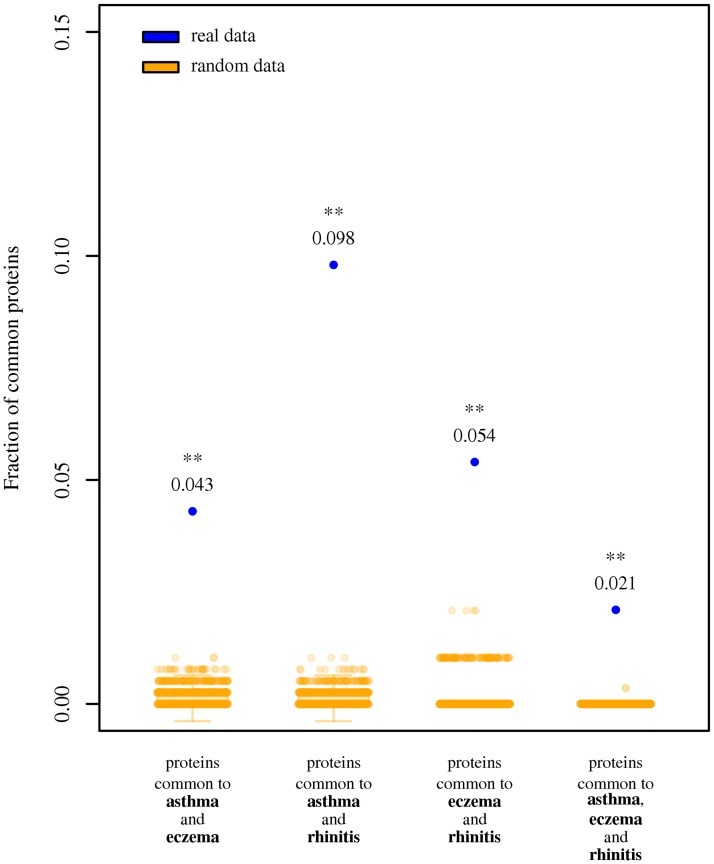
Fig 1. Fraction of proteins associated to asthma, eczema and rhinitis.
Blue dots indicate the observed fraction of proteins. Orange scatter boxplots indicate random expectation. One asterisk: observed results are significantly larger than random expectation (z-test; P < 0.05). Two asterisks: observed results are significantly larger than random expectation (z-test; P < 0.01).
Fig 2
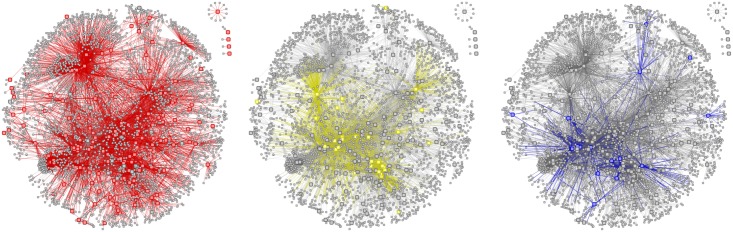
Fig 2. Functional Interaction Networks of asthma, eczema and rhinitis.
Fraction of the Functional Interaction Networks comprising the proteins associated to asthma, eczema, rhinitis and all proteins connected to them (i.e. their direct neighbors in the network). A node represents a protein. A link between two nodes represents a functional connection between them. Isolated nodes represent proteins not directly connected neither to any other disease-associated protein nor to any of its direct neighbors. (A) Large red nodes represent asthma-associated proteins. Red links represent functional connections of these proteins. (B) Large yellow nodes represent eczema-associated proteins. Yellow links represent functional connections of these proteins. (C) Large blue nodes represent rhinitis-associated proteins. Blue links represent functional connections of these proteins.
Fig 3
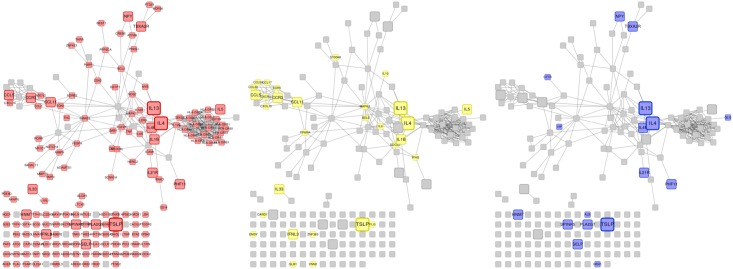
Fig 3. Functional Interaction Networks of asthma, eczema and rhinitis.
Fraction of the Functional Interaction Networks comprising the proteins associated to asthma, eczema and rhinitis. A node represents a protein. The size of the node represents the number of disease associations: the large nodes are associated to all diseases, the medium nodes are associated to two diseases, and the small nodes are associated to one disease. A link between two nodes represents a functional connection between them. These networks are a subset of the networks shown in Fig 2, where the direct neighbors have been removed. Isolated nodes at the bottom represent proteins not connected to any protein associated to asthma, eczema and rhinitis. (A) Red nodes represent asthma-associated proteins. (B) Yellow nodes represent eczema-associated proteins. (C) Blue nodes represent rhinitis-associated proteins.
Fig 4
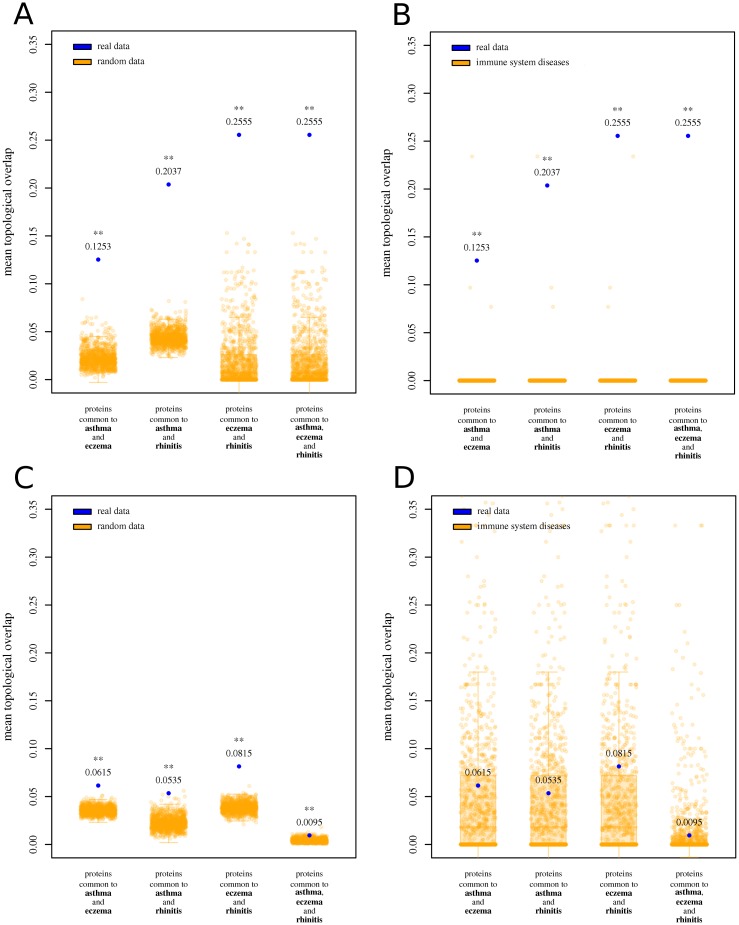
Fig 4. Mean topological overlap for proteins associated to asthma, eczema and rhinitis.
(A) Blue dots indicate the observed mean topological overlap (TO) for proteins common to asthma and eczema, asthma and rhinitis, eczema and rhinitis, and common to all three. Orange scatter boxplots indicate random expectation. (B) Blue dots indicate the observed mean TO for proteins common to the combinations of diseases shown in the previous figure. Orange scatter boxplots indicate observed TO values for pairs/trios of immune system diseases. (C) Blue dots indicate the observed mean TO between proteins unique to asthma and unique to eczema, unique to asthma and unique to rhinitis, unique to eczema and unique to rhinitis, and unique to each disease. Orange scatter boxplots indicate random expectation. (D) Blue dots indicate the observed mean TO for proteins unique to the combinations of diseases shown in the previous figure. Orange scatter boxplots indicate observed TO values for pairs/trios of immune system diseases. One asterisk: observed results are significantly larger than random expectation (P < 0.05). Two asterisks: observed results are significantly larger than random expectation (P < 0.01).

References

    1. Barnett K, Mercer SW, Norbury M, Watt G, Wyke S, Guthrie B. Epidemiology of multimorbidity and implications for health care, research, and medical education: a cross-sectional study. Lancet 2012; 380: 37–43. 10.1016/S0140-6736(12)60240-2 - DOI - PubMed
    1. Ballardini N, Kull I, Lind T, Hallner E, Almqvist C, Ostblom E, et al. Development and comorbidity of eczema, asthma and rhinitis to age 12: data from the BAMSE birth cohort. Allergy 2012; 67: 537–44. 10.1111/j.1398-9995.2012.02786.x - DOI - PubMed
    1. Hopper JL, Bui QM, Erbas B, Matheson MC, Gurrin LC, Burgess JA, et al. Does eczema in infancy cause hay fever, asthma, or both in childhood? Insights from a novel regression model of sibling data. J Allergy Clin Immunol 2012; 130: 1117–1122. 10.1016/j.jaci.2012.08.003 - DOI - PubMed
    1. Bousquet J, Anto J, Auffray C, Akdis M, Cambon-Thomsen A, Keil T, et al. MeDALL (Mechanisms of the Development of ALLergy): an integrated approach from phenotypes to systems medicine. Allergy 2011; 66: 596–604. 10.1111/j.1398-9995.2010.02534.x - DOI - PubMed
    1. Pinart M, Benet M, Annesi-Maesano I, von Berg A, Berdel D, Carlsen KC, et al. Comorbidity of eczema, rhinitis, and asthma in IgE-sensitised and non-IgE-sensitised children in MeDALL: a population-based cohort study. Lancet Respir Med. 2014; 2: 131–40. 10.1016/S2213-2600(13)70277-7 - DOI - PubMed

MeSH terms