


Drinking Water Salinity and Raised Blood Pressure: Evidence from a Cohort Study in Coastal Bangladesh
- PMID: 28599268
- PMCID: PMC5730519
- DOI: 10.1289/EHP659
Drinking Water Salinity and Raised Blood Pressure: Evidence from a Cohort Study in Coastal Bangladesh
Abstract
Background: Millions of coastal inhabitants in Southeast Asia have been experiencing increasing sodium concentrations in their drinking-water sources, likely partially due to climate change. High (dietary) sodium intake has convincingly been proven to increase risk of hypertension; it remains unknown, however, whether consumption of sodium in drinking water could have similar effects on health.
Objectives: We present the results of a cohort study in which we assessed the effects of drinking-water sodium (DWS) on blood pressure (BP) in coastal populations in Bangladesh.
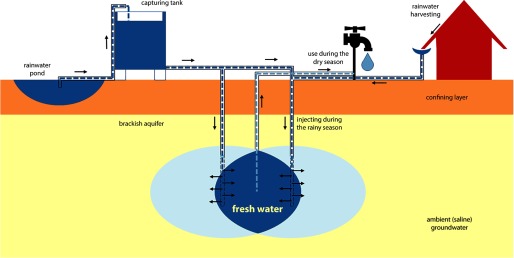
Methods: DWS, BP, and information on personal, lifestyle, and environmental factors were collected from 581 participants. We used generalized linear latent and mixed methods to model the effects of DWS on BP and assessed the associations between changes in DWS and BP when participants experienced changing sodium levels in water, switched from "conventional" ponds or tube wells to alternatives [managed aquifer recharge (MAR) and rainwater harvesting] that aimed to reduce sodium levels, or experienced a combination of these changes.
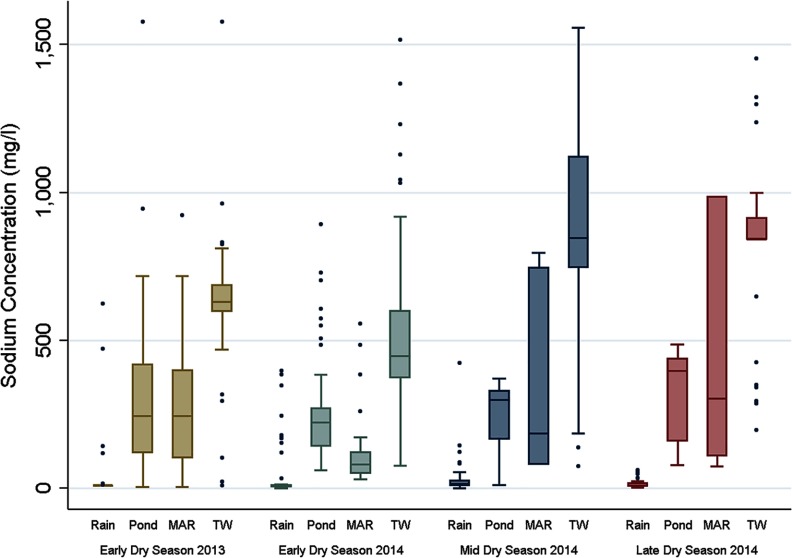
Results: DWS concentrations were highly associated with BP after adjustments for confounding factors. Furthermore, for each 100 mg/L reduction in sodium in drinking water, systolic/diastolic BP was lower on average by 0.95/0.57 mmHg, and odds of hypertension were lower by 14%. However, MAR did not consistently lower sodium levels.
Conclusions: DWS is an important source of daily sodium intake in salinity-affected areas and is a risk factor for hypertension. Considering the likely increasing trend in coastal salinity, prompt action is required. Because MAR showed variable effects, alternative technologies for providing reliable, safe, low-sodium fresh water should be developed alongside improvements in MAR and evaluated in "real-life" salinity-affected settings. https://doi.org/10.1289/EHP659.
Figures
Comment in
-
Another Side of a Low-Salt Diet: Reductions in the Salinity of Drinking Water May Lower Blood Pressure.Environ Health Perspect. 2017 Jun 23;125(6):064002. doi: 10.1289/EHP2099. Environ Health Perspect. 2017. PMID: 28650841 Free PMC article. No abstract available.
References
Publication types
MeSH terms
Substances
Grants and funding
LinkOut - more resources
Full Text Sources
Other Literature Sources
Medical