


Objectively measured short sleep duration and later sleep midpoint in pregnancy are associated with a higher risk of gestational diabetes
- PMID: 28599896
- PMCID: PMC5783638
- DOI: 10.1016/j.ajog.2017.05.066
Objectively measured short sleep duration and later sleep midpoint in pregnancy are associated with a higher risk of gestational diabetes
Abstract
Background: Experimental and epidemiologic data suggest that among nonpregnant adults, sleep duration may be an important risk factor for chronic disease. Although pregnant women commonly report poor sleep, few studies objectively evaluated the quality of sleep in pregnancy or explored the relationship between sleep disturbances and maternal and perinatal outcomes.
Objective: Our objective was to examine the relationship between objectively assessed sleep duration, timing, and continuity (measured via wrist actigraphy) and maternal cardiovascular and metabolic morbidity specific to pregnancy.
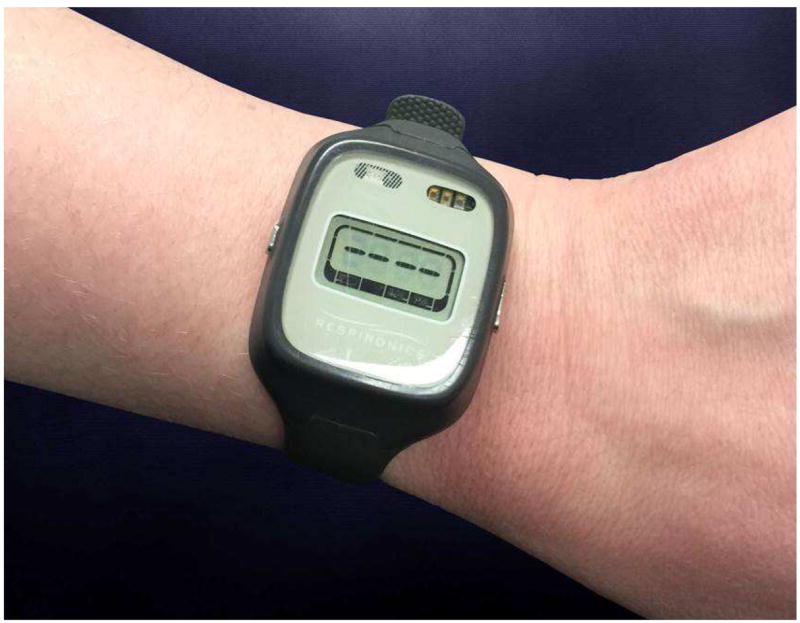
Study design: This was a prospective cohort study of nulliparous women. Women were recruited between 16 0/7 and 21 6/7 weeks' gestation. They were asked to wear a wrist actigraphy monitor and complete a daily sleep log for a period of 7 consecutive days. The primary sleep exposure variables were the averages of the following over the total valid nights (minimum 5, maximum 7 nights): short sleep duration during the primary sleep period (<7 h/night), late sleep midpoint (midpoint between sleep onset and sleep offset >5 am), and top quartile of minutes of wake time after sleep onset and sleep fragmentation index. The primary outcomes of interest were a composite of hypertensive disorders of pregnancy (mild, severe, or superimposed preeclampsia; eclampsia; or antepartum gestational hypertension) and gestational diabetes mellitus. We used χ2 tests to assess associations between sleep variables and categorical baseline characteristics. Crude odds ratios and 95% confidence intervals were estimated from univariate logistic regression models to characterize the magnitude of the relationship between sleep characteristics and hypertensive disorders of pregnancy and gestational diabetes. For associations significant in univariate analysis, multiple logistic regression was used to explore further the association of sleep characteristics with pregnancy outcomes.
Results: In all, 901 eligible women consented to participate; 782 submitted valid actigraphy studies. Short sleep duration and a later sleep midpoint were associated with an increased risk of gestational diabetes (odds ratio, 2.24; 95% confidence interval, 1.11-4.53; and odds ratio, 2.58; 95% confidence interval, 1.24-5.36, respectively) but not of hypertensive disorders. A model with both sleep duration and sleep midpoint as well as their interaction term revealed that while there was no significant interaction between these exposures, the main effects of both short sleep duration and later sleep midpoint with gestational diabetes remained significant (adjusted odds ratio, 2.06; 95% confidence interval, 1.01-4.19; and adjusted odds ratio, 2.37; 95% confidence interval, 1.13-4.97, respectively). Additionally, after adjusting separately for age, body mass index, and race/ethnicity, both short sleep duration and later sleep midpoint remained associated with gestational diabetes. No associations were demonstrated between the sleep quality measures (wake after sleep onset, sleep fragmentation) and hypertensive disorders or gestational diabetes.
Conclusion: Our results demonstrate a relationship between short sleep duration and later sleep midpoint with gestational diabetes. Our data suggest independent contributions of these 2 sleep characteristics to the risk for gestational diabetes in nulliparous women.
Keywords: actigraphy; gestational diabetes; hypertension; pregnancy outcomes; sleep duration; sleep midpoint; sleep quality.
Copyright © 2017 Elsevier Inc. All rights reserved.
Conflict of interest statement
The other authors did not report any potential conflicts of interest.
Figures
References
-
- Ayas NT, et al. A prospective study of sleep duration and coronary heart disease in women. Arch Intern Med. 2003;163(2):205–9. - PubMed
Publication types
MeSH terms
Grants and funding
LinkOut - more resources
Full Text Sources
Other Literature Sources
Medical
