


Yogic breathing practices improve lung functions of competitive young swimmers
- PMID: 28601355
- PMCID: PMC5496990
- DOI: 10.1016/j.jaim.2016.12.005
Yogic breathing practices improve lung functions of competitive young swimmers
Abstract
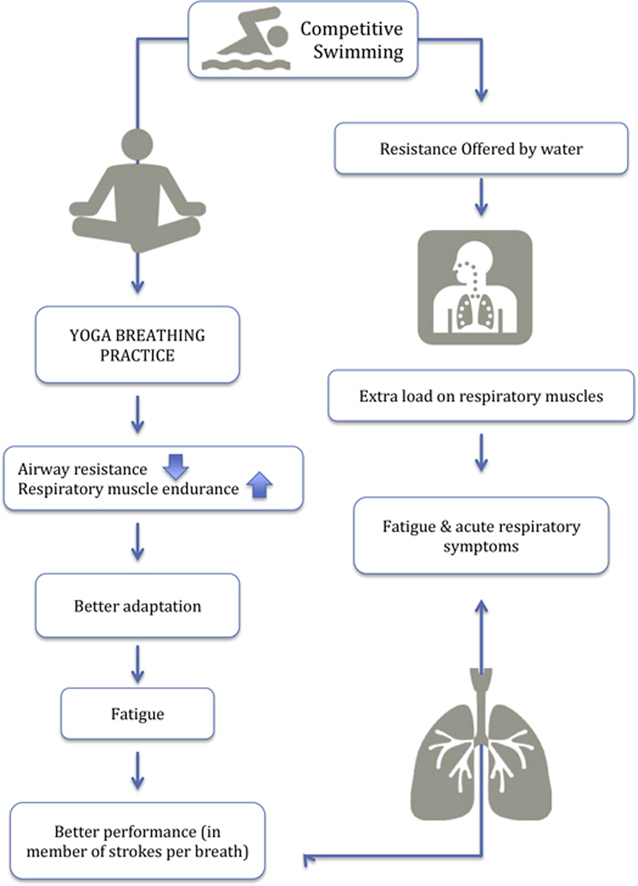
Background: Resistive breathing practices are known to improve endurance and performance in competitive swimmers. However, the effect of Pranayama or Yogic Breathing Practices (YBP) in improving respiratory endurance and performance of competitive swimmers remains un-investigated.
Objectives: To study effects of yogic breathing practices on lung functions of swimmers.
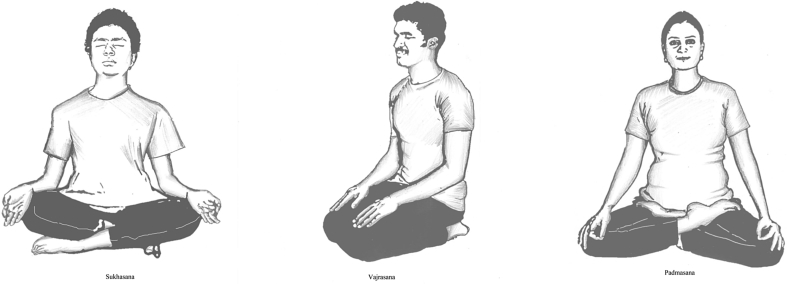
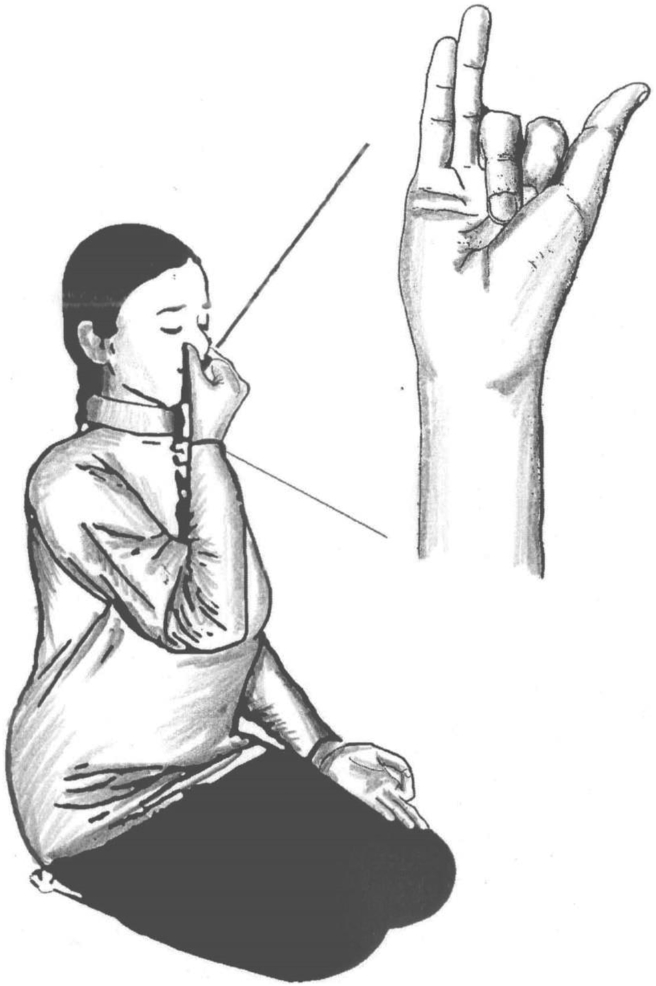
Material and methods: Twenty seven national and international competitive swimmers of the age range 13-20 years, with 8.29 ± 2.9 years of competitive swimming experience and practicing swimming for 9.58 ± 1.81 km everyday, were assigned randomly to either an experimental (YBP) or to wait list control group (no intervention). Outcome measures were taken on day 1 and day 30 and included (1) spirometry to measure lung function, (2) Sport Anxiety Scale-2 (SAS-2) to measure the antecedents and consequences of cognitive and somatic trait anxiety of sport performance and (3) number of strokes per breath to measure performance. The YBP group practiced a prescribed set of Yogic Breathing Practices - Sectional Breathing (Vibhagiya Pranayama), Yogic Bellows Breathing (Bhastrika Pranayama) and Alternate Nostril Breathing with Voluntary Internal Breath Holding (Nadi Shodhana with Anthar kumbhaka) for half an hour, five days a week for one month.
Results: There was a significant improvement in the YBP group as compared to control group in maximal voluntary ventilation (p = 0.038), forced vital capacity (p = 0.026) and number of strokes per breath (p = 0.001).
Conclusion: The findings suggest that YBP helps to enhance respiratory endurance in competitive swimmers.
Keywords: Breathing practices; Competitive swimming; Pranayama; Pulmonary function.
Copyright © 2016 Transdisciplinary University, Bangalore and World Ayurveda Foundation. Published by Elsevier B.V. All rights reserved.
Figures
References
-
- Romer L.E., Polkey M.I. Exercise-induced respiratory muscle fatigue: implications for performance. J Appl Physiol. 2008;104(3):879–888. - PubMed
-
- Aspenes S.T., Karlsen T. Exercise-training intervention studies in competitive swimming. Sports Med. 2012;42(6):527–543. - PubMed
-
- Silvestri M., Crimi E., Oliva S., Senarega D., Tosca M.A., Rossi G.A. Pulmonary function and airway responsiveness in young competitive swimmers. Pediatr Pulmonol. 2013;48(1):74–80. - PubMed
-
- Lindholm P., Wylegala J., Pendergast D.R., Lundgren C.E.G. Resistive respiratory muscle training improves and maintains endurance swimming performance in divers. Undersea Hyperb Med. 2007;34(3):169–180. - PubMed
-
- Lomax M., Castle S. Inspiratory muscle fatigue significantly affects breathing frequency, stroke rate, and stroke length during 200-m front-crawl swimming. J Strength Cond Res. 2011;25(10):2691–2695. - PubMed
LinkOut - more resources
Full Text Sources
Other Literature Sources
