


Exaggerated follicular helper T-cell responses in patients with LRBA deficiency caused by failure of CTLA4-mediated regulation
- PMID: 28601686
- PMCID: PMC5743769
- DOI: 10.1016/j.jaci.2017.05.022
Exaggerated follicular helper T-cell responses in patients with LRBA deficiency caused by failure of CTLA4-mediated regulation
Abstract
Background: LPS-responsive beige-like anchor protein (LRBA) and cytotoxic T lymphocyte-associated antigen 4 (CTLA4) deficiencies give rise to overlapping phenotypes of immune dysregulation and autoimmunity, with dramatically increased frequencies of circulating follicular helper T (cTFH) cells.
Objective: We sought to determine the mechanisms of cTFH cell dysregulation in patients with LRBA deficiency and the utility of monitoring cTFH cells as a correlate of clinical response to CTLA4-Ig therapy.
Methods: cTFH cells and other lymphocyte subpopulations were characterized. Functional analyses included in vitro follicular helper T (TFH) cell differentiation and cTFH/naive B-cell cocultures. Serum soluble IL-2 receptor α chain levels and in vitro immunoglobulin production by cultured B cells were quantified by using ELISA.
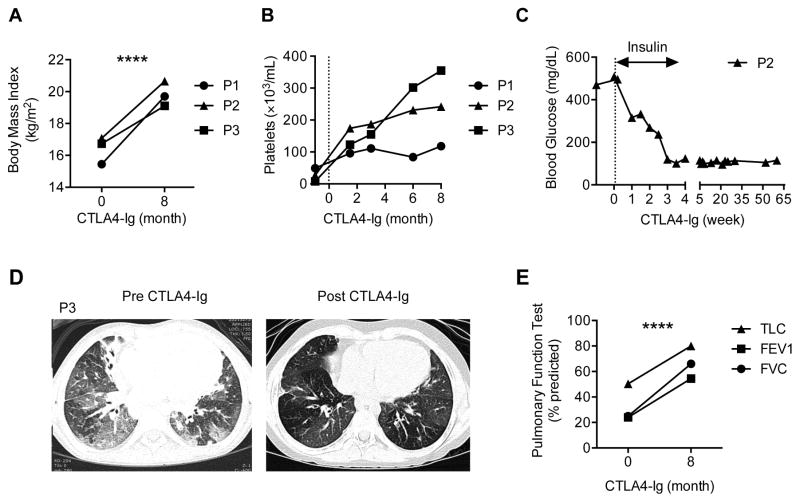
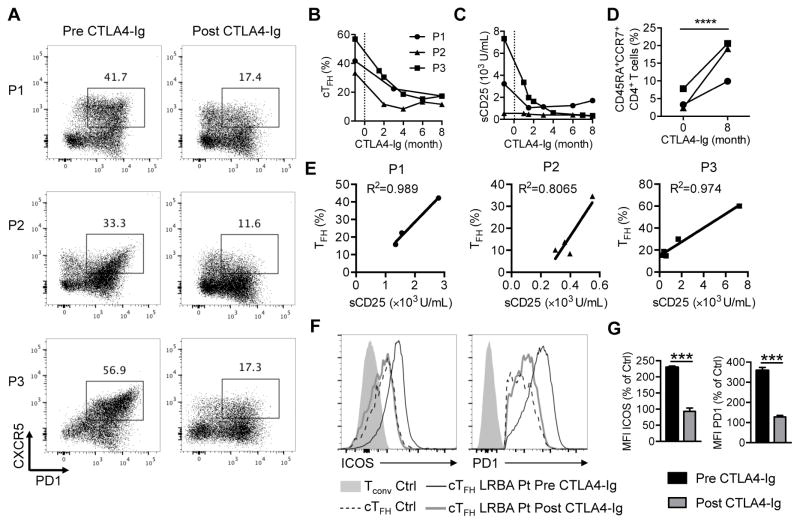
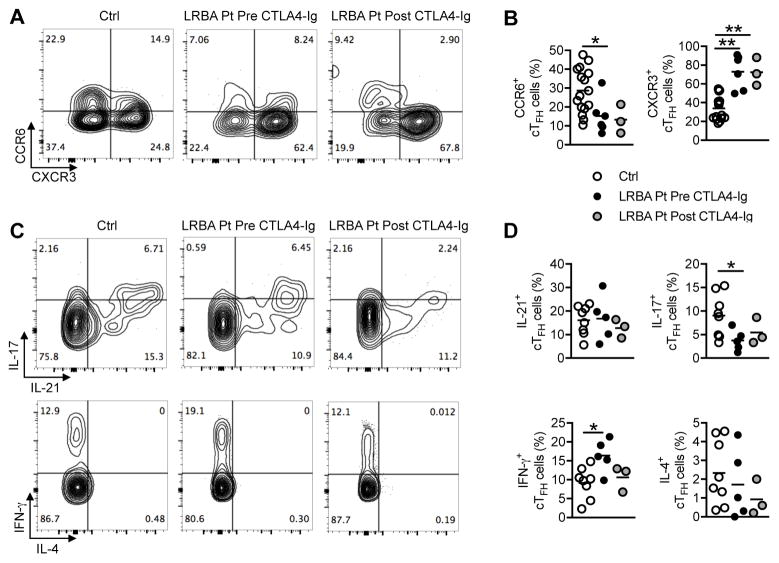
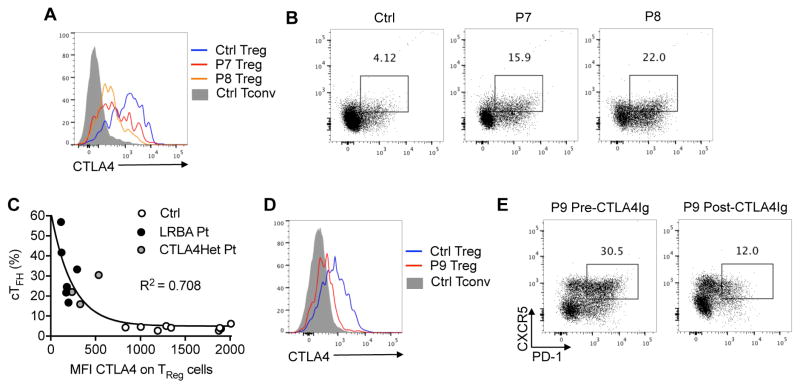
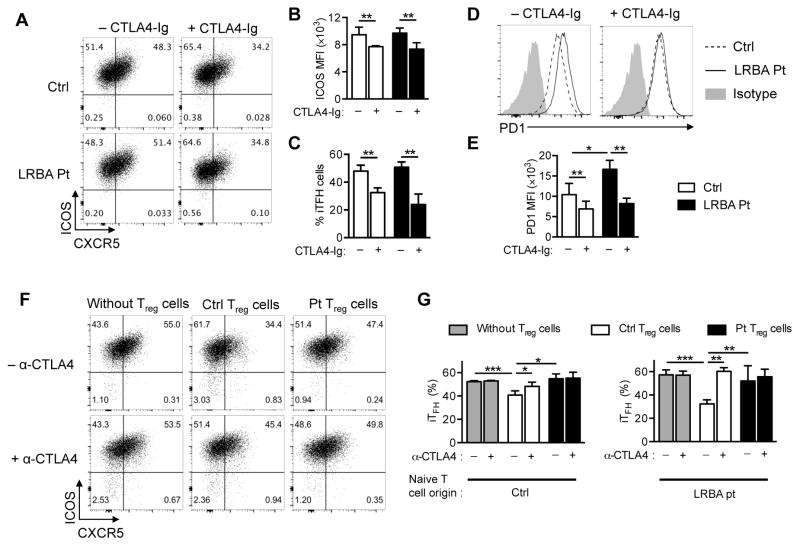
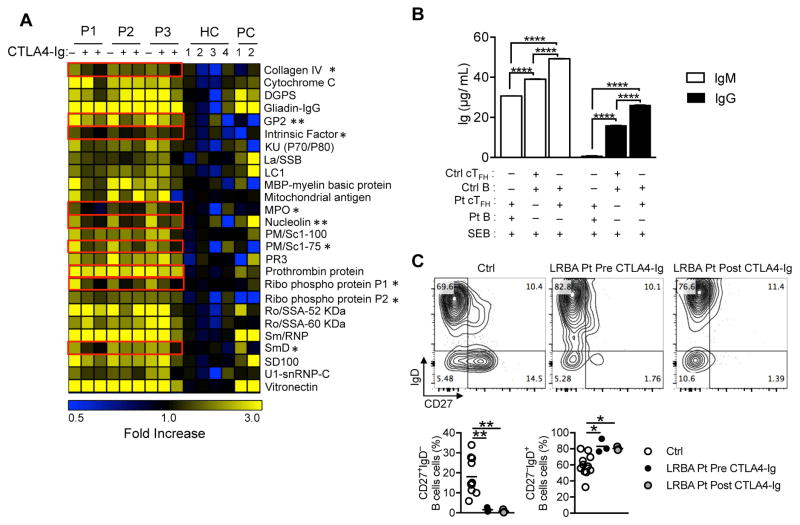
Results: cTFH cell frequencies in patients with LRBA or CTLA4 deficiency sharply decreased with CTLA4-Ig therapy in parallel with other markers of immune dysregulation, including soluble IL-2 receptor α chain, CD45RO+CD4+ effector T cells, and autoantibodies, and this was predictive of favorable clinical responses. cTFH cells in patients with LRBA deficiency were biased toward a TH1-like cell phenotype, which was partially reversed by CTLA4-Ig therapy. LRBA-sufficient but not LRBA-deficient regulatory T cells suppressed in vitro TFH cell differentiation in a CTLA4-dependent manner. LRBA-deficient TFH cells supported in vitro antibody production by naive LRBA-sufficient B cells.
Conclusions: cTFH cell dysregulation in patients with LRBA deficiency reflects impaired control of TFH cell differentiation because of profoundly decreased CTLA4 expression on regulatory T cells and probably contributes to autoimmunity in patients with this disease. Serial monitoring of cTFH cell frequencies is highly useful in gauging the clinical response of LRBA-deficient patients to CTLA4-Ig therapy.
Keywords: Autoantibodies; LPS-responsive beige-like anchor; cytotoxic T lymphocyte–associated antigen 4; follicular helper T cells; follicular regulatory T cells; regulatory T cells.
Copyright © 2017 American Academy of Allergy, Asthma & Immunology. Published by Elsevier Inc. All rights reserved.
Figures
References
-
- Vinuesa CG, Linterman MA, Yu D, MacLennan IC. Follicular Helper T Cells. Annu Rev Immunol. 2016 - PubMed
-
- He J, Tsai LM, Leong YA, Hu X, Ma CS, Chevalier N, et al. Circulating precursor CCR7(lo)PD-1(hi) CXCR5(+) CD4(+) T cells indicate Tfh cell activity and promote antibody responses upon antigen reexposure. Immunity. 2013;39:770–81. - PubMed
-
- Rolf J, Bell SE, Kovesdi D, Janas ML, Soond DR, Webb LM, et al. Phosphoinositide 3-kinase activity in T cells regulates the magnitude of the germinal center reaction. J Immunol. 2010;185:4042–52. - PubMed
Publication types
MeSH terms
Substances
Grants and funding
LinkOut - more resources
Full Text Sources
Other Literature Sources
Medical
Research Materials
Miscellaneous
