Effect of Liraglutide Treatment on Prediabetes and Overweight or Obesity in Clozapine- or Olanzapine-Treated Patients With Schizophrenia Spectrum Disorder: A Randomized Clinical Trial
- PMID: 28601891
- PMCID: PMC5710254
- DOI: 10.1001/jamapsychiatry.2017.1220
Effect of Liraglutide Treatment on Prediabetes and Overweight or Obesity in Clozapine- or Olanzapine-Treated Patients With Schizophrenia Spectrum Disorder: A Randomized Clinical Trial
Abstract
Importance: Compared with the general population, patients with schizophrenia have a 2- to 3-fold higher mortality rate primarily caused by cardiovascular disease. Previous interventions designed to counteract antipsychotic-induced weight gain and cardiometabolic disturbances reported limited effects.
Objectives: To determine the effects of the glucagon-like peptide-1 receptor agonist liraglutide added to clozapine or olanzapine treatment of schizophrenia spectrum disorders.
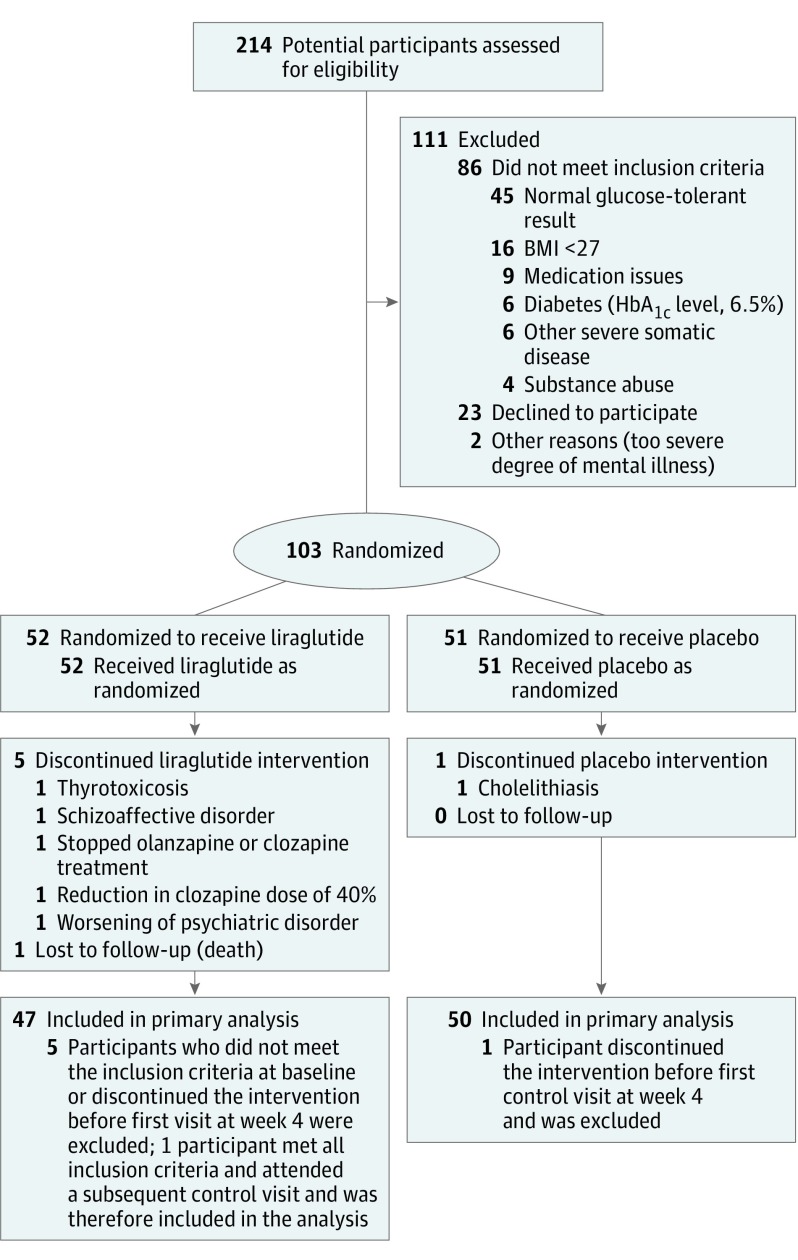
Design, setting, and participants: This randomized clinical double-blind trial enrolled participants at 2 clinical sites in Denmark. Of 214 eligible participants with a schizophrenia spectrum disorder, 103 were randomized to liraglutide or placebo. Participants received stable treatment with clozapine or olanzapine, were overweight or obese, and had prediabetes. Data were collected from May 1, 2013, through February 25, 2016.
Interventions: Treatment for 16 weeks with once-daily subcutaneous injection of liraglutide or placebo. Trial drug therapy was titrated during the first 2 weeks of the study.
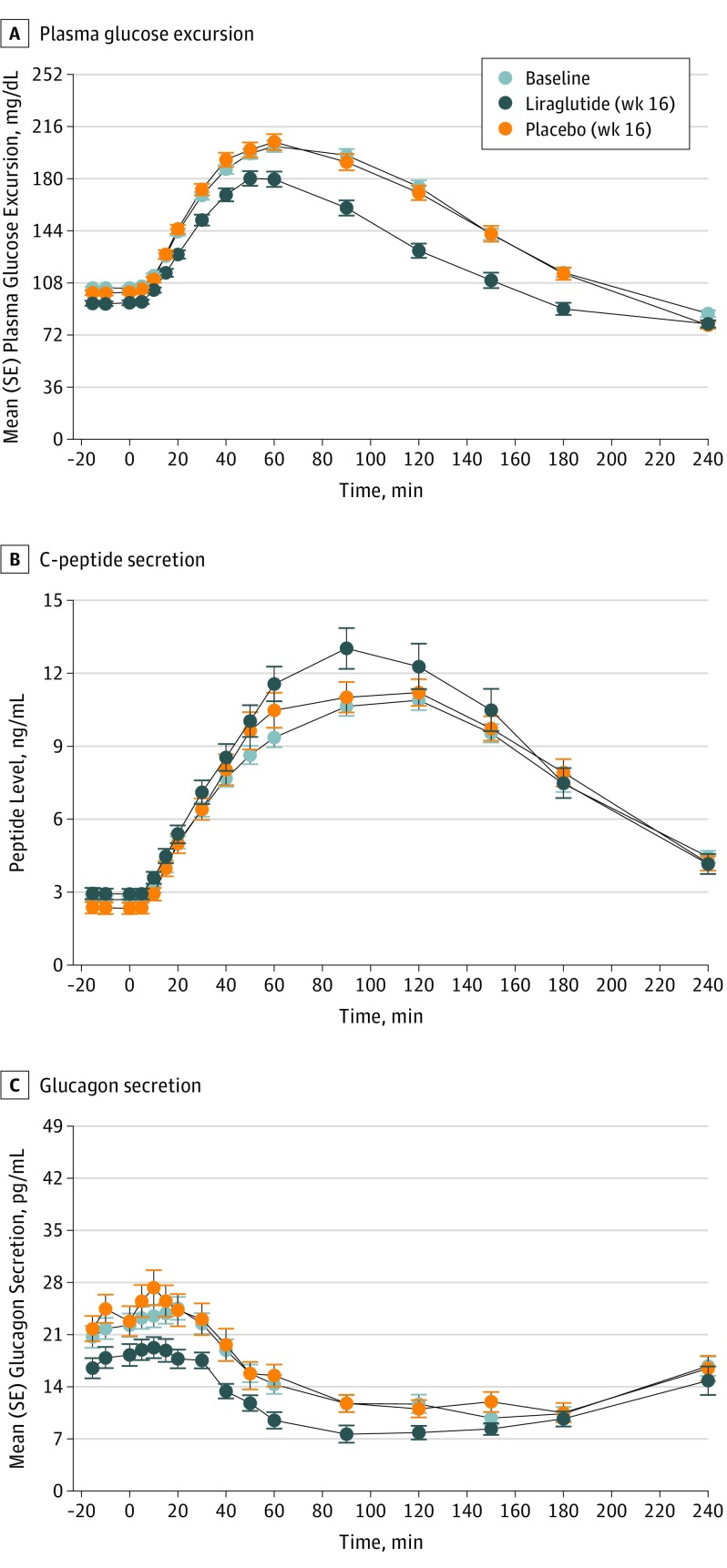
Main outcomes and measures: The primary end point was change in glucose tolerance estimated by a 75-g oral glucose tolerance test result. Secondary end points included change in body weight and cardiometabolic parameters.
Results: Of the 103 patients undergoing randomization (60 men [58.3%] and 43 women [41.7%]), 97 were included in the efficacy analysis, with a mean (SD) age of 42.5 (10.5) years and mean (SD) body mass index (calculated as weight in kilograms divided by height in meters squared) of 33.8 (5.9). The liraglutide and placebo groups had comparable characteristics (mean [SD] age, 42.1 [10.7] vs 43.0 [10.5] years; 30 men in each group; mean [SD] body mass index, 33.7 [5.1] vs 33.9 [6.6]). A total of 96 randomized participants (93.2%) completed the trial. Glucose tolerance improved in the liraglutide group compared with the placebo group (P < .001). Altogether, 30 liraglutide-treated participants (63.8%) developed normal glucose tolerance compared with 8 placebo-treated participants (16.0%) (P < .001; number needed to treat, 2). Body weight decreased with liraglutide compared with placebo (-5.3 kg; 95% CI, -7.0 to -3.7 kg). Reductions in waist circumference (-4.1 cm; 95% CI, -6.0 to -2.3 cm), systolic blood pressure (-4.9 mm Hg; 95% CI, -9.5 to -0.3 mm Hg), visceral fat (-250.19 g; 95% CI, -459.9 to -40.5 g), and low-density lipoprotein levels (-15.4 mg/dL; 95% CI, -23.2 to -7.7 mg/dL) occurred with liraglutide compared with placebo. Adverse events with liraglutide affected mainly the gastrointestinal tract.
Conclusions and relevance: Liraglutide significantly improved glucose tolerance, body weight, and cardiometabolic disturbances in patients with schizophrenia spectrum disorders treated with clozapine or olanzapine.
Trial registration: clinicaltrials.gov Identifier: NCT01845259.
Conflict of interest statement
Figures
Comment in
-
Liraglutide for the Treatment of Antipsychotic Drug-Induced Weight Gain.JAMA Psychiatry. 2017 Nov 1;74(11):1172-1173. doi: 10.1001/jamapsychiatry.2017.3053. JAMA Psychiatry. 2017. PMID: 28973118 No abstract available.
References
-
- Saha S, Chant D, McGrath J. A systematic review of mortality in schizophrenia: is the differential mortality gap worsening over time? Arch Gen Psychiatry. 2007;64(10):1123-1131. - PubMed
-
- Laursen TM, Munk-Olsen T, Vestergaard M. Life expectancy and cardiovascular mortality in persons with schizophrenia. Curr Opin Psychiatry. 2012;25(2):83-88. - PubMed
-
- Hennekens CH, Hennekens AR, Hollar D, Casey DE. Schizophrenia and increased risks of cardiovascular disease. Am Heart J. 2005;150(6):1115-1121. - PubMed
-
- Henderson DC, Vincenzi B, Andrea NV, Ulloa M, Copeland PM. Pathophysiological mechanisms of increased cardiometabolic risk in people with schizophrenia and other severe mental illnesses. Lancet Psychiatry. 2015;2(5):452-464. - PubMed
Publication types
MeSH terms
Substances
Associated data
LinkOut - more resources
Full Text Sources
Other Literature Sources
Medical