


Examining the effect of peer helping in a coping skills intervention: a randomized controlled trial for advanced gastrointestinal cancer patients and their family caregivers
- PMID: 28601957
- PMCID: PMC5723567
- DOI: 10.1007/s11136-017-1620-7
Examining the effect of peer helping in a coping skills intervention: a randomized controlled trial for advanced gastrointestinal cancer patients and their family caregivers
Abstract
Purpose: At the end of life, spiritual well-being is a central aspect of quality of life for many patients and their family caregivers. A prevalent spiritual value in advanced cancer patients is the need to actively give. To address this need, the current randomized trial examined whether adding a peer helping component to a coping skills intervention leads to improved meaning in life and peace for advanced gastrointestinal cancer patients and their caregivers. Feasibility and acceptability outcomes were also assessed.
Methods: Advanced gastrointestinal cancer patients and caregivers (n = 50 dyads) were randomly assigned to a 5-session, telephone-based coping skills intervention or a peer helping + coping skills intervention. One or both dyad members had moderate-severe distress. Peer helping involved contributing to handouts on coping skills for other families coping with cancer. Patients and caregivers completed measures of meaning in life/peace, fatigue, psychological symptoms, coping self-efficacy, and emotional support. Patient pain and caregiver burden were also assessed.
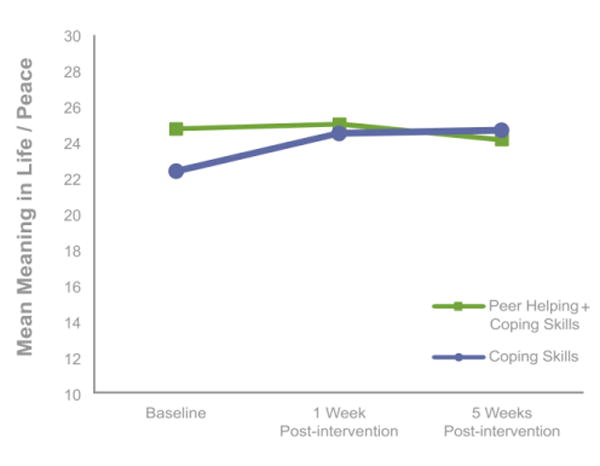
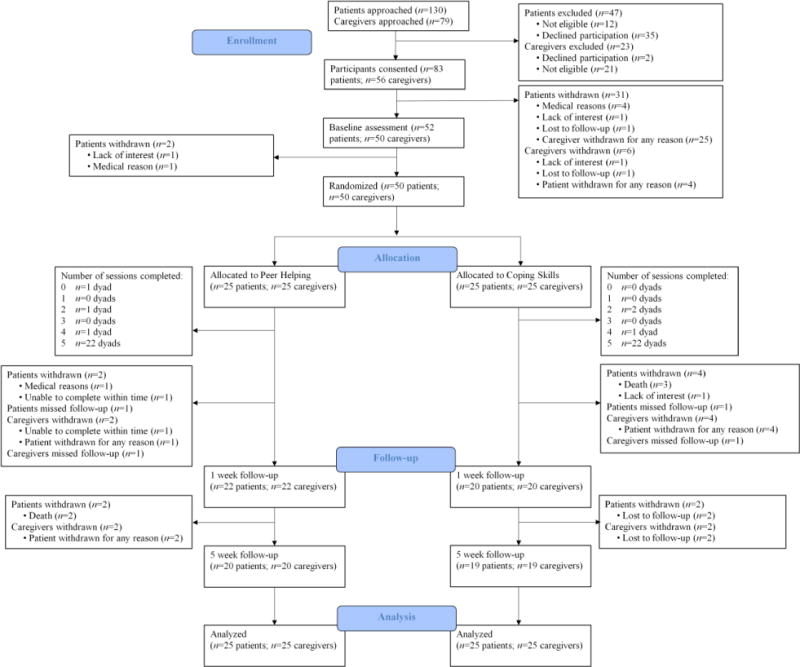
Results: Small effects in favor of the coping skills group were found regarding meaning in life/peace at 1 and 5 weeks post-intervention. Other outcomes did not vary as a function of group assignment, with both groups showing small decreases in patient and caregiver fatigue and caregiver distress and burden. High recruitment and retention rates supported feasibility, and high participant satisfaction ratings supported acceptability.
Conclusions: Although a telephone-based intervention is feasible and acceptable for this population, peer helping in the context of a coping skills intervention does not enhance spiritual well-being relative to coping skills alone.
Keywords: Distress; Family caregivers; Gastrointestinal cancer; Peer helping; Psychosocial interventions; Spiritual well-being.
Conflict of interest statement
Figures
References
-
- Kim Y, Carver CS, Spillers RL, Crammer C, Zhou ES. Individual and dyadic relations between spiritual well-being and quality of life among cancer survivors and their spousal caregivers. Psycho-Oncology. 2011;20(7):762–770. - PubMed
-
- Colgrove LA, Kim Y, Thompson N. The effect of spirituality and gender on the quality of life of spousal caregivers of cancer survivors. Annals of Behavioral Medicine. 2007;33(1):90–98. - PubMed
-
- Hocker A, Krull A, Koch U, Mehnert A. Exploring spiritual needs and their associated factors in an urban sample of early and advanced cancer patients. European Journal of Cancer Care. 2014;23(6):786–794. - PubMed
-
- Lo C, Zimmermann C, Gagliese L, Li M, Rodin G. Sources of spiritual well-being in advanced cancer. BMJ Supportive and Palliative Care. 2011;1(2):149–153. - PubMed
Publication types
MeSH terms
Grants and funding
LinkOut - more resources
Full Text Sources
Other Literature Sources
