Effects of exercise training on nitric oxide, blood pressure and antioxidant enzymes
- PMID: 28603344
- PMCID: PMC5463976
- DOI: 10.3164/jcbn.16-108
Effects of exercise training on nitric oxide, blood pressure and antioxidant enzymes
Abstract
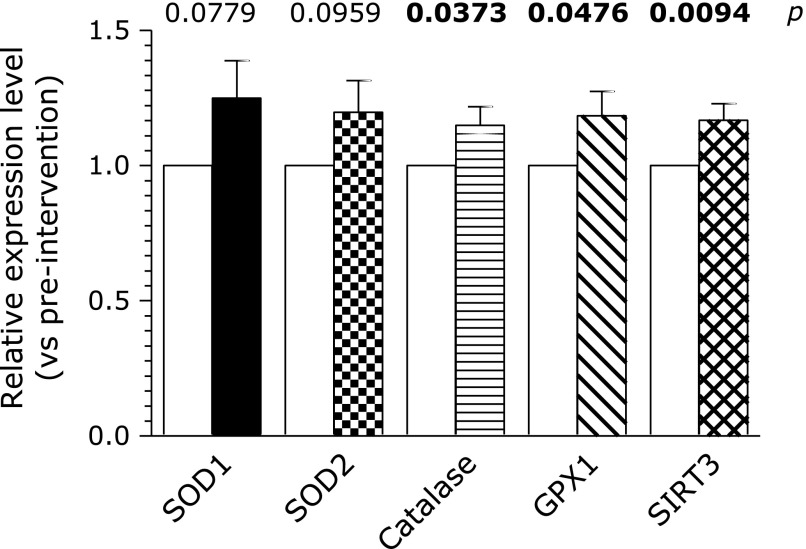
The relationship between exercise training and nitric oxide-related parameters was examined in a cross-sectional study and an intervention study. A cross-sectional study using 184 employees was conducted to observe the association of exercise habits with serum arginase (ELISA and activity), l-arginine, l-citrulline, l-ornithine, NOx, exhaled nitric oxide, blood pressure, FEV1%, hs-CRP, HDL-cholesterol, IgE, and life style factors. An intervention study was also conducted to evaluate the changes of serum arginase I, nitric oxide-related parameters, and mRNA levels of anti-oxidant enzymes in blood monocytes before and after 1 h of aerobic exercise training per day for a month. Exercise habits were associated with increased arginase activity and a moderate alcohol drinking habit, after adjustment with several covariates. Aerobic exercise training induced a decrease in l-arginine and diastolic blood pressure and induced an increase in NO2- and urea. Moreover, mRNA expression of anti-oxidant enzymes, such as catalase and GPX1, and a life elongation enzyme, SIRT3, were significantly increased after aerobic exercise. The results that aerobic exercise training increased NO generation, reduced blood pressure, and induced anti-oxidant enzymes via SIRT3 suggest that exercise training may be an important factor for the prevention of disease by inducing intrinsic NO and anti-oxidant enzymes.
Keywords: blood pressure; exercise; intervention research; l-arginine; nitric oxide.
Conflict of interest statement
No potential conflicts of interest were disclosed.
Figures
References
-
- Cornelissen VA, Verheyden B, Aubert AE, Fagard RH. Effects of aerobic training intensity on resting, exercise and post-exercise blood pressure, heart rate and heart-rate variability. J Hum Hypertens. 2010;24:175–182. - PubMed
-
- Duncan JJ, Farr JE, Upton SJ, Hagan RD, Oglesby ME, Blair SN. The effects of aerobic exercise on plasma catecholamines and blood pressure in patients with mild essential hypertension. JAMA. 1985;254:2609–2613. - PubMed
-
- Nelson L, Jennings GL, Esler MD, Korner PI. Effect of changing levels of physical activity on blood-pressure and haemodynamics in essential hypertension. Lancet. 1986;2:473–476. - PubMed
-
- Martinez DG, Nicolau JC, Lage RL, et al. Effect of long-term exercise training on autonomic control in myocardial infarction patients. Hypertension. 2011;58:1049–1056. - PubMed
LinkOut - more resources
Full Text Sources
Other Literature Sources
Research Materials
Miscellaneous