


Hypertension and Risk of Post-Operative Cognitive Dysfunction (POCD): A Systematic Review and Meta-Analysis
- PMID: 28603544
- PMCID: PMC5447947
- DOI: 10.2174/1745017901713010027
Hypertension and Risk of Post-Operative Cognitive Dysfunction (POCD): A Systematic Review and Meta-Analysis
Abstract
Background: Post-operative cognitive dysfunction (POCD) occurs frequently after major surgery. Hypertension is well-established as a risk factor for age-related cognitive impairment, but it is unclear whether or not it also increases the risk of POCD.
Objective: To evaluate the role of hypertension in POCD risk in a systematic review and meta-analysis.
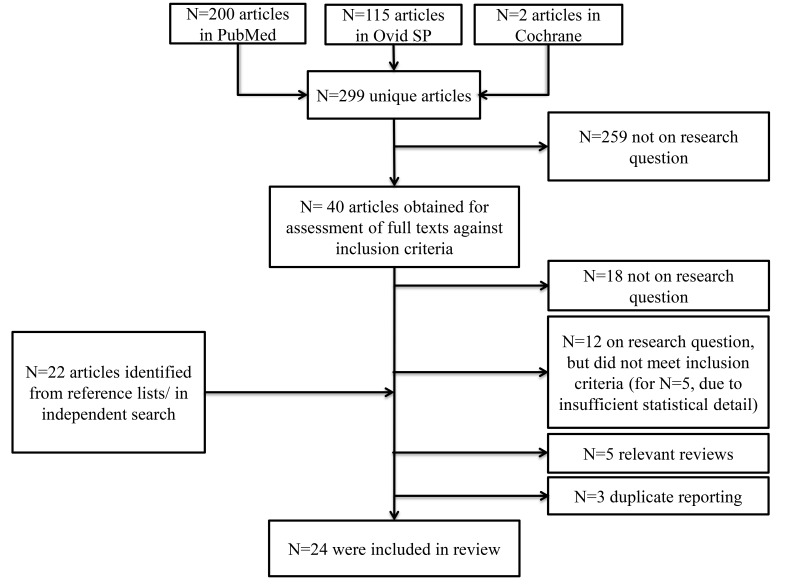
Method: PubMed, Ovid SP and the Cochrane Database of Systematic Reviews were searched for longitudinal studies of adults undergoing surgery with reporting of hypertension, blood pressure and/or anti-hypertensive treatment associations with POCD as relative risks or odds ratios. Fixed-effects meta-analyses were performed using Review Manager (version 5.3).
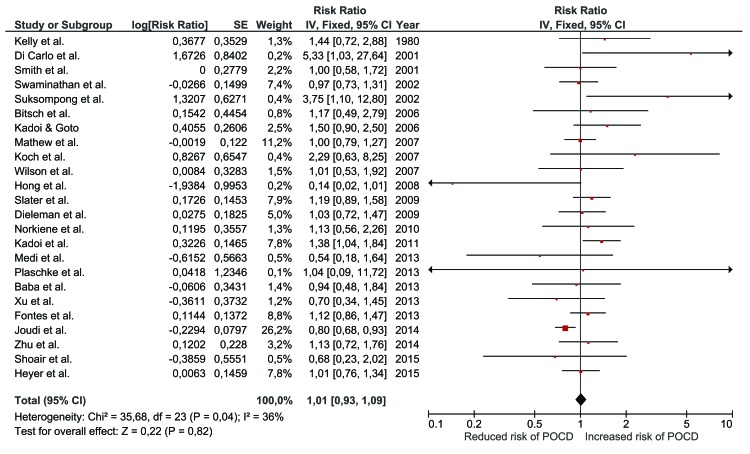
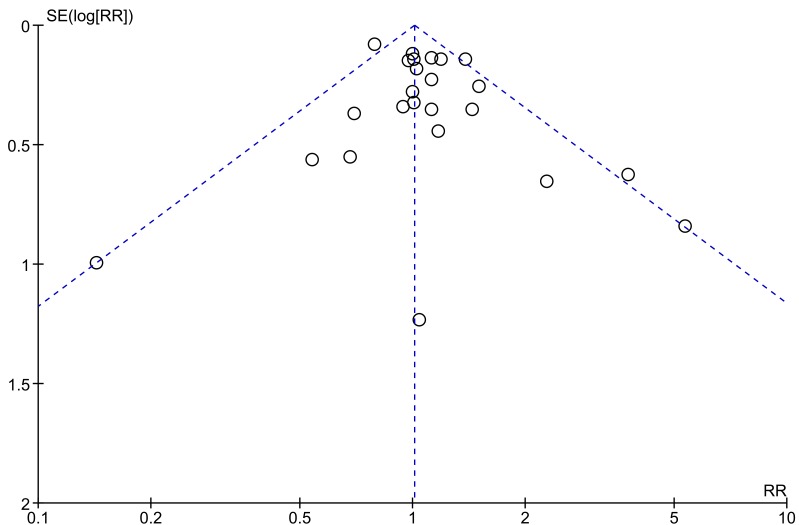
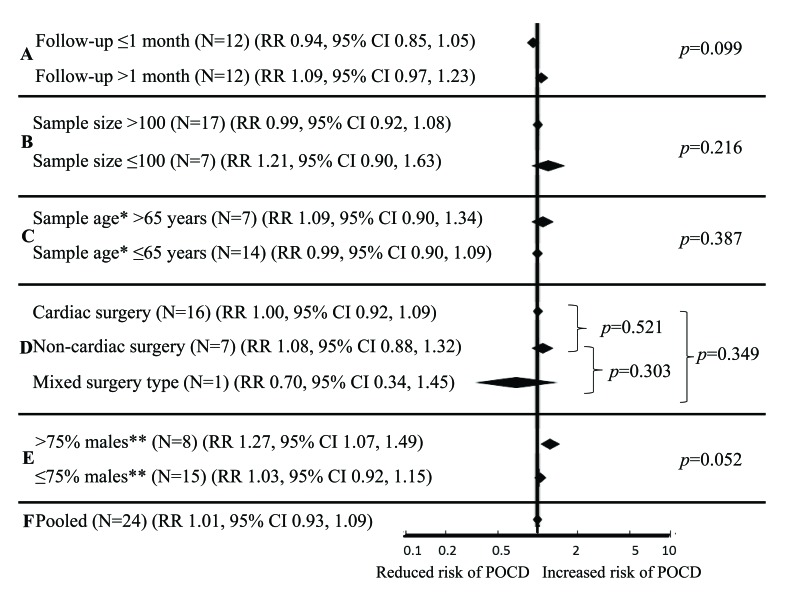
Results: Twenty-four studies on 4317 patients (mean age 63 years) were included. None of the studies had set out to assess hypertension as a risk factor for POCD. Hypertension was used as a categorical predictor throughout and only 2 studies adjusted for potential confounders. Across all 24 studies, hypertension was not significantly associated with POCD risk (RR 1.01; 95% CI 0.93, 1.09; p=0.82), though among 8 studies with >75% males, we found hypertension associations with a 27% increased risk of POCD (RR 1.27, 95% CI 1.07, 1.49; p=0.005).
Conclusion: Our findings do not support the hypothesis that hypertension is a risk factor for POCD. However, since none of the studies included in our analysis were hypothesis-driven and most did not adjust for potential confounders, further systematic investigations are needed to evaluate the role of hypertension in the epidemiology of POCD.
Keywords: Blood pressure; Cognitive epidemiology; Hypertension; Meta-Analysis; POCD; Post-operative cognitive dysfunction.
References
-
- Evered L.A., Silbert B., Scott D.A. The impact of peri-operative period on cognition in older individuals. J Pharm Practice Res. 2015;45:93–99. doi: 10.1002/jppr.1069. - DOI
-
- Funder K.S., Steinmetz J., Rasmussen L.S. Cognitive dysfunction after cardiovascular surgery. Minerva Anestesiol. 2009;75(5):329–332. - PubMed
LinkOut - more resources
Full Text Sources
Other Literature Sources