


Botulism mortality in the USA, 1975-2009
- PMID: 28603554
- PMCID: PMC5460764
- DOI: 10.1504/TBJ.2015.078132
Botulism mortality in the USA, 1975-2009
Abstract
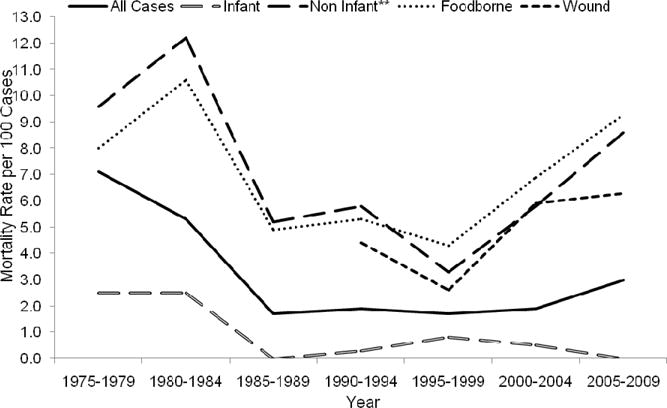
Botulism had mortality rates >60% before the 1950s. We reviewed confirmed botulism cases in the USA during 1975-2009 including infant, foodborne, wound, and other/unknown acquisition categories, and calculated mortality ratios. We created a multivariate logistic regression model for non-infant cases (foodborne, wound, and other/unknown). Overall mortality was 3.0% with 109 botulism-related deaths among 3,618 botulism cases [18 (<1%) deaths among 2,352 infant botulism cases, 61 (7.1%) deaths among 854 foodborne botulism cases, 18 (5.0%) deaths among 359 wound botulism cases, and 12 (22.6%) deaths among 53 other/unknown botulism cases]. Mortality among all cases increased with age; it was lowest among infants (0.8%) and highest among persons ≥80 years old (34.4%). Toxin type F had higher mortality (13.8%) than types A, B, or E (range, 1.4% to 4.1%). Efforts to reduce botulism mortality should target non-infant transmission categories and older adults.
Keywords: USA; age groups; botulism; food; infant; mortality.
Figures
References
-
- Armada M, Love S, et al. Foodborne botulism in a six-month-old infant caused by home-canned baby food. Annals of Emergency Medicine. 2003;42(2):226–229. - PubMed
-
- Centers for Disease Control and Prevention. Handbook for Epidemiologists, Clinicians, and Laboratory Workers. CDC; Atlanta: 1998. Botulism in the United States, 1899–1996. [online] http://www.cdc.gov/ncidod/dbmd/diseaseinfo/files/botulism_manual.htm (accessed 21 December 2012)
-
- Centers for Disease Control and Prevention. Investigational heptavalent botulinum antitoxin (HBAT) to replace licensed botulinum antitoxin AB and investigational botulinum antitoxin E. Morbitidy and Mortality Weekly Report. 2010;59(10):299. - PubMed
-
- Centers for Disease Control and Prevention. Nationally Notifiable Diseases Surveillance System (NNDSS): Botulism [online] 2012 http://wwwn.cdc.gov/NNDSS/script/conditionsummary.aspx?CondID=25 (accessed 28 January 2012)
-
- Chertow D, Tan E, et al. Botulism in four adults following cosmetic injections with an unlicensed, highly concentrated botulinum preparation. The Journal of the American Medical Association. 2006;296(20):2476–2479. - PubMed
Grants and funding
LinkOut - more resources
Full Text Sources