


Selectively Distracted: Divided Attention and Memory for Important Information
- PMID: 28604267
- PMCID: PMC5546942
- DOI: 10.1177/0956797617702502
Selectively Distracted: Divided Attention and Memory for Important Information
Erratum in
-
Corrigendum: Selectively Distracted: Divided Attention and Memory for Important Information.Psychol Sci. 2020 Jul;31(7):902-904. doi: 10.1177/0956797620937679. Epub 2020 Jun 29. Psychol Sci. 2020. PMID: 32597370 Free PMC article. No abstract available.
Abstract
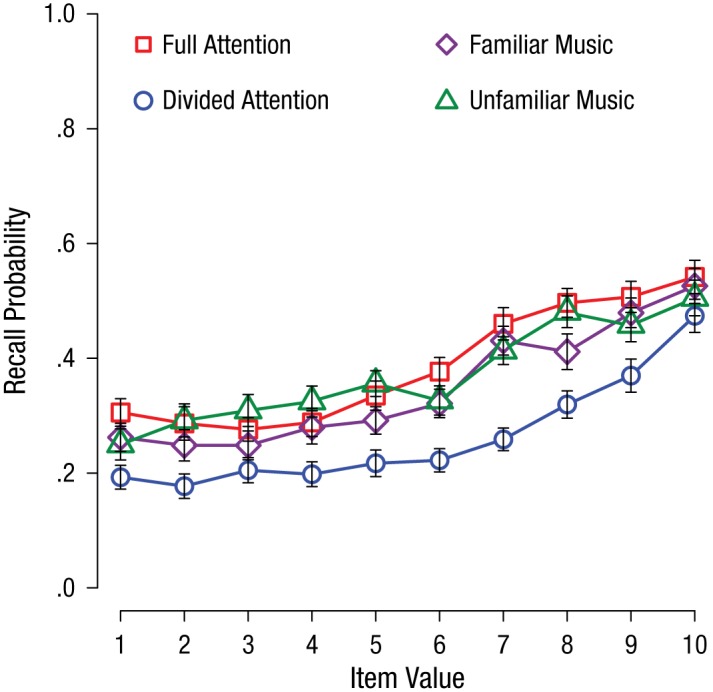
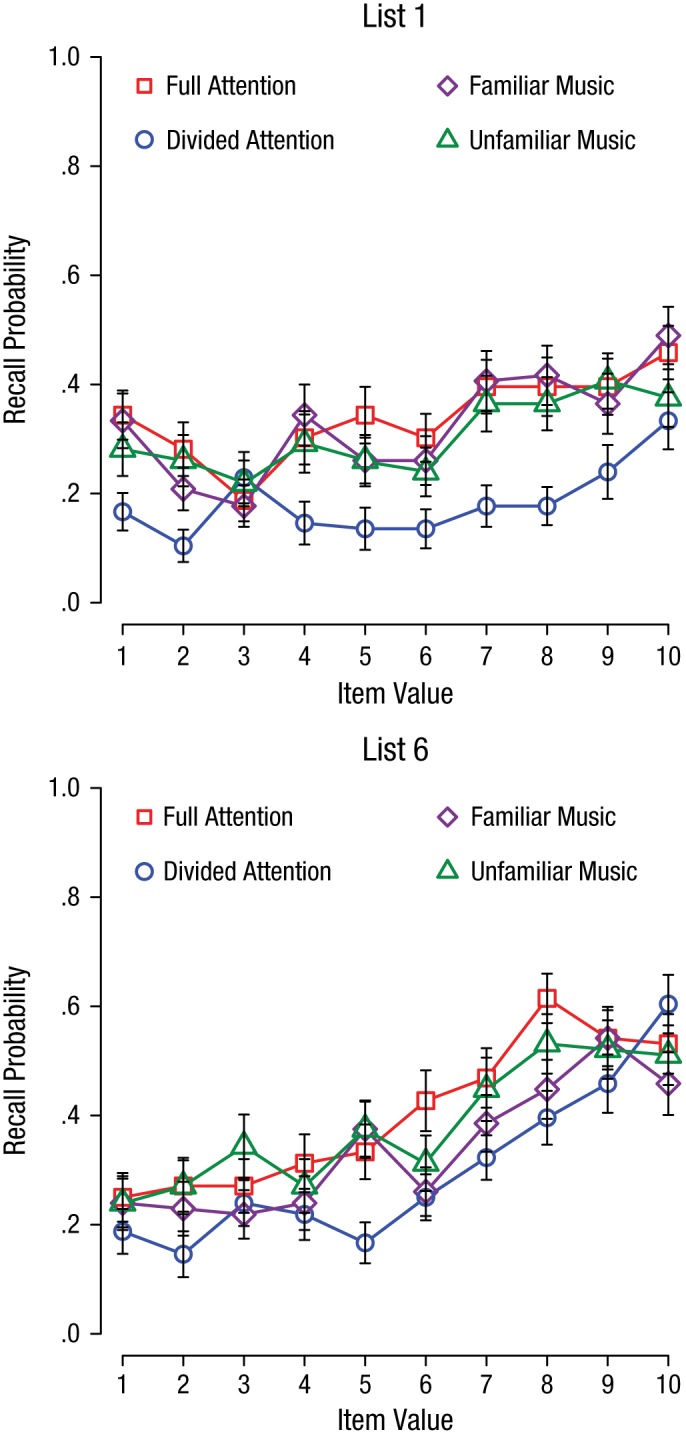
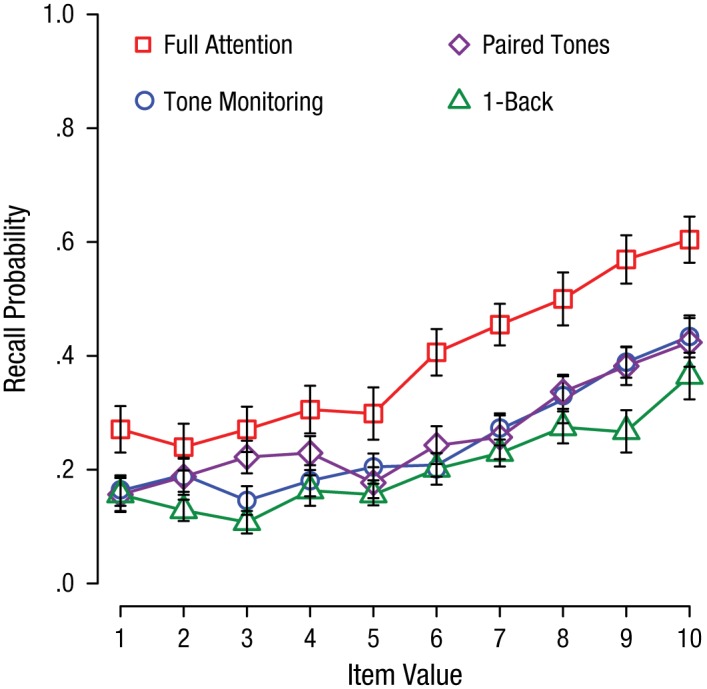
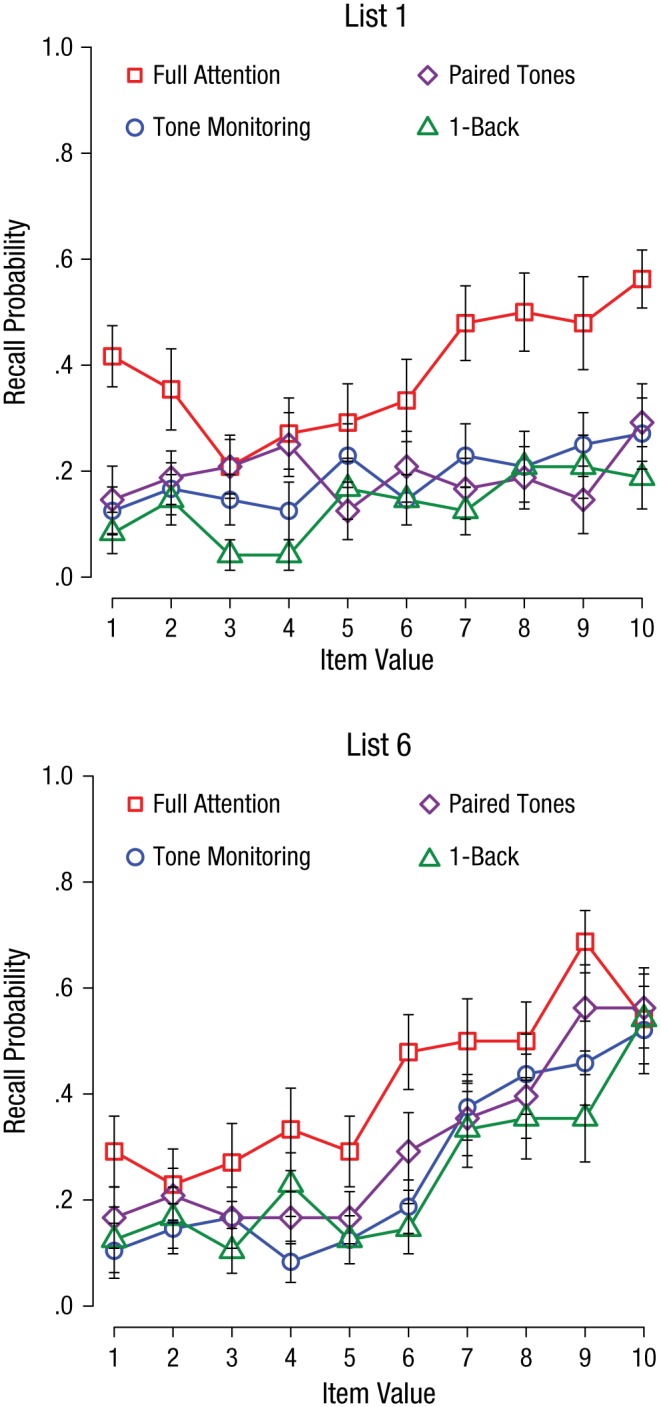
Distractions and multitasking are generally detrimental to learning and memory. Nevertheless, people often study while listening to music, sitting in noisy coffee shops, or intermittently checking their e-mail. The current experiments examined how distractions and divided attention influence one's ability to selectively remember valuable information. Participants studied lists of words that ranged in value from 1 to 10 points while completing a digit-detection task, while listening to music, or without distractions. Though participants recalled fewer words following digit detection than in the other conditions, there were no significant differences between conditions in terms of selectively remembering the most valuable words. Similar results were obtained across a variety of divided-attention tasks that stressed attention and working memory to different degrees, which suggests that people may compensate for divided-attention costs by selectively attending to the most valuable items and that factors that worsen memory do not necessarily impair the ability to selectively remember important information.
Keywords: distractions; divided attention; memory; selectivity; value-directed remembering.
Conflict of interest statement
Figures
References
-
- Anderson N. D., Iidaka T., Cabeza R., Kapur S., McIntosh A. R., Craik F. I. M. (2000). The effects of divided attention on encoding- and retrieval-related brain activity: A PET study of younger and older adults. Journal of Cognitive Neuroscience, 12, 775–792. doi: 10.1162/089892900562598 - DOI - PubMed
-
- Calderwood C., Ackerman P. L., Conklin E. M. (2014). What else do college students “do” while studying? An investigation of multitasking. Computers & Education, 75, 19–29. doi: 10.1016/j.compedu.2014.02.004 - DOI
MeSH terms
Grants and funding
LinkOut - more resources
Full Text Sources
Other Literature Sources
