


Private-well stewardship among a general population based sample of private well-owners
- PMID: 28605871
- PMCID: PMC5662198
- DOI: 10.1016/j.scitotenv.2017.05.284
Private-well stewardship among a general population based sample of private well-owners
Abstract
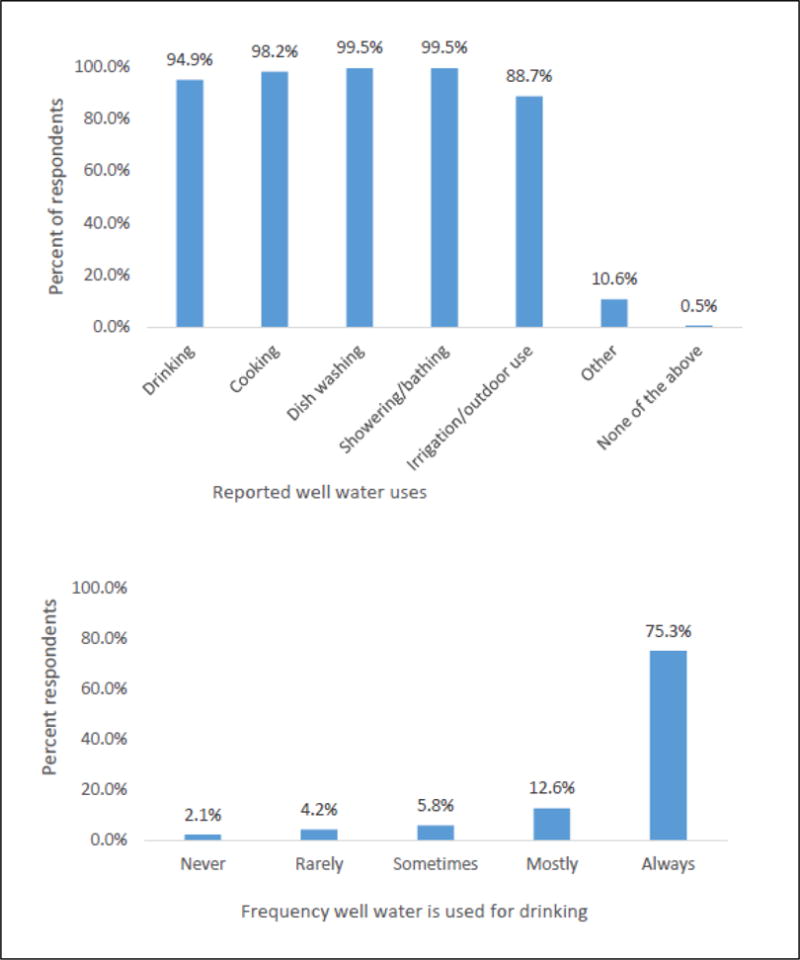
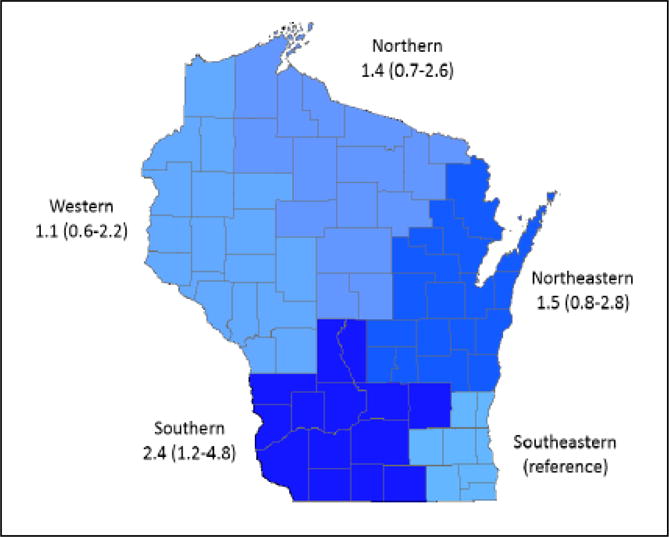
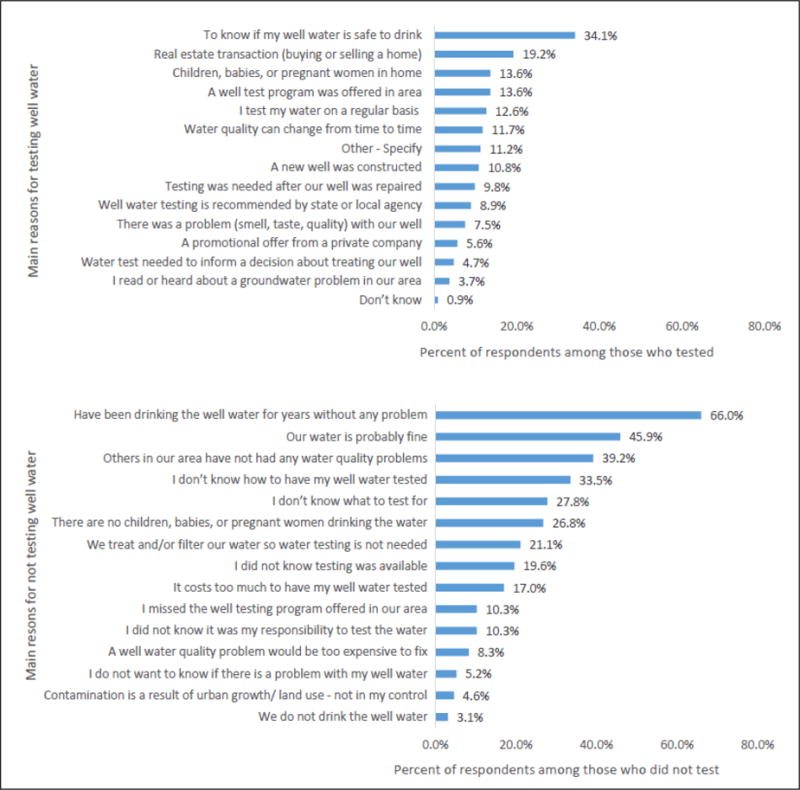
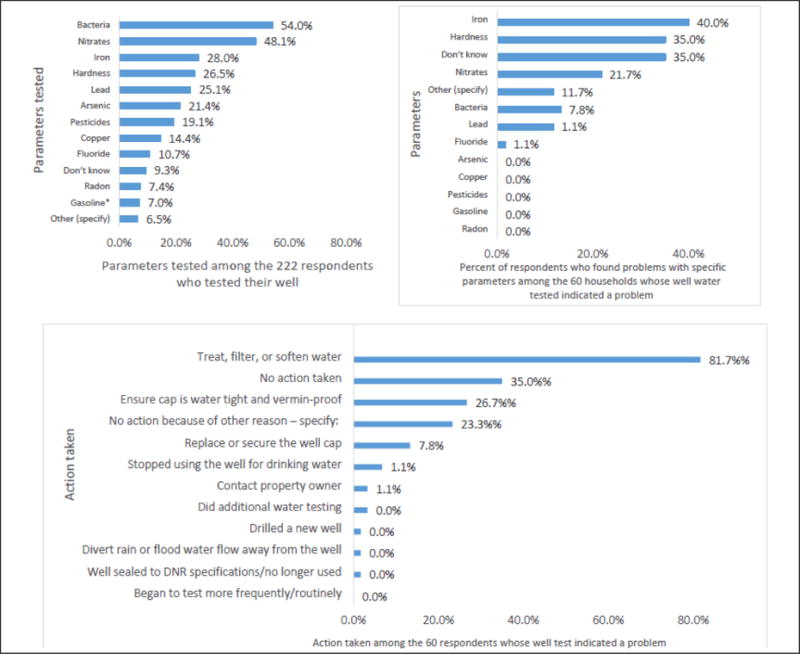
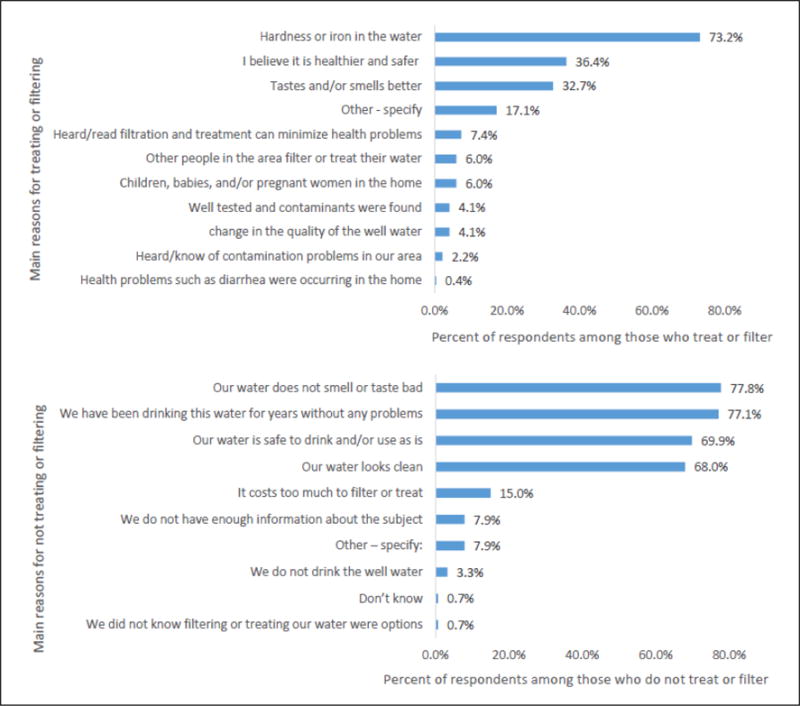
Private well stewardship, including on-going testing and treatment, can ensure private well users are able to maintain source-water quality and prevent exposures to potentially harmful constituents in primary drinking water supplies. Unlike municipal water supplies, private well users are largely responsible for their own testing and treatment and well stewardship is often minimal. The importance of factors influencing regular testing, and treatment behaviors, including knowledge, risk perception, convenience and social norms, can vary by geography and population characteristics. The primary goals of this study were to survey a general statewide population of private well users in Wisconsin in order to quantify testing and treatment patterns and gather data on motivations and barriers to well stewardship. The majority of respondents reported using and drinking well water daily but only about one half of respondents reported testing their wells in the last ten years and of these, only 10% reported testing in the last 12months. Bacteria and nitrates were contaminants most often tested; and, a private laboratory most often conducted testing. The most commonly reported water treatment was a water softener. Living in a particular geographic region and income were the most significant predictors of water testing and treatment. Iron and hardness, which influence water aesthetics but not always safety, were the most commonly reported water quality problems. Health concerns or perceived lack thereof were, respectively, motivators and barriers to testing and treatment. Limited knowledge of testing and treatment options were also identified as barriers. Results confirm previous findings that well stewardship practices are minimal and often context specific. Understanding the target population's perceptions of risk and knowledge are important elements to consider in identifying vulnerable populations and developing education and policy efforts to improve well stewardship.
Keywords: Prevention; Private well; SHOW; Testing; Treatment; Well stewardship.
Copyright © 2017 Elsevier B.V. All rights reserved.
Figures
References
-
- Bureau, U. S. C. American Housing Survey for the United States: 2007. U.S. Government Printing Office; Washington, D.C: 2008.
-
- Desimone LA, National Water-Quality Assessment Program (U.S.) Quality of water from domestic wells in principal aquifers of the United States, 1991–2004. U.S Dept of the Interior, U.S. Geological Survey; Reston, Va: 2009. p. xi, 127.
-
- Fox MA, Nachman KE, Anderson B, Lam J, Resnick B. Meeting the public health challenge of protecting private wells: Proceedings and recommendations from an expert panel workshop. The Science of the total environment. 2016;554–555:113–8. - PubMed
-
- Frederick L, VanDerslice J, Taddie M, Malecki K, Gregg J, Faust N, Johnson WP. Contrasting regional and national mechanisms for predicting elevated arsenic in private wells across the United States using classification and regression trees. Water research. 2016;91:295–304. - PubMed
-
- Resources, W. D. o. N. Wells. http://dnr.wi.gov/topic/wells/ (5/5/2017)
MeSH terms
Grants and funding
LinkOut - more resources
Full Text Sources
Other Literature Sources
