


Recent Advances in Pathophysiology of Traumatic Brain Injury
- PMID: 28606040
- PMCID: PMC6142406
- DOI: 10.2174/1570159X15666170613083606
Recent Advances in Pathophysiology of Traumatic Brain Injury
Abstract
Background: Traumatic brain injury (TBI) constitutes the primary reason for mortality and morbidity in persons worldwide below 45 years of age. 1.7 million Traumatic events occur yearly in the United States alone, considering for 50,000 deaths. In severe traumatic brain injury sufferers, a considerable achievement attained in treating short-term consequences; but till date, huge failures are occurring in researcher's capability to render severe traumatic brain injury sufferers to an elevated degree of performing.
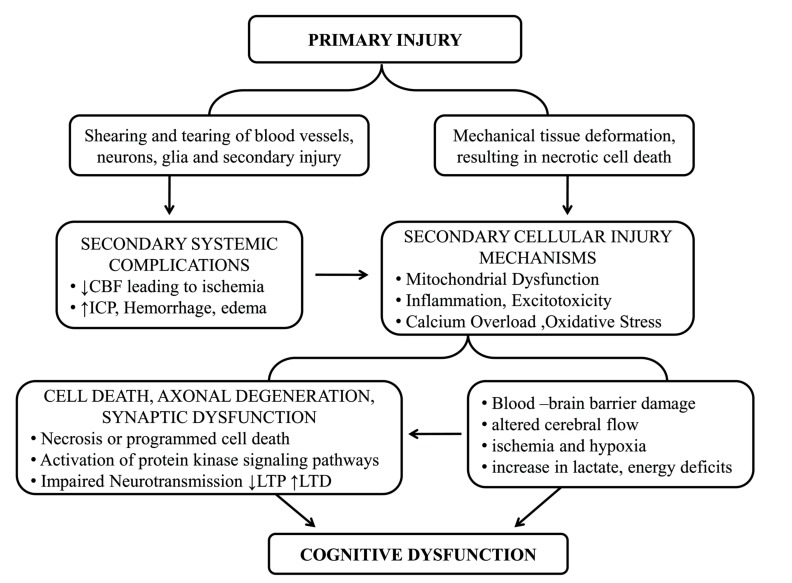
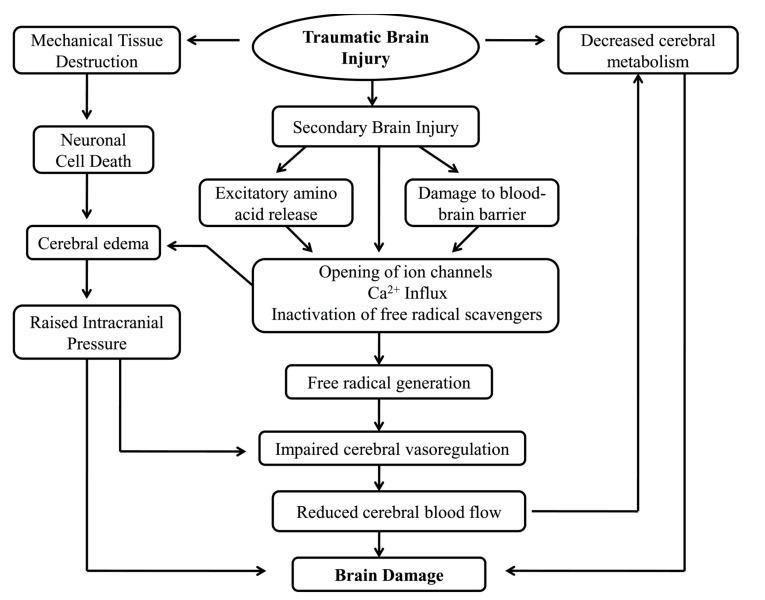
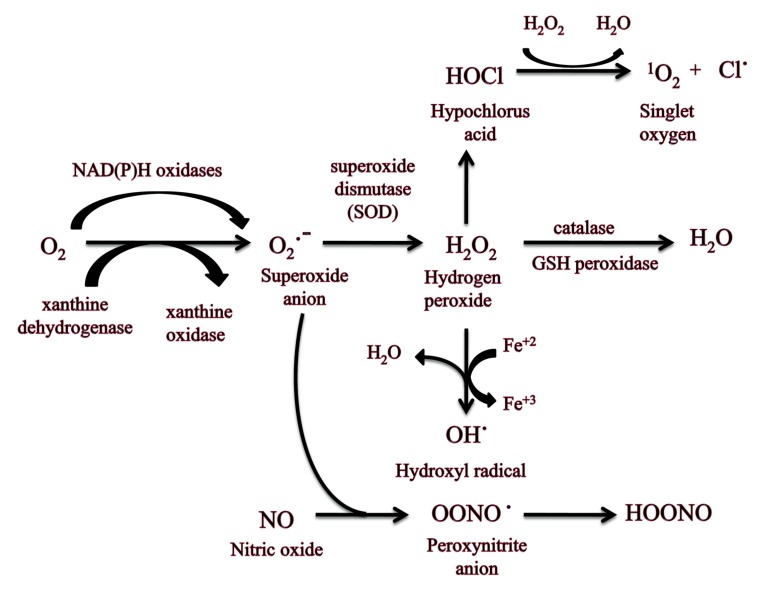
Methods: Initial damage force results in Primary brain injury, causing tissue destruction and distortion in the early post-injury period. These secondary injuries from TBI cause changes in cell performance and dissemination of trauma via activities like free-radical generation, depolarization, and formation of edema, excitotoxicity, and disruption of blood brain barrier, calcium homeostasis, and intracranial hematoma. The expectation for developing effect in TBI sufferers is the best knowledge of these activities and enhancement of remedies that restrict secondary brain damage.
Results: The focal point of this study is on knowing the complex outburst of secondary impairments and studying the pathophysiology of TBI which provides alternative treatment benefits.
Conclusion: While injured persons demonstrate dissimilar levels of harm and every case is novel with specific recovery profiles, this article strengthens the recent pathophysiological sight of TBI mainly attention on oxidative stress, excitotoxicity, cerebral oxygenation and cerebral blood flow (CBF), development of edema, and inflammatory activities. For initial research acknowledgment of these recurring factors could permit clarification of possible beneficial targets.
Keywords: Traumatic brain injury; excitotoxicity; inflammation; oxidative stress; primary brain injury; secondary injury..
Copyright© Bentham Science Publishers; For any queries, please email at epub@benthamscience.org.
Figures
References
-
- Langlois J.A., Rutland-Brown W., Wald M.M. The epidemiology and impact of traumatic brain injury: a brief overview. J. Head Trauma Rehabil. 2006;21(5):375–378. [http://dx.doi.org/10.1097/ 00001199-200609000-00001]. [PMID: 16983222]. - PubMed
-
- Thurman D. Traumatic Brain Injury in the United States: A Report to Congress. Centers for Disease Control and Prevention; 1999.
-
- Freire M.A. Pathophysiology of neurodegeneration following traumatic brain injury. West Indian Med. J. 2012;61(7):751–755. [PMID: 23620976]. - PubMed
-
- Thurman D.J., Alverson C., Browne D., Dunn K.A., Guerrero J., Johnson R., Johnson V., Langlois J., Pilkey D., Sniezek J.E.
-
- Nolan S. Traumatic brain injury: a review. Crit. Care Nurs. Q. 2005;28(2):188–194. [http://dx.doi.org/10.1097/00002727-200504000-00010]. [PMID: 15875448]. - PubMed
Publication types
MeSH terms
LinkOut - more resources
Full Text Sources
Other Literature Sources
Medical