


Immediate Regrafting of the Split Thickness Skin Graft Donor Site Assists Healing
- PMID: 28607863
- PMCID: PMC5459646
- DOI: 10.1097/GOX.0000000000001339
Immediate Regrafting of the Split Thickness Skin Graft Donor Site Assists Healing
Abstract
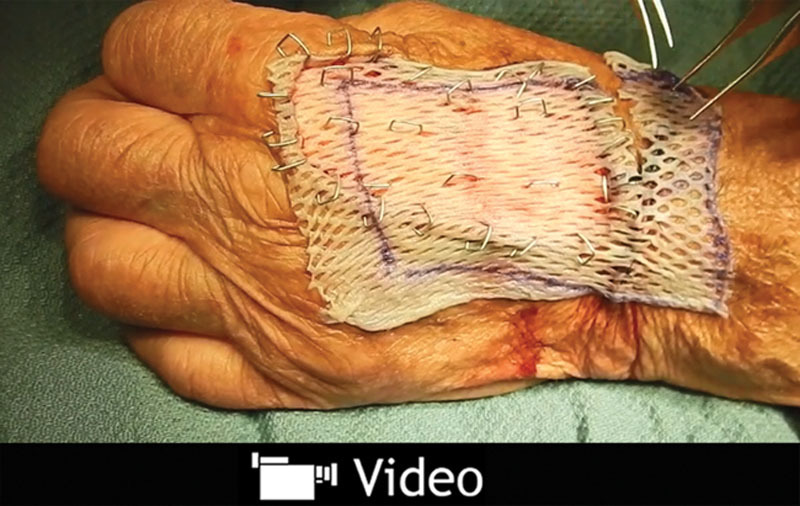
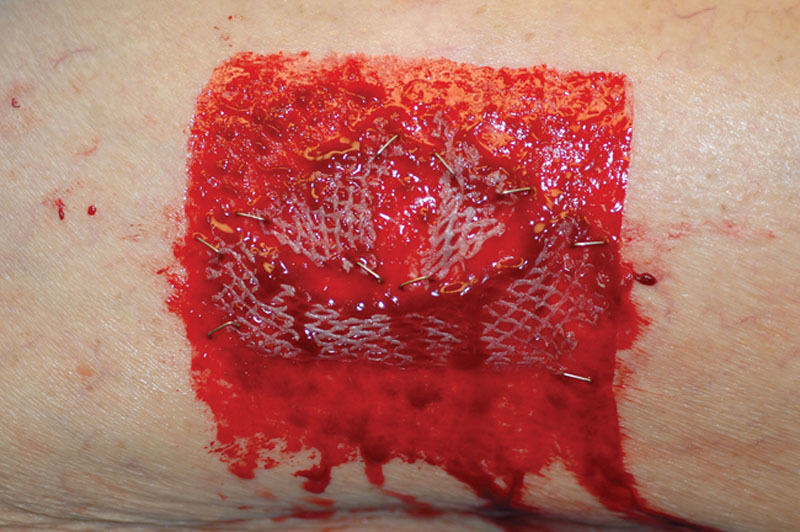
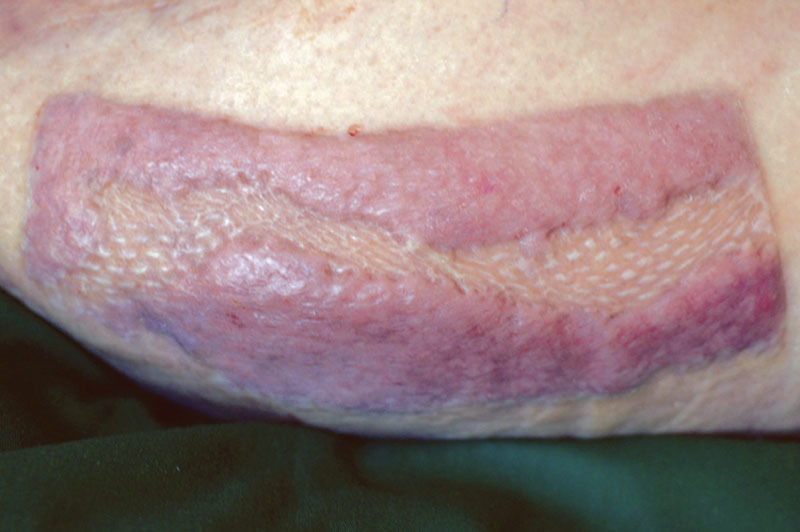
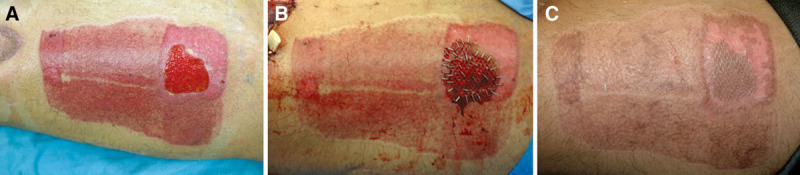
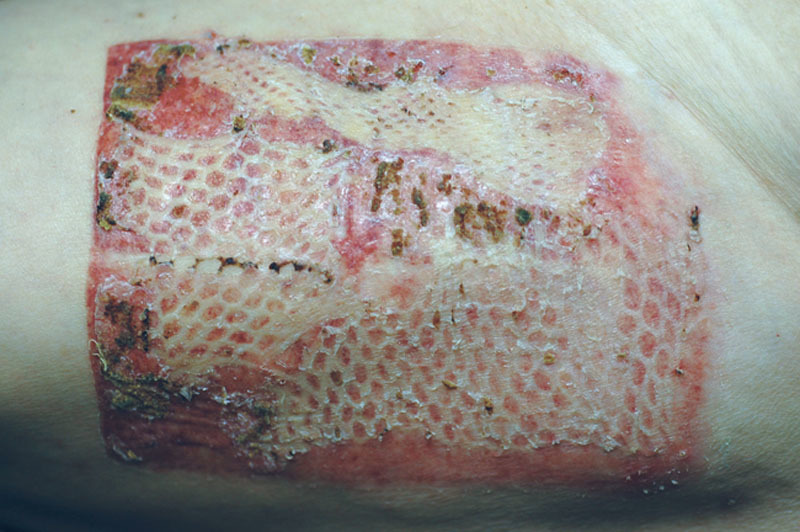
Background: Delayed or even lack of healing of a split-thickness skin graft (STSG) donor site is a potential problem with elderly patients or those with poor wound healing capabilities. A proactive solution that may minimize this risk is to regraft that donor site using otherwise discarded skin graft remnants.
Methods: A prospective, nonrandomized, consecutive study was designed to compare the time to healing of the commonly used anterior thigh STSG donor site in patients who had routine dressings (n = 113) versus those with comorbidities known to adversely affect wound healing and had planned regrafting (n = 204). Those comorbidities included age (≥65 years), diabetes mellitus, peripheral vascular disease, chronic renal disease, and chronic steroid use.
Results: The average number of comorbidities in the regrafted subgroup versus those not regrafted was 1.41 and 0.31, respectively. This was considered to be a significant difference (P < 0.0001) confirming the validity in predicting patients at risk for adverse donor-site healing that would benefit by regrafting. The mean time required for donor-site reepithelialization of those regrafted was 17.2 days compared with 17.8 days for those not regrafted (P = 0.2395), which was not significantly different.
Conclusions: Regrafting the STSG donor site of patients with known comorbidities, that is, those expected to have delayed healing in general, had a mean time to reepithelialization comparable with conventionally treated individuals. This was considered a direct consequence of recycling rather than discarding any excess skin graft materials when so indicated and can be a proactive solution to a potentially cumbersome dilemma.
Figures
References
-
- Wood RJ, Peltier GL, Twomey JA. Management of the difficult split-thickness donor site. Ann Plast Surg. 1989;22:80–81.. - PubMed
-
- Blight A, Fatah MF, Datubo-Brown DD, et al. The treatment of donor sites with cultured epithelial grafts. Br J Plast Surg. 1991;44:12–14.. - PubMed
-
- Attwood AI. Calcium alginate dressing accelerates split skin graft donor site healing. Br J Plast Surg. 1989;42:373–379.. - PubMed
-
- Grossman AJ. A simplified technique for split-thickness skin graft donor-site care. Plast Reconstr Surg. 2004;113:796–797.. - PubMed
-
- Argirova M, Ognjan H, Victorova A. Acticoat versus allevyn as a split-thickness skin graft donor-site dressing: a prospective comparative study. Plast Reconstr Surg 2009;124:298–306.. - PubMed
LinkOut - more resources
Full Text Sources
Other Literature Sources