


Associations of Community Water Fluoridation with Caries Prevalence and Oral Health Inequality in Children
- PMID: 28608827
- PMCID: PMC5486317
- DOI: 10.3390/ijerph14060631
Associations of Community Water Fluoridation with Caries Prevalence and Oral Health Inequality in Children
Abstract
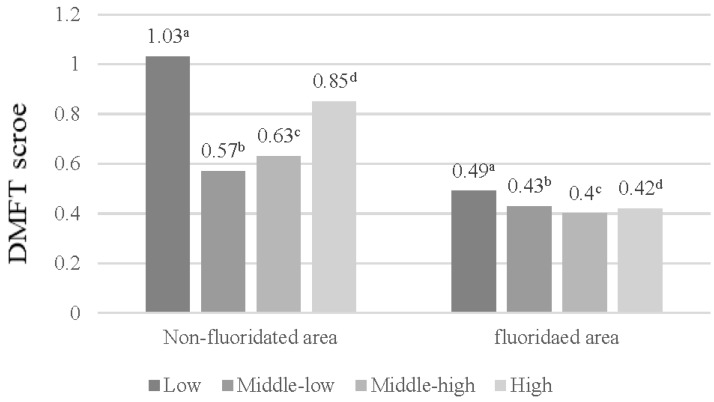
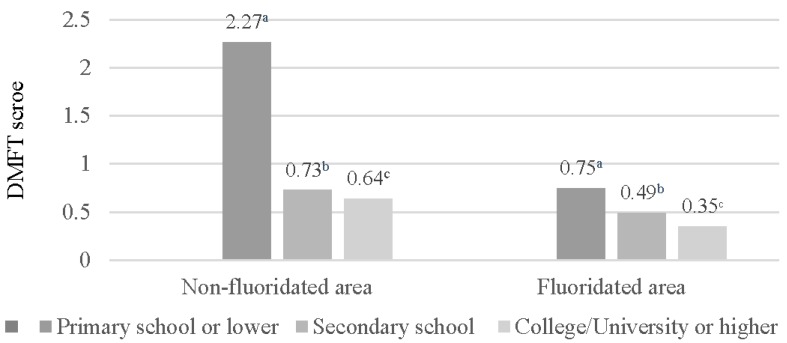
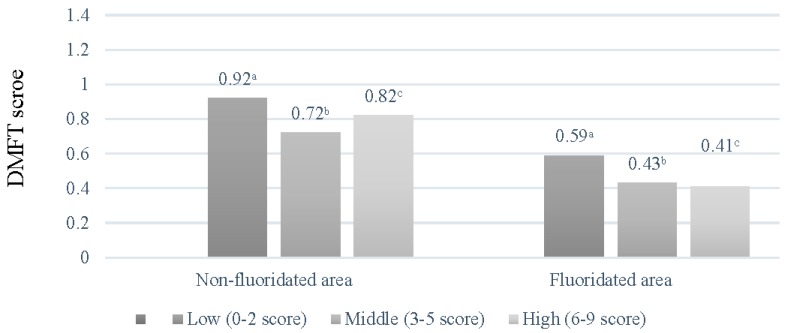
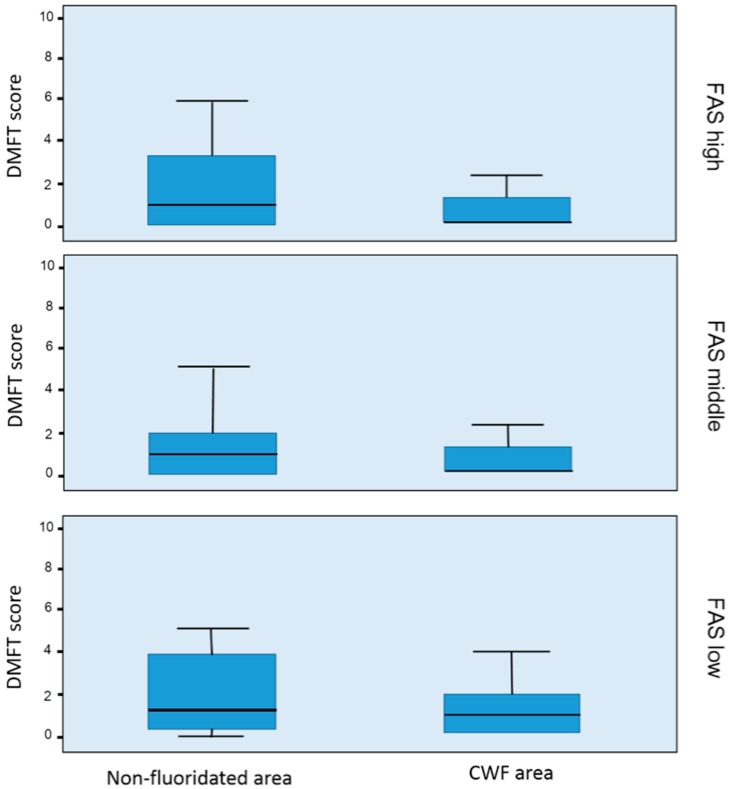
This study aimed to confirm the association between the community water fluoridation (CWF) programme and dental caries prevention on permanent teeth, comparing to a control area, neighbouring population without the programme, and verifying whether the programme can reduce the socio-economic inequality related to the oral health of children in Korea. Evaluation surveys were conducted among 6-, 8-, and 11-year-old children living in Okcheon (CWF) and neighbouring Yeongdong (non-CWF, control area) towns in South Korea. Data on monthly family income, caregiver educational level, and Family Affluence Scale scores were evaluated using questionnaires that were distributed to the parents. The effectiveness of CWF in caries reduction was calculated based on the differences in decayed, missing, and filled teeth and decayed, missing, and filled tooth surfaces indices between the two towns. The data were analysed using logistic regression and univariate analysis of variance. Both 8- and 11-year-old children living in the CWF area had lower dental caries prevalence than those living in the non-CWF community. Differences in dental caries prevalence based on educational level were found in the control area but not in the CWF area. Socio-economic factor-related inequality in oral health were observed in the non-CWF community. Additionally, 8- and 11-year-old children living in the CWF area displayed lower dental caries prevalence in the pit-and-fissure and smooth surfaces than those living in the non-CWF community. These results suggest that CWF programmes are effective in the prevention of caries on permanent teeth and can reduce oral health inequalities among children. The implementation of CWF programmes should be sustained to overcome oral health inequalities due to socio-economic factors and improve children's overall oral health.
Keywords: children; community water fluoridation; dental caries; dental caries reduction; inequality; oral health; social inequalities.
Conflict of interest statement
The authors have no conflict of interest to declare.
Figures
References
-
- Health Insurance Review and Assessment Service . 2012 Health Insurance Statistical Report. Health Insurance Review and Assessment Service; Seoul, Korea: 2012. pp. 70–72.
-
- Fejerskov O., Kidd E. Dental Caries: The Disease and its Clinical Management. John Wiley & Sons; Hoboken, NJ, USA: 2009. p. 252.
-
- Loh T. Thirty-eight years of water fluoridation—The Singapore scenario. Community Dent. Health. 1996;13:47–50. - PubMed
MeSH terms
LinkOut - more resources
Full Text Sources
Other Literature Sources
Medical
