


Potential of Icariin Metabolites from Epimedium koreanum Nakai as Antidiabetic Therapeutic Agents
- PMID: 28608833
- PMCID: PMC6152727
- DOI: 10.3390/molecules22060986
Potential of Icariin Metabolites from Epimedium koreanum Nakai as Antidiabetic Therapeutic Agents
Abstract
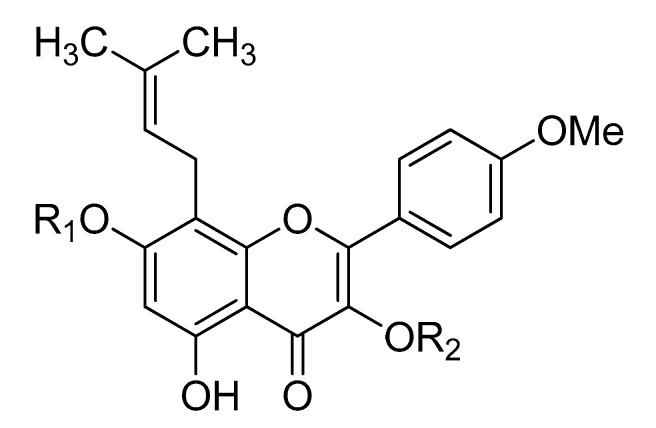
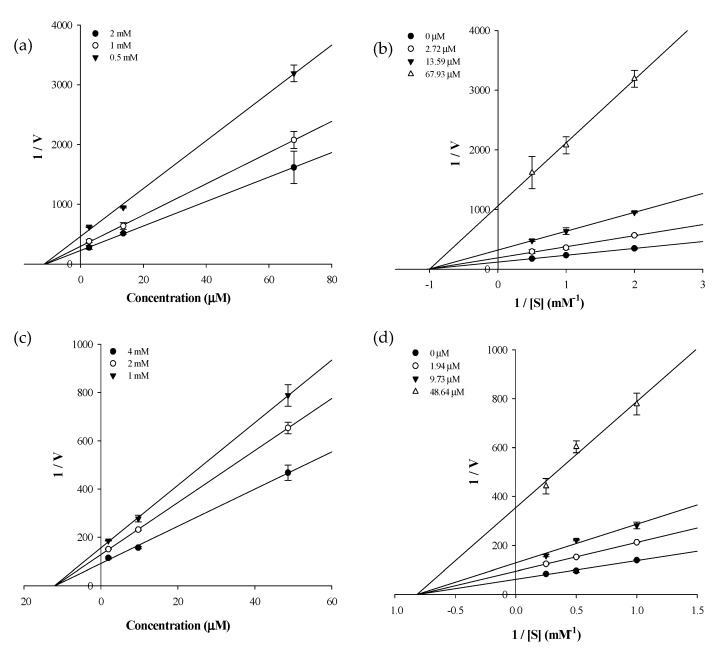
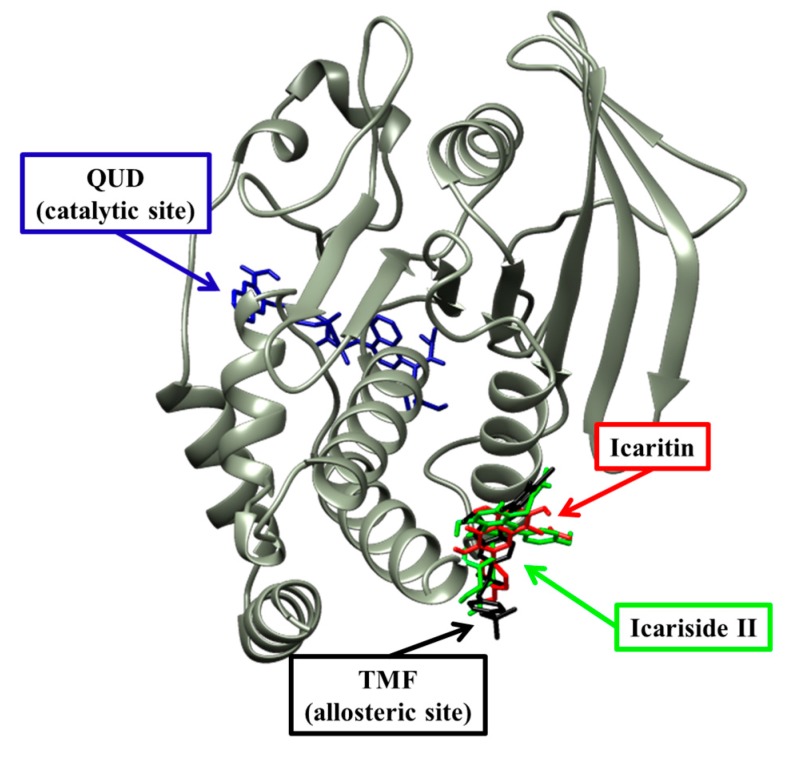
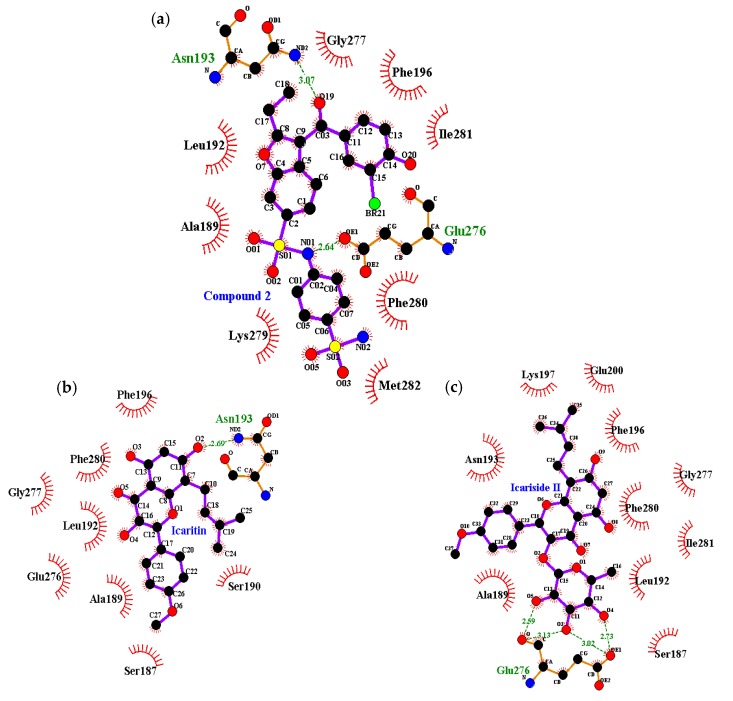
The therapeutic properties of Epimediumkoreanum are presumed to be due to the flavonoid component icariin, which has been reported to have broad pharmacological potential and has demonstrated anti-diabetic, anti-Alzheimer's disease, anti-tumor, and hepatoprotective activities. Considering these therapeutic properties of icariin, its deglycosylated icaritin and glycosylated flavonoids (icaeriside II, epimedin A, epimedin B, and epimedin C) were evaluated for their ability to inhibit protein tyrosine phosphatase 1B (PTP1B) and α-glucosidase. The results show that icaritin and icariside II exhibit potent inhibitory activities, with 50% inhibition concentration (IC50) values of 11.59 ± 1.39 μM and 9.94 ± 0.15 μM against PTP1B and 74.42 ± 0.01 and 106.59 ± 0.44 μM against α-glucosidase, respectively. With the exceptions of icaritin and icariside II, glycosylated flavonoids did not exhibit any inhibitory effects in the two assays. Enzyme kinetics analyses revealed that icaritin and icariside II demonstrated noncompetitive-type inhibition against PTP1B, with inhibition constant (Ki) values of 11.41 and 11.66 μM, respectively. Moreover, molecular docking analysis confirmed that icaritin and icariside II both occupy the same site as allosteric ligand. Thus, the molecular docking simulation results were in close agreement with the experimental data with respect to inhibition activity. In conclusion, deglycosylated metabolites of icariin from E. koreanum might offer therapeutic potential for the treatment of type 2 diabetes mellitus.
Keywords: Epimedium koreanum Nakai; PTP1B; icariin metabolite; molecular docking simulation.; α-glucosidase.
Conflict of interest statement
The authors declare that they have no potential conflicts of interest with respect to the research, authorship, and/or publication of this article.
Figures
References
-
- The Expert Committee on the Diagnosis and Classification of Diabetes Mellitus Report of the expert committee on the diagnosis and classification of diabetes mellitus. Diabetes Care. 1997;20:1183–1197. - PubMed
-
- Parthasarathy R., Ilavarasan R., Karrunakaran C.M. Antidiabetic activity of Thespesia Populnea bark and leaf extract against streptozotocin induced diabetic rats. Int. J. PharmTech. Res. 2009;1:1069–1072.
-
- Kwon J.H., Chang M.J., Seo H.W., Lee J.H., Min B.S., Na M., Kim J.C., Woo M.H., Choi J.S., Lee H.K., et al. Triterpenoids and a sterol from the stem-bark of Styrax japonica and their protein tyrosine phosphatase 1B inhibitory activities. Phytother. Res. 2008;22:1303–1306. doi: 10.1002/ptr.2484. - DOI - PubMed
-
- Elchebly M., Payette P., Michaliszyn E., Cromlish W., Collins S., Loy A.L., Normandin D., Cheng A., Himms-Hagen J., Chan C.C., et al. Increased insulin sensitivity and obesity resistance in mice lacking the protein tyrosine phosphatase-1B gene. Science. 1999;283:1544–1548. doi: 10.1126/science.283.5407.1544. - DOI - PubMed
-
- Liu Z.Q., Liu T., Chen C., Li M.Y., Wang Z.Y., Chen R.S., Wei G.X., Wang X.Y., Luo D.Q. Fumosorinone, a novel PTP1B inhibitor, activates insulin signaling in insulin-resistance HepG2 cells and shows anti-diabetic effect in diabetic KKAy mice. Toxicol. Appl. Pharmacol. 2015;285:61–70. doi: 10.1016/j.taap.2015.03.011. - DOI - PubMed
MeSH terms
Substances
LinkOut - more resources
Full Text Sources
Other Literature Sources
Medical
Miscellaneous
