


Polydatin alleviated radiation-induced lung injury through activation of Sirt3 and inhibition of epithelial-mesenchymal transition
- PMID: 28609013
- PMCID: PMC5706589
- DOI: 10.1111/jcmm.13230
Polydatin alleviated radiation-induced lung injury through activation of Sirt3 and inhibition of epithelial-mesenchymal transition
Abstract
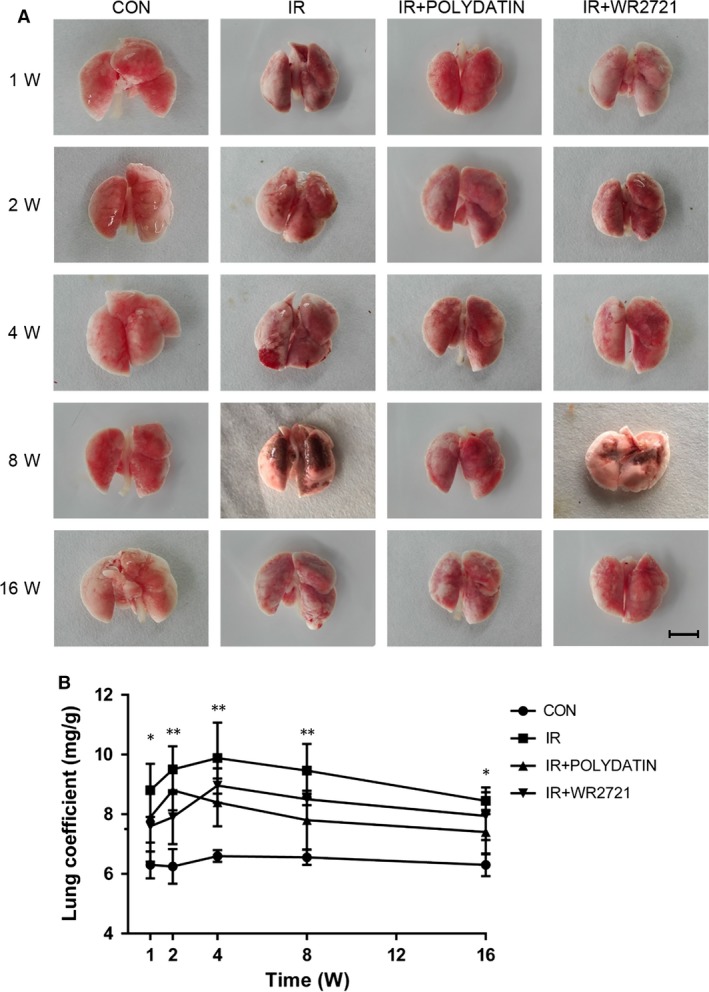
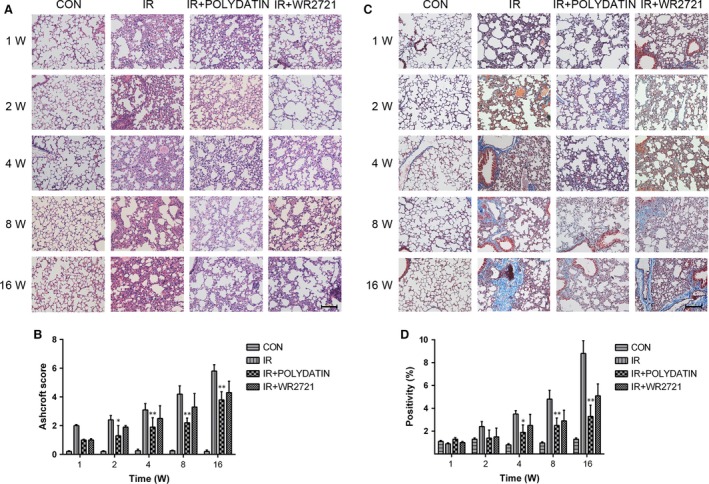
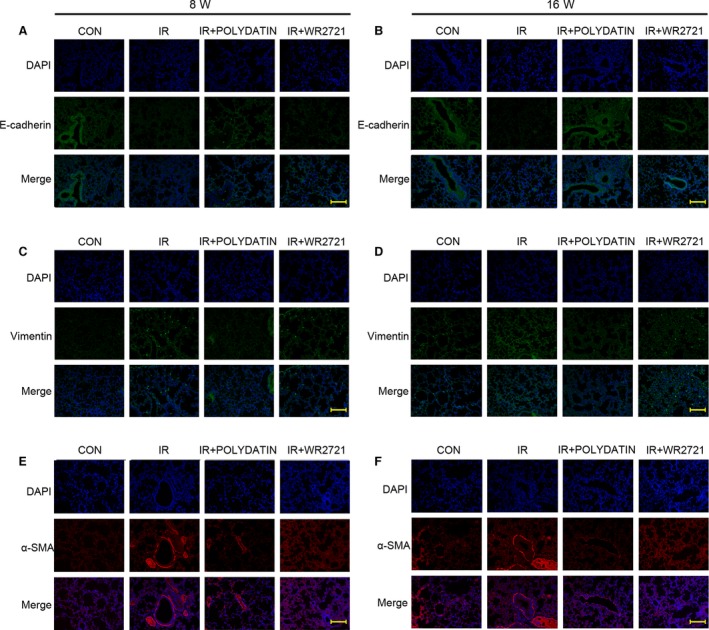
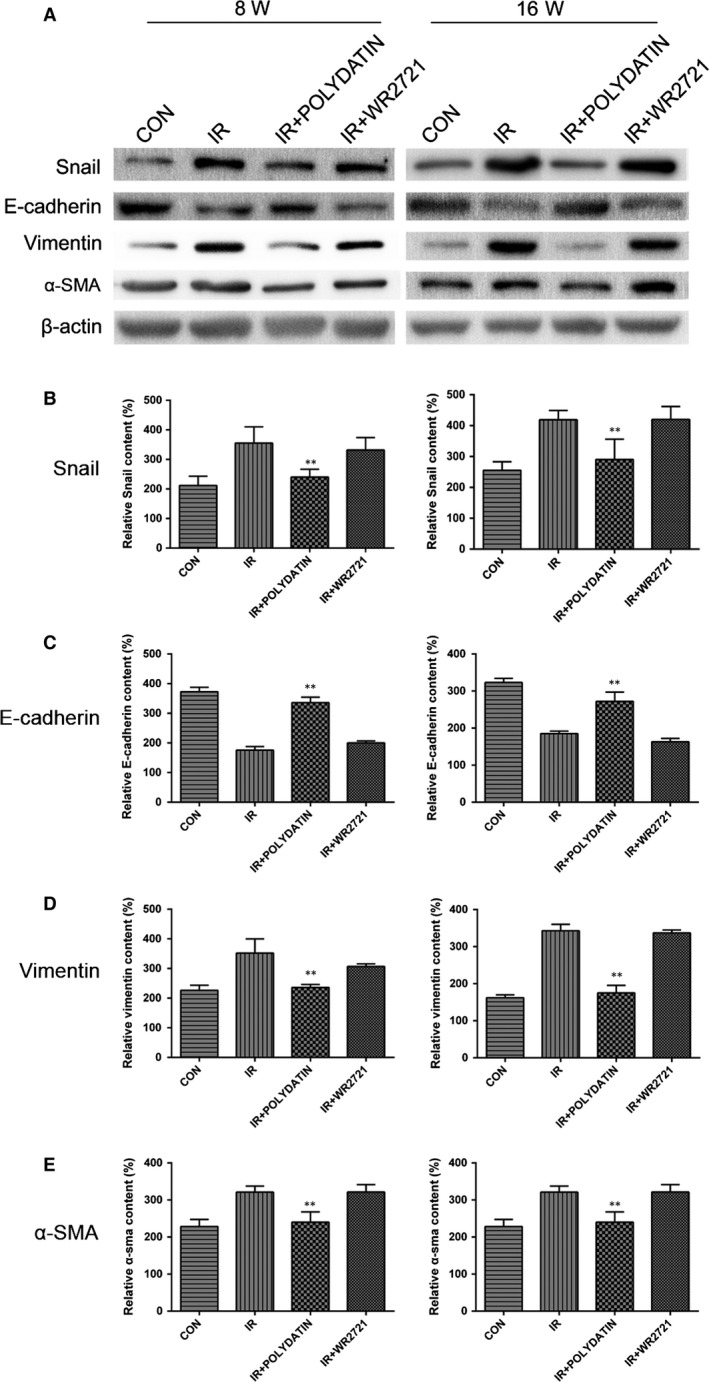
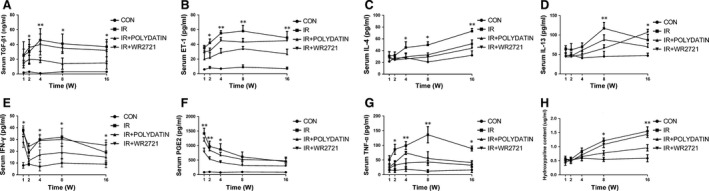
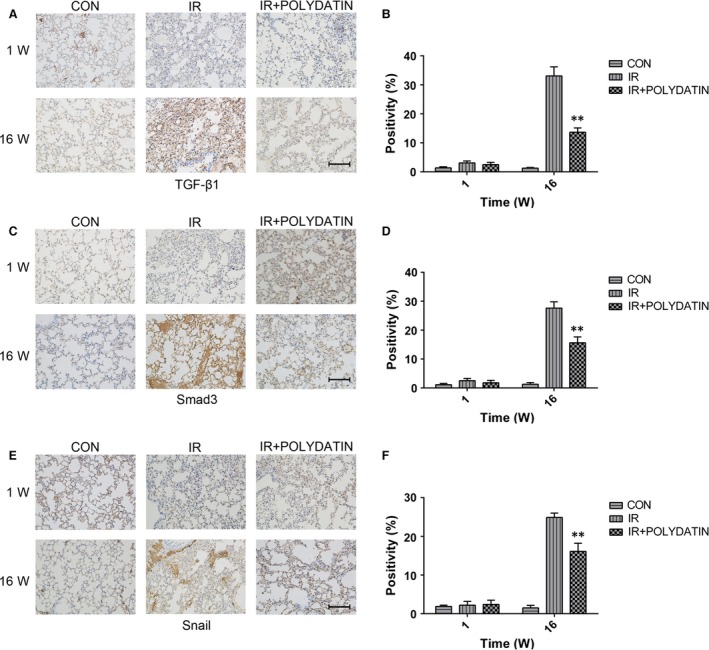
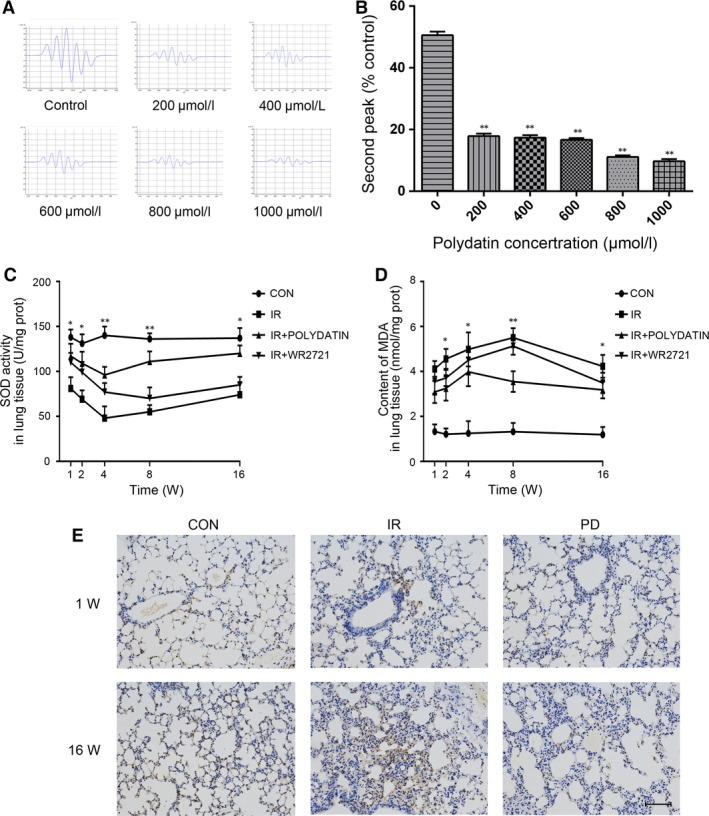
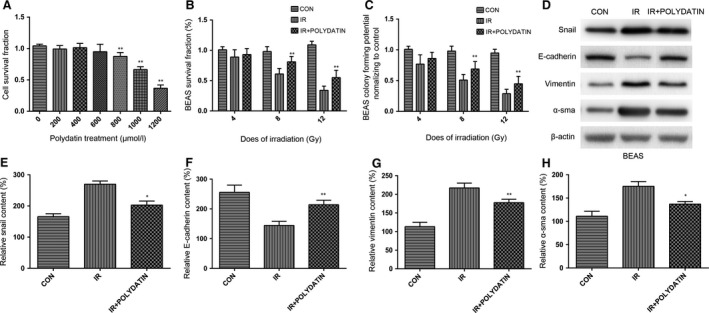
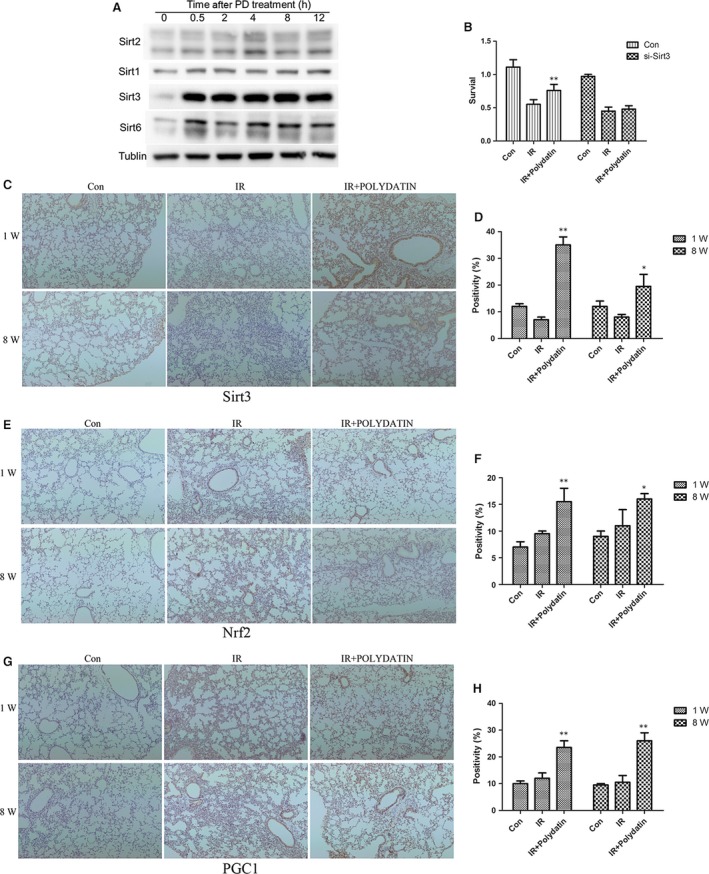
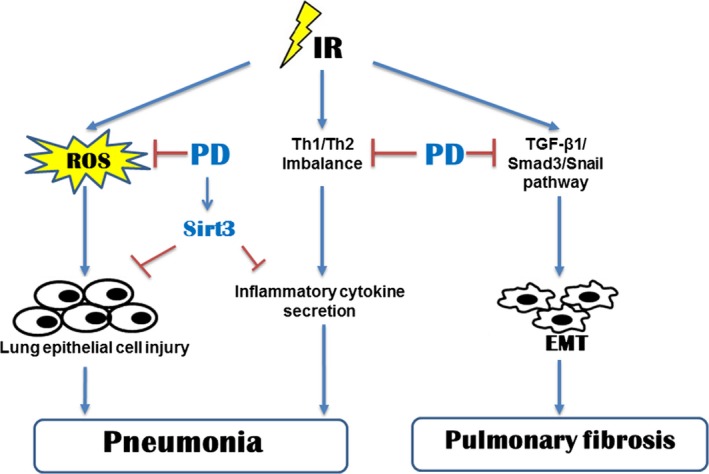
Radiation-induced lung injury (RILI) is one of the most common and fatal complications of thoracic radiotherapy. It is characterized with two main features including early radiation pneumonitis and fibrosis in later phase. This study was to investigate the potential radioprotective effects of polydatin (PD), which was shown to exert anti-inflammation and anti-oxidative capacities in other diseases. In this study, we demonstrated that PD-mitigated acute inflammation and late fibrosis caused by irradiation. PD treatment inhibited TGF-β1-Smad3 signalling pathway and epithelial-mesenchymal transition. Moreover, radiation-induced imbalance of Th1/Th2 was also alleviated by PD treatment. Besides its free radical scavenging capacity, PD induced a huge increase of Sirt3 in culture cells and lung tissues. The level of Nrf2 and PGC1α in lung tissues was also elevated. In conclusion, our data showed that PD attenuated radiation-induced lung injury through inhibiting epithelial-mesenchymal transition and increased the expression of Sirt3, suggesting PD as a novel potential radioprotector for RILI.
Keywords: epithelial-mesenchymal transition (EMT); free radicals; polydatin (PD); radiation-induced lung injury.
© 2017 The Authors. Journal of Cellular and Molecular Medicine published by John Wiley & Sons Ltd and Foundation for Cellular and Molecular Medicine.
Figures
References
-
- Vujaskovic Z, Marks LB, Anscher MS. The physical parameters and molecular events associated with radiation‐induced lung toxicity. Semin Radiat Oncol. 2000; 10: 296–307. - PubMed
MeSH terms
Substances
LinkOut - more resources
Full Text Sources
Other Literature Sources
