


End-stage renal disease: a risk factor of deep neck infection - a nationwide follow-up study in Taiwan
- PMID: 28610562
- PMCID: PMC5470218
- DOI: 10.1186/s12879-017-2531-5
End-stage renal disease: a risk factor of deep neck infection - a nationwide follow-up study in Taiwan
Abstract
Background: Uremia is likely a risk factor for deep neck infection (DNI). However, only a few relevant cases have been reported, and evidence sufficient to support this hypothesis is lacking. The aim of the study is to investigate the effects of end-stage renal disease (ESRD) on DNI.
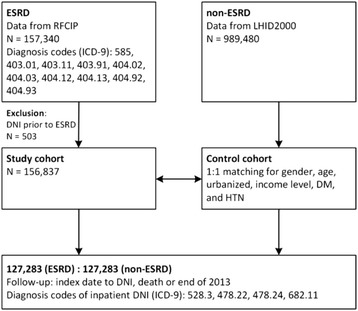
Methods: We used the database of the Registry for Catastrophic Illness Patients (RFCIP), a subset of the National Health Insurance Research Database (NHIRD) in Taiwan, to conduct a retrospective follow-up study. Between 1997 and 2013, a total of 157,340 patients in Taiwan with ESRD who received dialysis were registered in the RFCIP, whom were matched with a database consisting of 1,000,000 randomly selected patients who represented the national population, to conduct the follow-up study for investigating the incidence of DNI in the ESRD and control cohorts.
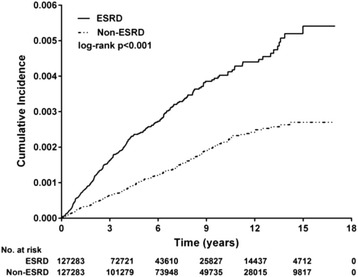
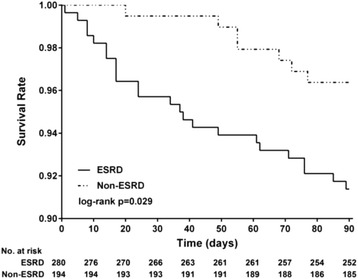
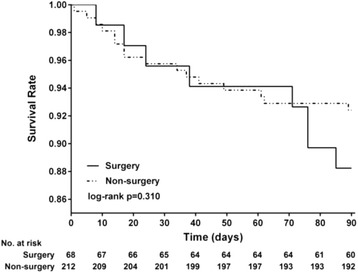
Results: In the ESRD group, 280 DNIs were identified with an incidence rate of 43 per 100,000 person-years. In the comparison group, 194 DNIs were identified with an incidence rate of 20 per 100,000 person-years. The incidence rate ratio was 2.16 (p < 0.001). Kaplan-Meier analysis indicated that the ESRD group had a significantly higher cumulative incidence of DNI (p < 0.001). According to Cox regression analysis, the hazard ratio of ESRD for DNI was 2.23 (p < 0.001). The therapeutic methods (non-surgery and surgery), performance of tracheostomy, duration of hospitalization did not differ significantly between the two groups, except more ESRD-DNI patients were admitted to intensive care units. The mortality rate of patients with DNI in the ESRD group was significantly higher than that in the control group (8.6% for ESRD vs 3.6% for control, p = 0.032). Furthermore, the Kaplan-Meier analysis demonstrated a poorer survival outcome in the ESRD group (p = 0.029). However, the individual survival outcomes following non-surgical and surgical therapies in the ESRD group did not differ significantly (p = 0.31).
Conclusions: ESRD is a predisposing factor for DNI, increasing its risk by twofold. In the patients with ESRD, DNI was not associated with higher rates of surgical debridement, tracheostomy, and mediastinal complications or longer hospital stays; however, it was associated with poorer survival outcomes, regardless of the therapeutic method.
Keywords: Abscess; Cellulitis; Cervical; Dialysis; ESRD; Failure; Kidney; NHIRD; Nephropathy; Predisposing.
Figures
References
-
- Har-El G, Aroesty JH, Shaha A, Lucente FE. Changing trends in deep neck abscess. A retrospective study of 110 patients. Oral surgery, oral medicine, and oral pathology. 1994;77:446–450. - PubMed
MeSH terms
LinkOut - more resources
Full Text Sources
Other Literature Sources
Medical
