


The efficiency and safety of dexamethasone for pain control in total joint arthroplasty: A meta-analysis of randomized controlled trials
- PMID: 28614232
- PMCID: PMC5478317
- DOI: 10.1097/MD.0000000000007126
The efficiency and safety of dexamethasone for pain control in total joint arthroplasty: A meta-analysis of randomized controlled trials
Abstract
Background: This meta-analysis aimed to evaluate the efficiency and safety of dexamethasone administration in total knee and hip arthroplasties.
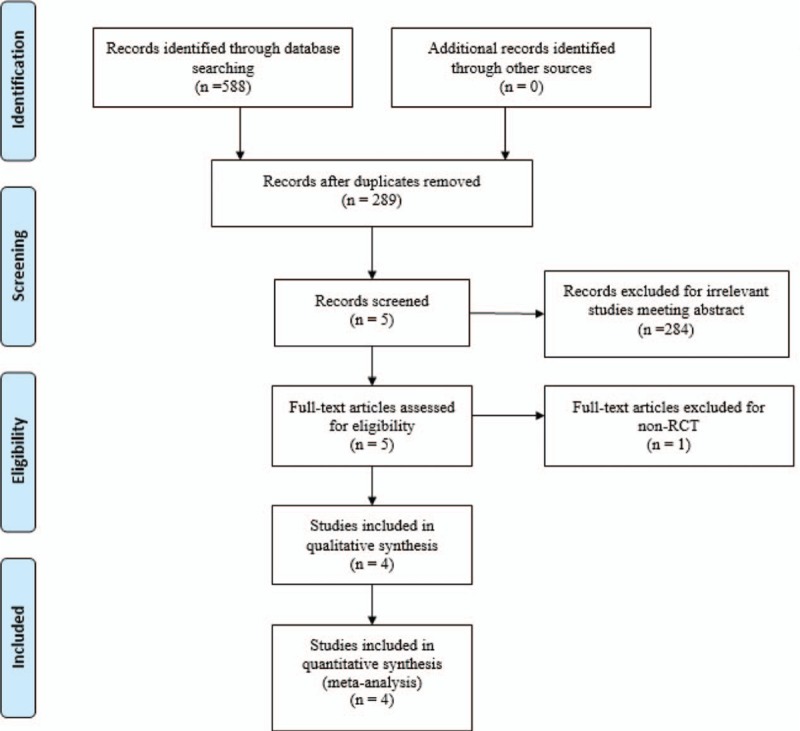
Methods: Two researchers search the relevant studies independently including Embase (1980-017.04), PubMed (1966-017.04), ScienceDirect (1985-017.04), Web of Science (1950-2017.03), and Cochrane Library for potential relevant studies. After testing for heterogeneity between studies, data were aggregated for random-effects models when necessary. The results of dichotomous outcomes were expressed as risk difference (RD) with a 95% confidence intervals (CIs). For continuous various outcomes, mean difference (MD) or standard mean difference (SMD) with a 95% confidence intervals (CIs) was applied for assessment. Meta-analysis was performed using Stata 11.0 software.
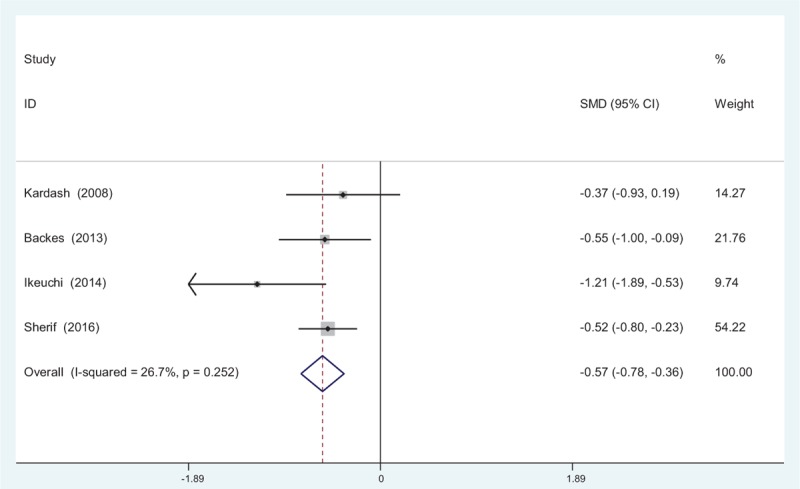
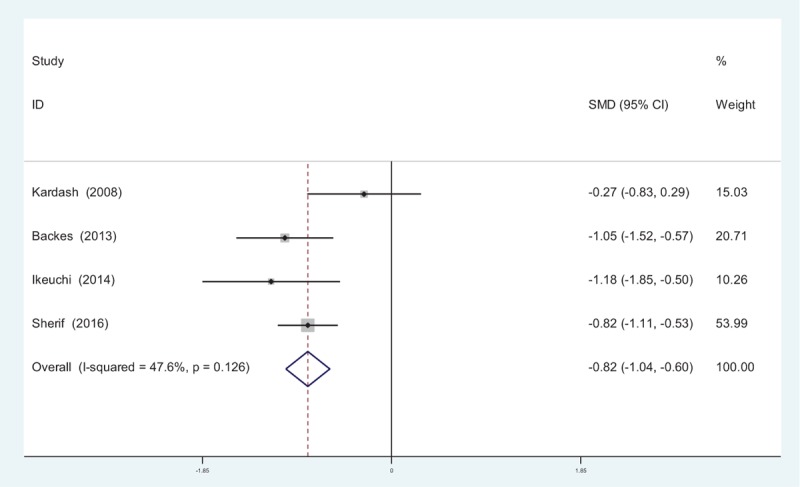
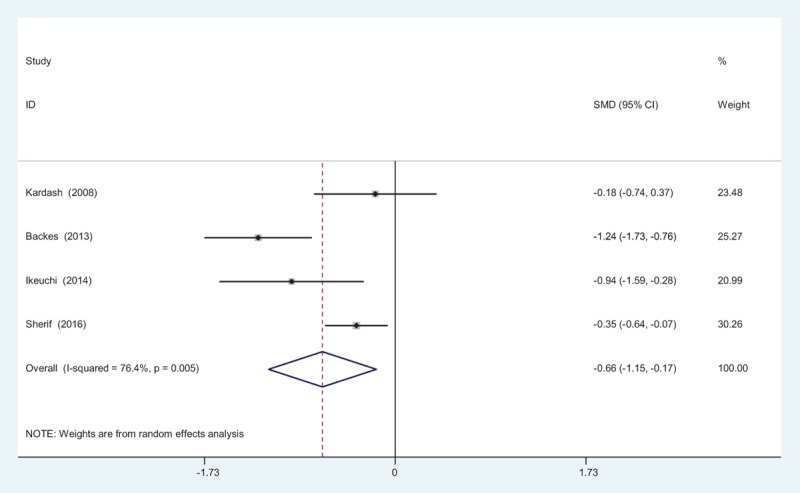
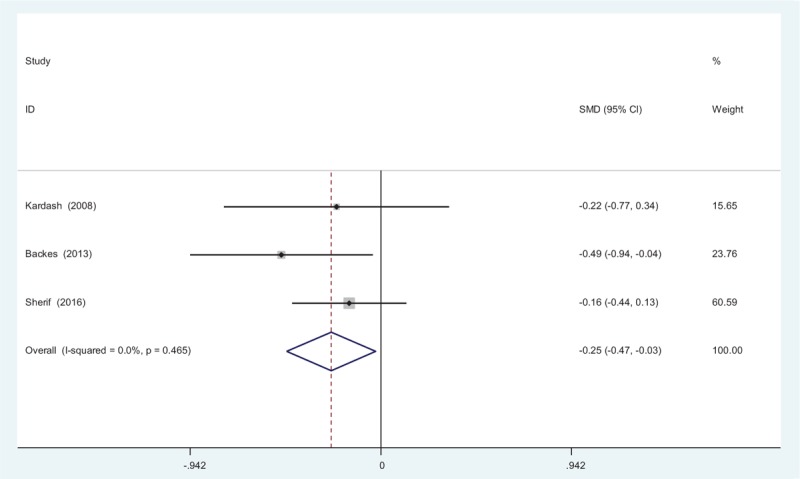
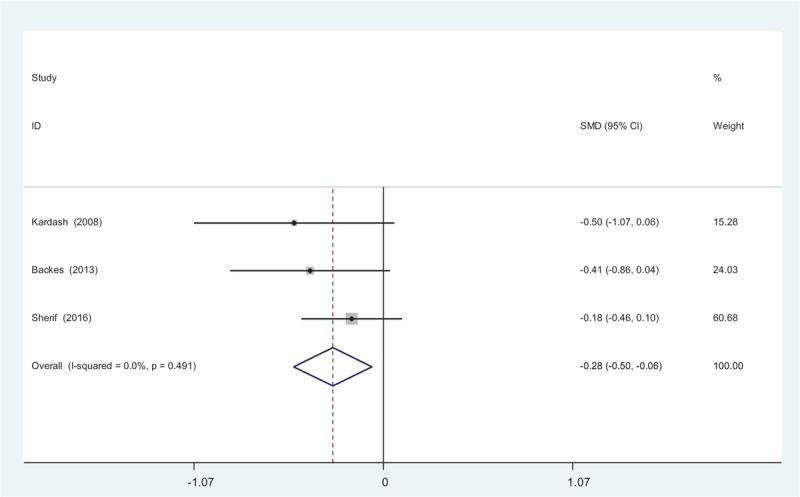
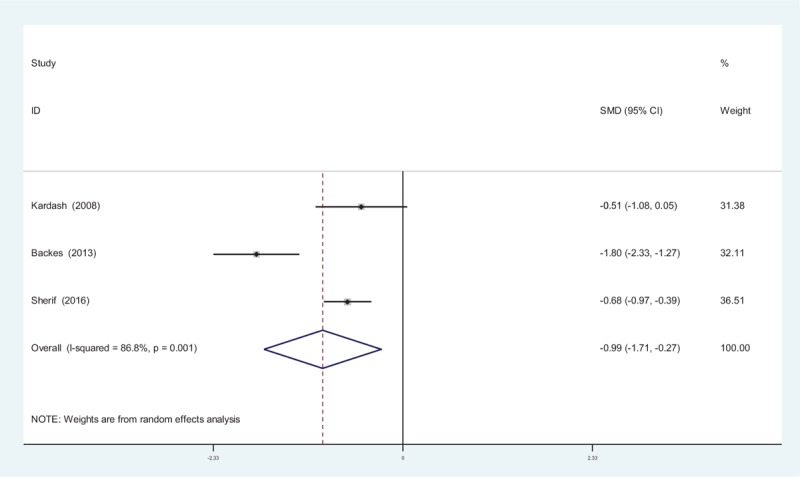
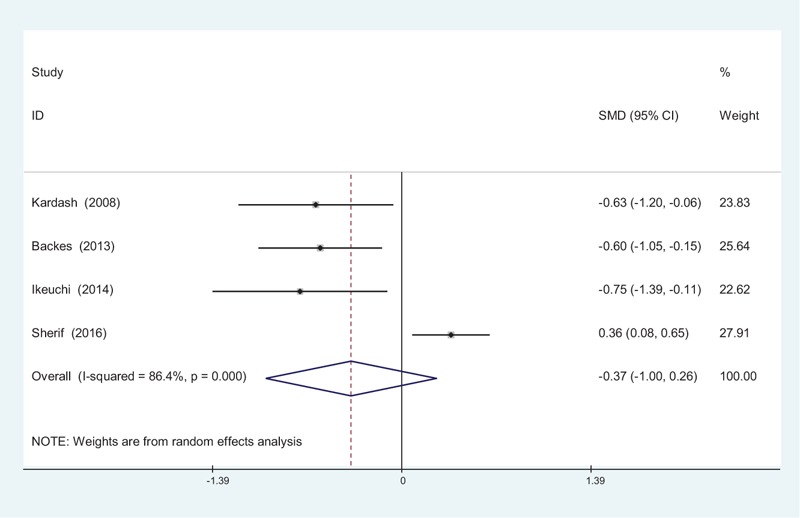
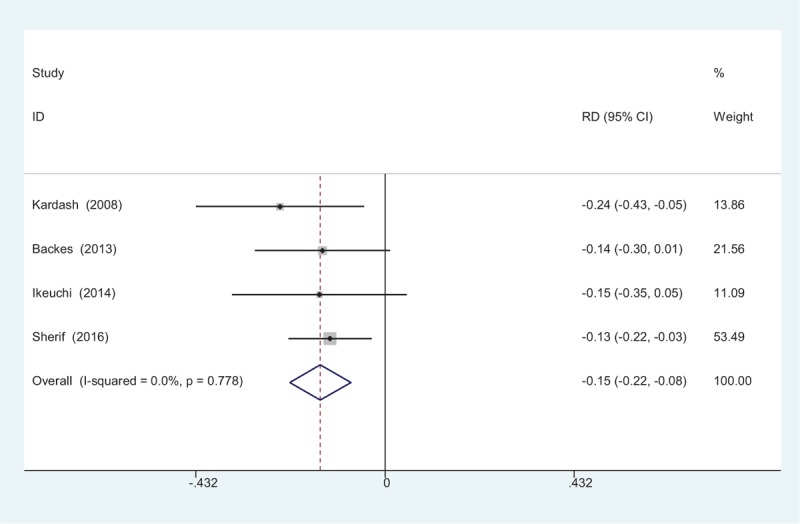
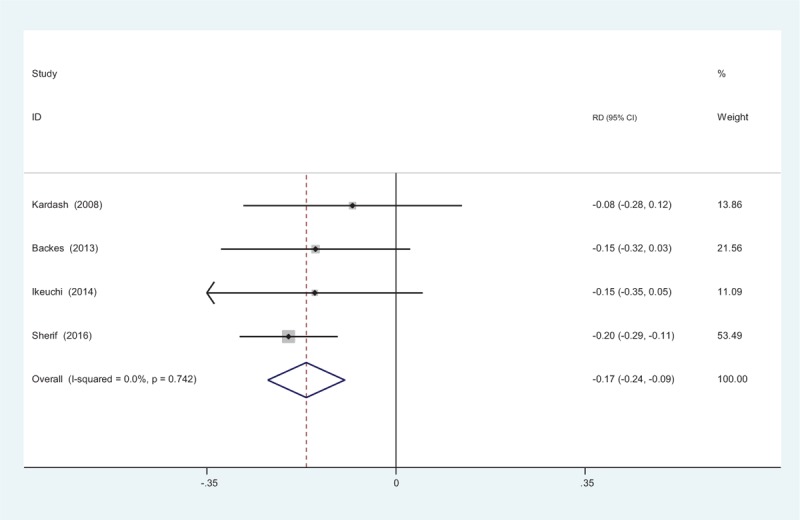
Results: Four randomized controlled trials (RCTs) including 361 patients met the inclusion criteria. The present meta-analysis indicated that there were significant differences between groups in terms of visual analogue scale (VAS) score at 12 hours (SMD = -0.579, 95% CI: -0.780 to -0.357, P = .000), 24 hours (SMD = -0.820, 95% CI: -1.036 to -0.604, P = .000), and 48 hours (SMD = -0.661, 95% CI: -1.149 to -0.172, P = .008). Dexamethasone was associated with a lower opioid consumption at 12 hours (SMD = -0.245, 95% CI: -0.465 to -0.025, P = .029), 24 hours (SMD = -0.285, 95% CI: -0.505 to -0.064, P = .011), and 48 hours (SMD = -0.989, 95% CI: -1.710 to -0.267, P = .007).
Conclusion: Dexamethasone could significantly reduce postoperative pain scores and opioid consumption within the 1st 48 hours following total joint arthroplasty (TJA). The overall evidence quality was moderate to low, further high-quality RCTs are needed to identify the optimal dose of dexamethasone for reducing pain after TJA.
Conflict of interest statement
The authors have no funding and conflicts of interest to disclose.
Figures
References
-
- Salerno A, Hermann R. Efficacy and safety of steroid use for postoperative pain relief. Update and review of the medical literature. J Bone Joint Surg Am 2006;88:1361–72. - PubMed
-
- Gan TJ, Meyer T, Apfel CC, et al. Consensus guidelines for managing postoperative nausea and vomiting. Anesth Analg 2003;97:62–71. table of contents. - PubMed
-
- Thorsell M, Holst P, Hyldahl HC, et al. Pain control after total knee arthroplasty: a prospective study comparing local infiltration anesthesia and epidural anesthesia. Orthopedics 2010;33:75–80. - PubMed
-
- Kuchalik J, Granath B, Ljunggren A, et al. Postoperative pain relief after total hip arthroplasty: a randomized, double-blind comparison between intrathecal morphine and local infiltration analgesia. Br J Anaesth 2013;111:793–9. - PubMed
Publication types
MeSH terms
Substances
LinkOut - more resources
Full Text Sources
Other Literature Sources
Medical
Miscellaneous
