


Learning from the mistakes of others: How female elk (Cervus elaphus) adjust behaviour with age to avoid hunters
- PMID: 28614406
- PMCID: PMC5470680
- DOI: 10.1371/journal.pone.0178082
Learning from the mistakes of others: How female elk (Cervus elaphus) adjust behaviour with age to avoid hunters
Abstract
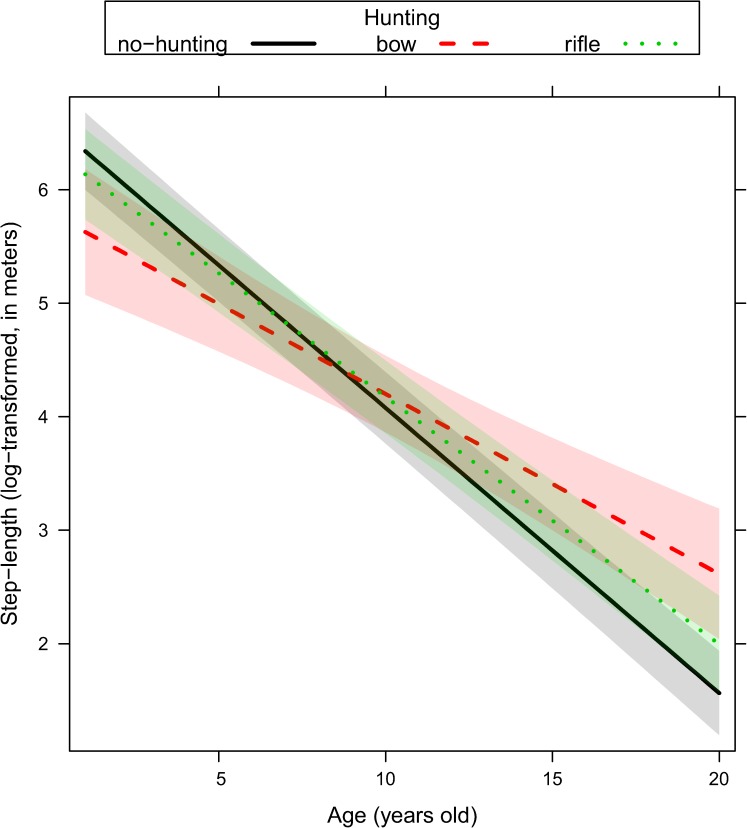
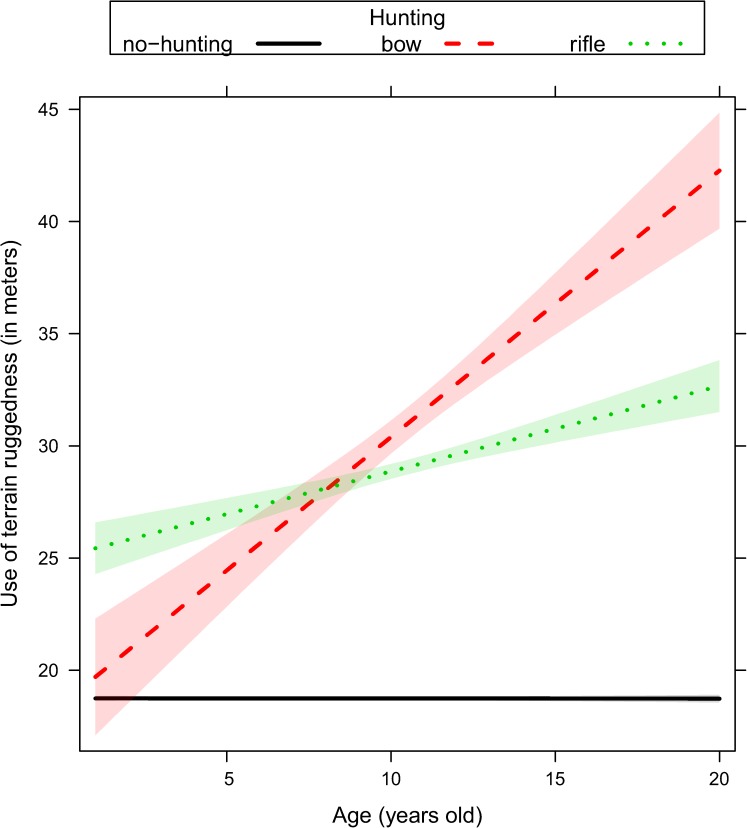
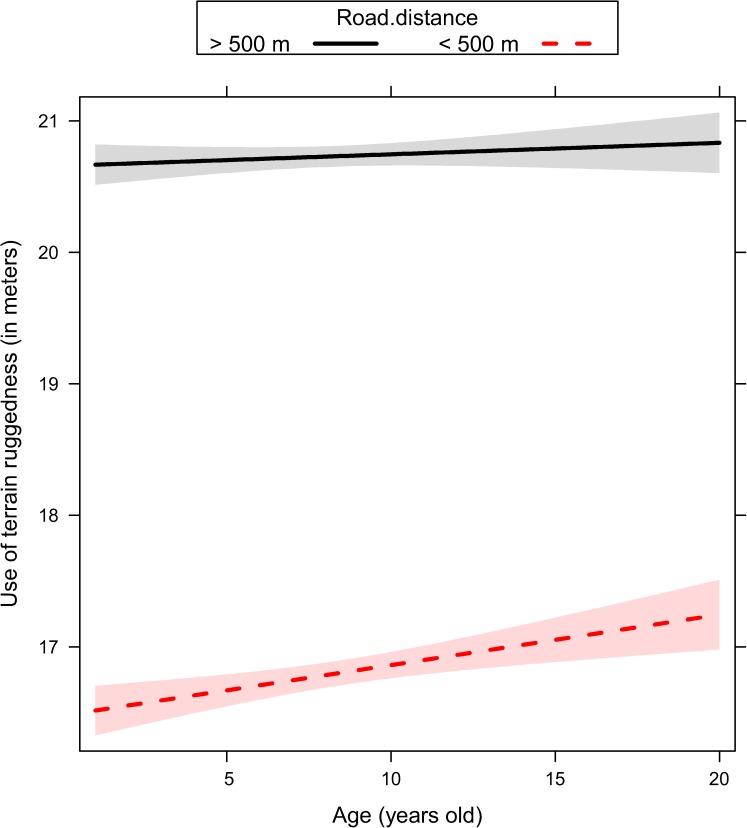
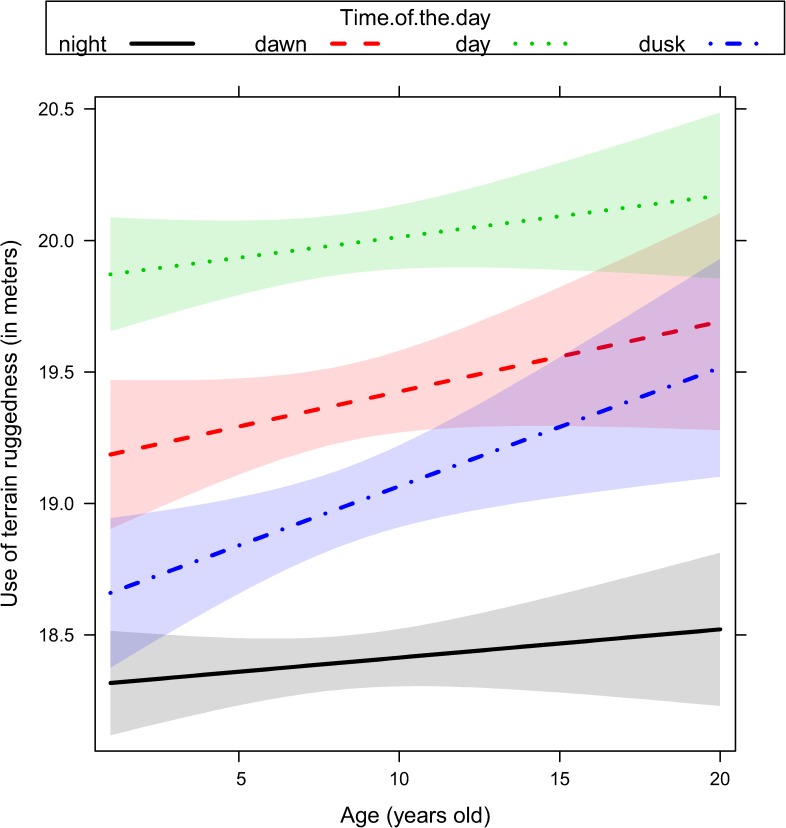
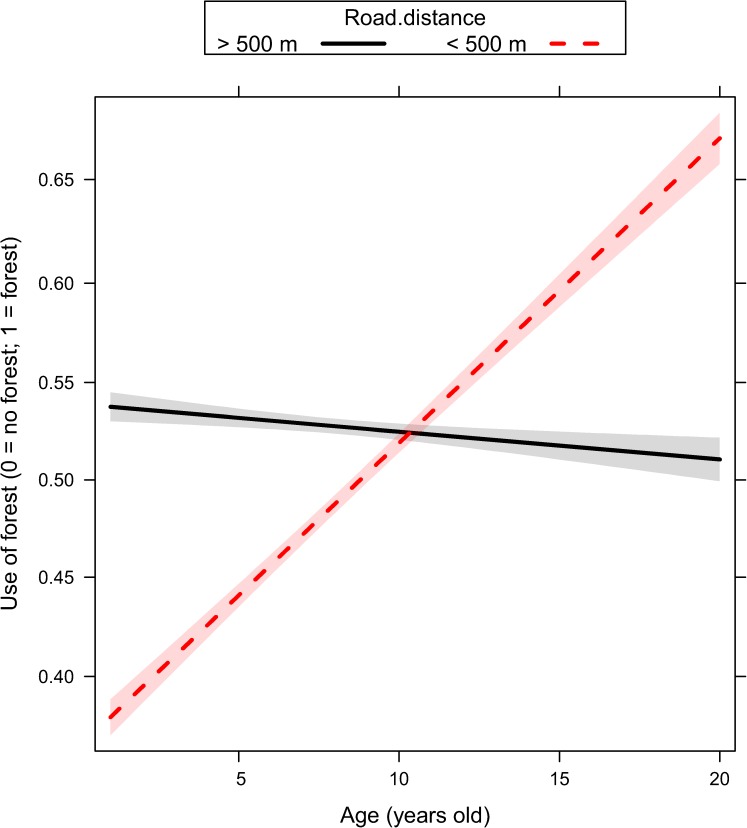
In animal behaviour, there is a dichotomy between innate behaviours (e.g., temperament or personality traits) versus those behaviours shaped by learning. Innate personality traits are supposedly less evident in animals when confounded by learning acquired with experience through time. Learning might play a key role in the development and adoption of successful anti-predator strategies, and the related adaptation has the potential to make animals that are more experienced less vulnerable to predation. We carried out a study in a system involving a large herbivorous mammal, female elk, Cervus elaphus, and their primary predator, i.e., human hunters. Using fine-scale satellite telemetry relocations, we tested whether differences in behaviour depending on age were due solely to selection pressure imposed by human hunters, meaning that females that were more cautious were more likely to survive and become older. Or whether learning also was involved, meaning that females adjusted their behaviour as they aged. Our results indicated that both human selection and learning contributed to the adoption of more cautious behavioural strategies in older females. Whereas human selection of behavioural traits has been shown in our previous research, we here provide evidence of additive learning processes being responsible for shaping the behaviour of individuals in this population. Female elk are indeed almost invulnerable to human hunters when older than 9-10 y.o., confirming that experience contributes to their survival. Female elk monitored in our study showed individually changing behaviours and clear adaptation as they aged, such as reduced movement rates (decreased likelihood of encountering human hunters), and increased use of secure areas (forest and steeper terrain), especially when close to roads. We also found that elk adjusted behaviours depending on the type of threat (bow and arrow vs. rifle hunters). This fine-tuning by elk to avoid hunters, rather than just becoming more cautious during the hunting season, highlights the behavioural plasticity of this species. Selection on behavioural traits and/or behavioural shifts via learning are an important but often-ignored consequence of human exploitation of wild animals. Such information is a critical component of the effects of human exploitation of wildlife populations with implications for improving their management and conservation.
Conflict of interest statement
Figures
References
-
- Dingemanse NJ, Kazem AJN, Reale D, Wright J. Behavioural reaction norms: animal personality meets individual plasticity. Trends Ecol Evol. 2010;25(2):81–9. doi: 10.1016/j.tree.2009.07.013 - DOI - PubMed
-
- Krebs JR, Davies NB. Behavioural ecology—An evolutionary approach. fourth edition ed: Blackwell publishing; 1996.
-
- Sih A, Bell A, Johnson JC. Behavioral syndromes: an ecological and evolutionary overview. Trends Ecol Evol. 2004;19(7):372–8. doi: 10.1016/j.tree.2004.04.009 - DOI - PubMed
-
- Hellstrom G, Magnhagen C. The influence of experience on risk taking: results from a common-garden experiment on populations of Eurasian perch. Behav Ecol Sociobiol. 2011;65(10):1917–26.
-
- Dawson EH, Avargues-Weber A, Chittka L, Leadbeater E. Learning by observation emerges from simple associations in an insect model. Curr Biol. 2013;23(8):727–30. doi: 10.1016/j.cub.2013.03.035 - DOI - PubMed
MeSH terms
LinkOut - more resources
Full Text Sources
Other Literature Sources
