


Therapeutic potential of dental stem cells
- PMID: 28616151
- PMCID: PMC5461911
- DOI: 10.1177/2041731417702531
Therapeutic potential of dental stem cells
Abstract
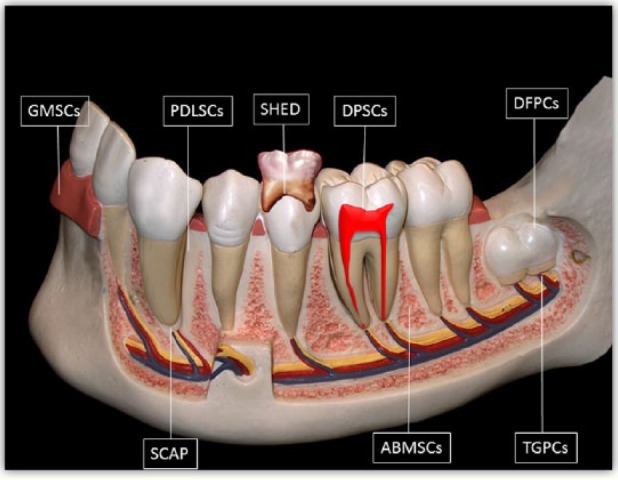
Stem cell biology has become an important field in regenerative medicine and tissue engineering therapy since the discovery and characterization of mesenchymal stem cells. Stem cell populations have also been isolated from human dental tissues, including dental pulp stem cells, stem cells from human exfoliated deciduous teeth, stem cells from apical papilla, dental follicle progenitor cells, and periodontal ligament stem cells. Dental stem cells are relatively easily obtainable and exhibit high plasticity and multipotential capabilities. The dental stem cells represent a gold standard for neural-crest-derived bone reconstruction in humans and can be used for the repair of body defects in low-risk autologous therapeutic strategies. The bioengineering technologies developed for tooth regeneration will make substantial contributions to understand the developmental process and will encourage future organ replacement by regenerative therapies in a wide variety of organs such as the liver, kidney, and heart. The concept of developing tooth banking and preservation of dental stem cells is promising. Further research in the area has the potential to herald a new dawn in effective treatment of notoriously difficult diseases which could prove highly beneficial to mankind in the long run.
Keywords: Dental stem cell; differentiation; regeneration; stem cell therapy; tissue engineering; tooth banking.
Conflict of interest statement
Declaration of conflicting interests: The author(s) declared no potential conflicts of interest with respect to the research, authorship, and/or publication of this article.
Figures
References
-
- La Noce M, Mele L, Tirino V, et al. Neural crest stem cell population in craniomaxillofacial development and tissue repair. Eur Cell Mater 2014; 28: 348–357. - PubMed
-
- Smith MM, Fraser GJ, Mitsiadis TA. Dental lamina as source of odontogenic stem cells: evolutionary origins and developmental control of tooth generation in gnathostomes. J Exp Zool B Mol Dev Evol 2009; 312B(4): 260–280. - PubMed
-
- Egusa H, Sonoyama W, Nishimura M, et al. Stem cells in dentistry—part I: stem cell sources. J Prosthodont Res 2012; 56(3): 151–165. - PubMed
-
- Kawai G, Ohno T, Kawaguchi T, et al. Human dental pulp facilitates bone regeneration in a rat bone defect model. Bone Tissue Regen Insights 2013; 4: 12.
Publication types
LinkOut - more resources
Full Text Sources
Other Literature Sources
