


High-dose hydroxocobalamin for vasoplegic syndrome causing false blood leak alarm
- PMID: 28616214
- PMCID: PMC5466086
- DOI: 10.1093/ckj/sfx004
High-dose hydroxocobalamin for vasoplegic syndrome causing false blood leak alarm
Abstract
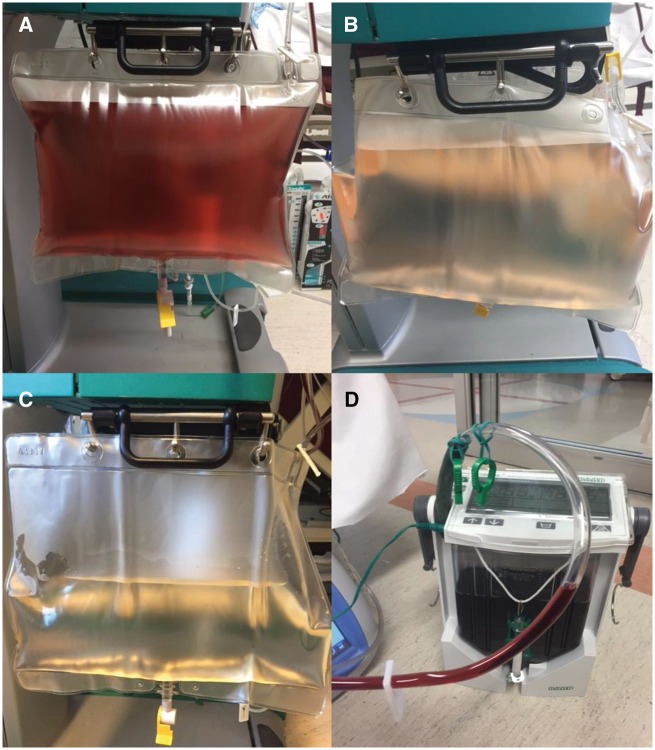
Blood leak alarms are important safety features in a hemodialysis machine to protect patients from loss of blood through a rupture in the dialyzer membrane (true alarms). A false blood leak alarm can be triggered by air bubbles or detector malfunction (such as deposits of grease or scale). Hydroxocobalamin is an injectable form of vitamin B12 approved by the US Food and Drug Administration for the treatment of confirmed or suspected cyanide toxicity. Due to observations of an increase in arterial pressure after high-dose hydroxocobalamin infusion for the treatment of acute cyanide poisoning, it has recently been reported as an off-label rescue treatment for post-cardiopulmonary bypass vasoplegic syndrome. We report an 83-year-old man who received hydroxocobalamin following cardiac surgery for treatment of vasoplegic syndrome. The patient developed severe acute kidney injury with volume overload. Hydroxocobalamin interference with the blood leak detector compromised his dialysis treatment. We describe the use of continuous renal replacement therapy to overcome the hydroxocobalamin-related interference with hemodialysis. As the utility of hydroxocobalamin potentially expands, physicians must be aware of its inadvertent effect on renal replacement therapy.
Keywords: blood leak; dialysis; hemodialysis; hydroxocobalamin; vitamin B12.
Figures
References
-
- Avila J, Prasad D, Weisberg LS. et al. Pseudo-blood leak? A hemodialysis mystery. Clin Nephrol 2013; 79: 323–325 - PubMed
-
- Lindley E, Finney D, Jones P. et al. Unexpected triggering of the dialysate blood leak detector by haemolysis. Acta Clin Belg 2015; 70: 226–229 - PubMed
-
- Sutter ME, Clarke ME, Cobb J. et al. Blood leak alarm interference by hydoxocobalamin is hemodialysis machine dependent. Clin Toxicol (Phila) 2012; 50: 892–895 - PubMed
-
- Omar S, Zedan A, Nugent K.. Cardiac vasoplegia syndrome: pathophysiology, risk factors and treatment. Am J Med Sci 2015; 349: 80–88 - PubMed
LinkOut - more resources
Full Text Sources
Other Literature Sources
Research Materials
