Review
. 2017 May;9(Suppl 6):S454-S464.
doi: 10.21037/jtd.2017.05.11.

Bicuspid aortic valve syndrome: a multidisciplinary approach for a complex entity

Affiliations
Review

Bicuspid aortic valve syndrome: a multidisciplinary approach for a complex entity

María Martín et al. J Thorac Dis. 2017 May.

Abstract

Bicuspid aortic valve (BAV) or bicuspid aortopathy is the most common congenital heart disease. It can be clinically silent and it is often identified as an incidental finding in otherwise healthy, asymptomatic patients. However, it can be dysfunctioning at birth, even requiring neonatal intervention, or, in time, lead to aortic stenosis, aortic insufficiency, and endocarditis, and also be associated with aortic aneurysm and aortic dissection. Given its prevalence and significant complications, it is estimated that BAV is responsible for more deaths and morbidity than the combined effects of all the other congenital heart defects. Pathology of BAV is still not well known and many questions are unresolved. In this manuscript we review some aspects on bicuspid aortopathy, a heterogeneous and frequent disease in which like some authors have previously described, complex gene environment are present. Further investigations and, what is more, multidisciplinary teams are needed to improve our knowledge on this really fascinating disease.

Keywords: Bicuspid aortic valve (BAV); aortic dilatation; aortopathy.


Conflict of interest statement

Conflicts of Interest: Dr. C Morís is Proctor for Medtronic. The other authors have no conflicts of interest to declare.

Figures
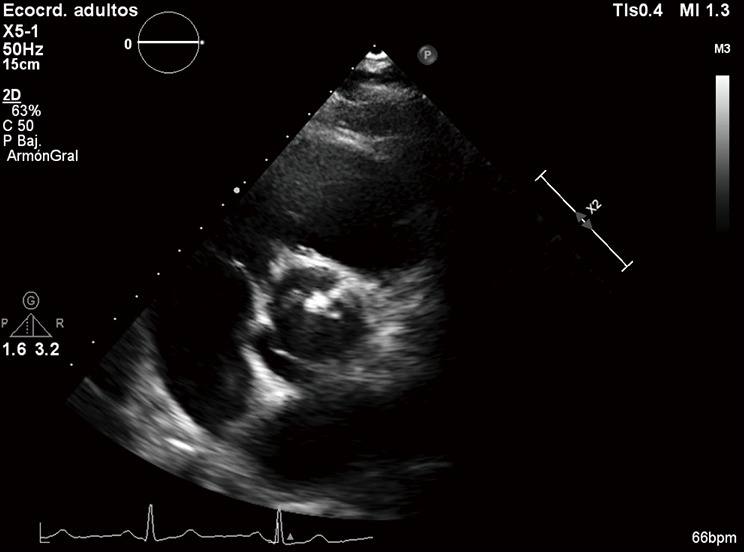
Figure 1
Figure 1
Transthoracic echocardiogram in a patient with BAV. Right-left calcified raphe is present. Patient had a moderate aortic stenosis. BAV, bicuspid aortic valve.
Figure 2
Figure 2
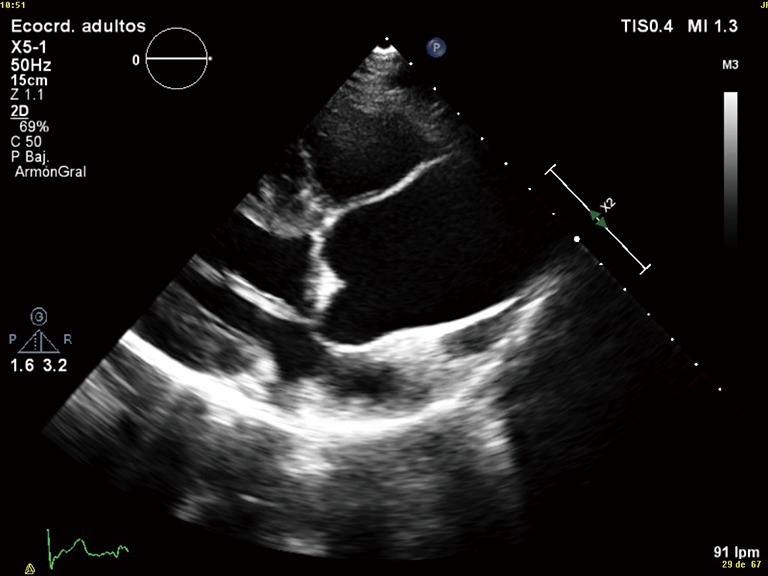
Transthoracic echocardiogram. Dilatation of tubular ascending aorta with mild root dilatation. Pattern type I by Verma et al.
Figure 3
Figure 3
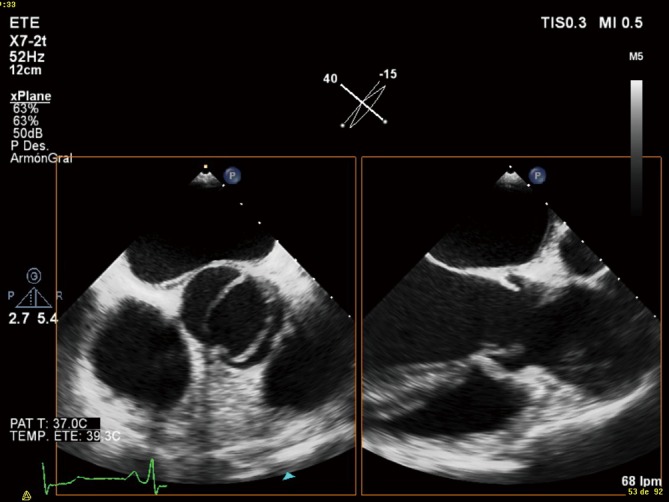
Transesophageal echocardiography: BAV and aortic root and ascending aorta perfectly visualizated in the same study. This was complementary of a transthoracic echocardiogram. BAV, bicuspid aortic valve.
Figure 4
Figure 4
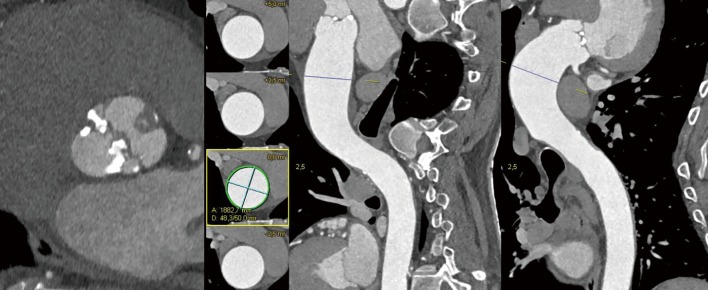
Cardiac CT previous to valvular surgery. Calcified stenotic BAV and measures of ascending aorta. BAV, bicuspid aortic valve.

References

    1. Ward C. Clinical significance of the bicuspid aortic valve. Heart 2000;83:81-5. 10.1136/heart.83.1.81 - DOI - PMC - PubMed
    1. Longobardo L, Jain R, Carerj S, et al. Bicuspid Aortic Valve: Unlocking the Morphogenetic Puzzle. Am J Med 2016;129:796-805. 10.1016/j.amjmed.2016.03.009 - DOI - PubMed
    1. Kang JW, Song HG, Yang DH, et al. Association between bicuspid aortic valve phenotype and patterns of valvular dysfunction and bicuspid aortopathy: comprehensive evaluation using MDCT and echocardiography. JACC Cardiovasc Imaging 2013;6:150-61. 10.1016/j.jcmg.2012.11.007 - DOI - PubMed
    1. Wassmuth R, von Knobelsdorff-Brenkenhoff F, Gruettner H, et al. Cardiac magnetic resonance imaging of congenital bicuspid aortic valves and associated aortic pathologies in adults. Eur Heart J Cardiovasc Imaging 2014;15:673-9. 10.1093/ehjci/jet275 - DOI - PubMed
    1. Nistri S, Giusti B, Pepe G, et al. Another piece in the puzzle of bicuspid aortic valve syndrome. Eur Heart J Cardiovasc Imaging 2016;17:1248-9. 10.1093/ehjci/jew169 - DOI - PMC - PubMed

LinkOut - more resources