


Ten years of the Tiger: Aedes albopictus presence in Australia since its discovery in the Torres Strait in 2005
- PMID: 28616473
- PMCID: PMC5462651
- DOI: 10.1016/j.onehlt.2016.02.001
Ten years of the Tiger: Aedes albopictus presence in Australia since its discovery in the Torres Strait in 2005
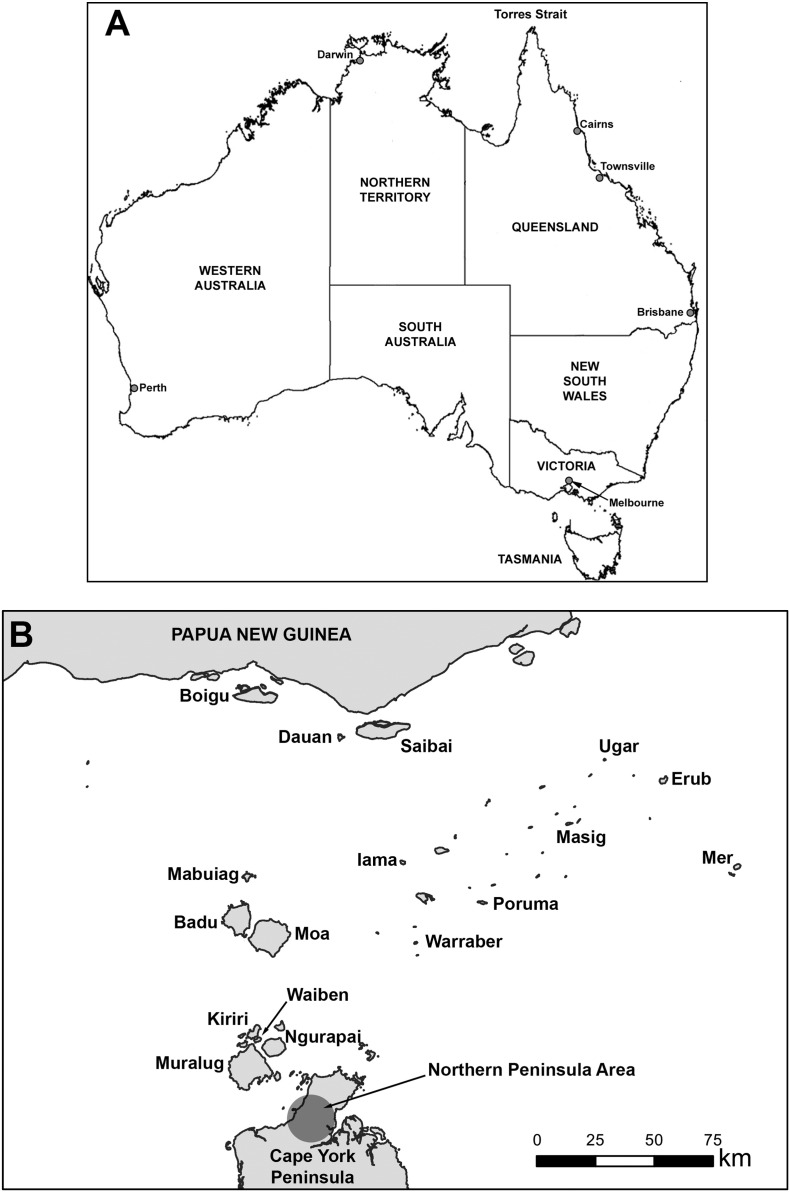
Abstract
The "Asian tiger mosquito", Aedes albopictus, is highly invasive, an aggressive biter and a major arbovirus vector. It is not currently present on mainland Australia despite being intercepted on numerous occasions at international ports and infesting the Torres Strait of Australia since at least 2004. In the current paper, we describe the invasion and current status of Ae. albopictus in the Torres Strait, as well as research conducted to assess the threat of this species becoming established in arbovirus transmission cycles on the Australian mainland. Genetic analysis of the invading population demonstrated that the Indonesian region was the likely origin of the invasion and not Papua New Guinea (PNG) as initially suspected. There was also intermixing between Torres Strait, PNG and Indonesian populations, indicating that the species could be re-introduced into the Torres Strait compromising any successful eradication programme. Vector competence experiments with endemic and exotic viruses revealed that Ae. albopictus from the Torres Strait are efficient alphavirus vectors, but less efficient flavivirus vectors. Ae.albopictus obtains blood meals from a range of vertebrate hosts (including humans), indicating that it could play a role in both zoonotic and human-mosquito arbovirus transmission cycles in Australia. Predictive models coupled with climate tolerance experiments suggest that a Torres Strait strain of Ae. albopictus could colonise southern Australia by overwintering in the egg stage before proliferating in the warmer months. Cohabitation experiments demonstrated that the presence of Aedes notoscriptus larvae in containers would not prevent the establishment of Ae. albopictus. Evidence from these studies, coupled with global experience suggests that we need to be prepared for the imminent invasion of Australia by Ae. albopictus by thoroughly understanding its biology and being willing to embrace emerging control technologies.
Keywords: Aedes albopictus; Arbovirus transmission; Australia; Control; Ecology; Invasive mosquito.
Figures
References
-
- Gratz N.G. Critical review of the vector status of Aedes albopictus. Med. Vet. Entomol. 2004;18:215–227. - PubMed
-
- Lounibos L.P. Invasions by insect vectors of human disease. Annu. Rev. Entomol. 2002;47:233–266. - PubMed
-
- Reiter P. Aedes albopictus and the world trade in used tires, 1988–1995: the shape of things to come? J. Am. Mosq. Control Assoc. 1998;14:83–94. - PubMed
Publication types
LinkOut - more resources
Full Text Sources
Other Literature Sources
