


Oral D-galactose supplementation in PGM1-CDG
- PMID: 28617415
- PMCID: PMC5675745
- DOI: 10.1038/gim.2017.41
Oral D-galactose supplementation in PGM1-CDG
Abstract
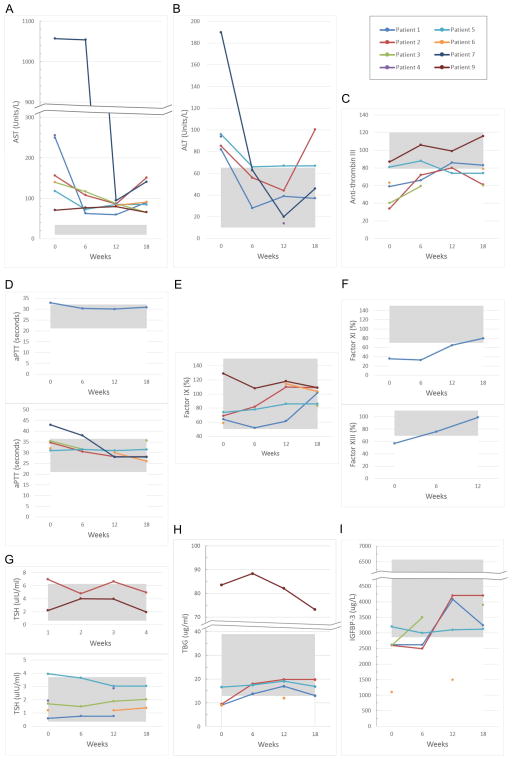
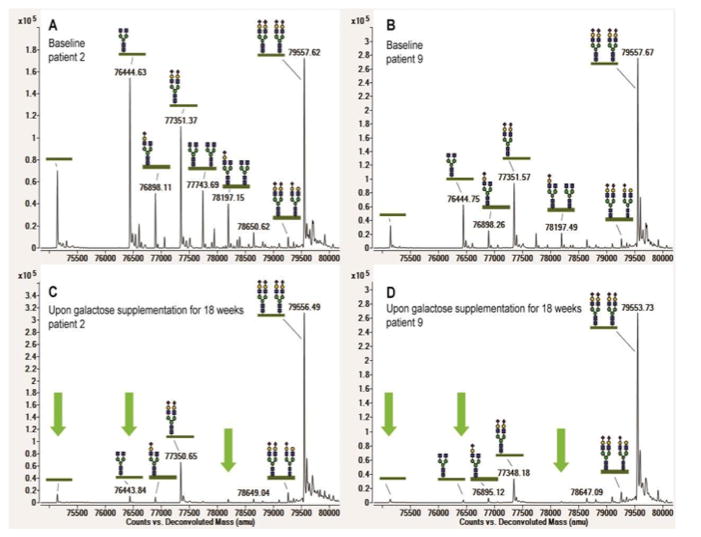
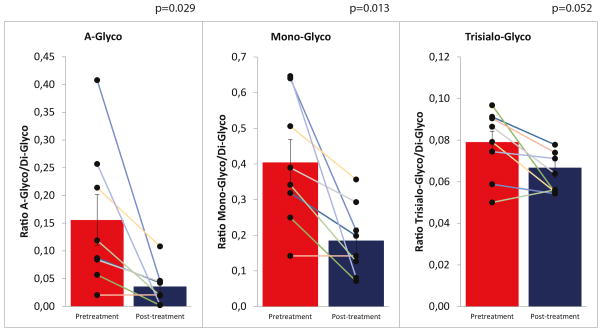
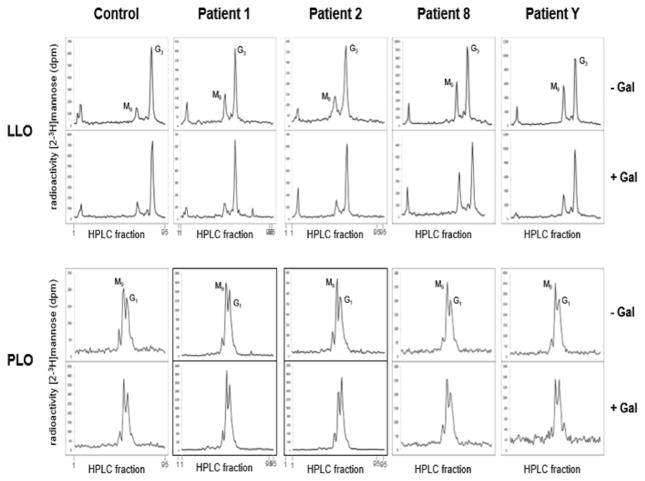
PurposePhosphoglucomutase-1 deficiency is a subtype of congenital disorders of glycosylation (PGM1-CDG). Previous casereports in PGM1-CDG patients receiving oral D-galactose (D-gal) showed clinical improvement. So far no systematic in vitro and clinical studies have assessed safety and benefits of D-gal supplementation. In a prospective pilot study, we evaluated the effects of oral D-gal in nine patients.MethodsD-gal supplementation was increased to 1.5 g/kg/day (maximum 50 g/day) in three increments over 18 weeks. Laboratory studies were performed before and during treatment to monitor safety and effect on serum transferrin-glycosylation, coagulation, and liver and endocrine function. Additionally, the effect of D-gal on cellular glycosylation was characterized in vitro.ResultsEight patients were compliant with D-gal supplementation. No adverse effects were reported. Abnormal baseline results (alanine transaminase, aspartate transaminase, activated partial thromboplastin time) improved or normalized already using 1 g/kg/day D-gal. Antithrombin-III levels and transferrin-glycosylation showed significant improvement, and increase in galactosylation and whole glycan content. In vitro studies before treatment showed N-glycan hyposialylation, altered O-linked glycans, abnormal lipid-linked oligosaccharide profile, and abnormal nucleotide sugars in patient fibroblasts. Most cellular abnormalities improved or normalized following D-gal treatment. D-gal increased both UDP-Glc and UDP-Gal levels and improved lipid-linked oligosaccharide fractions in concert with improved glycosylation in PGM1-CDG.ConclusionOral D-gal supplementation is a safe and effective treatment for PGM1-CDG in this pilot study. Transferrin glycosylation and ATIII levels were useful trial end points. Larger, longer-duration trials are ongoing.
Conflict of interest statement
None declared.
The authors declare no conflict of interest
Figures
References
-
- Jaeken J. Congenital disorders of glycosylation (CDG): it’s (nearly) all in it! J Inherit Metab Dis. 2011;34(4):853–858. - PubMed
-
- Timal S, Hoischen A, Lehle L, et al. Gene identification in the congenital disorders of glycosylation type I by whole-exome sequencing. Hum Mol Genet. 2012;21(19):4151–4161. - PubMed
Publication types
MeSH terms
Substances
Supplementary concepts
Grants and funding
LinkOut - more resources
Full Text Sources
Other Literature Sources
Molecular Biology Databases
Miscellaneous
