Recent advances in understanding lung function development
- PMID: 28620467
- PMCID: PMC5461903
- DOI: 10.12688/f1000research.11185.1
Recent advances in understanding lung function development
Abstract
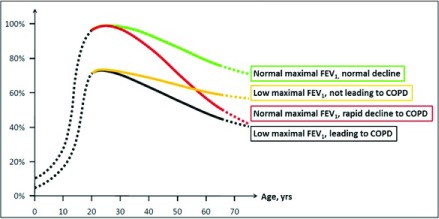
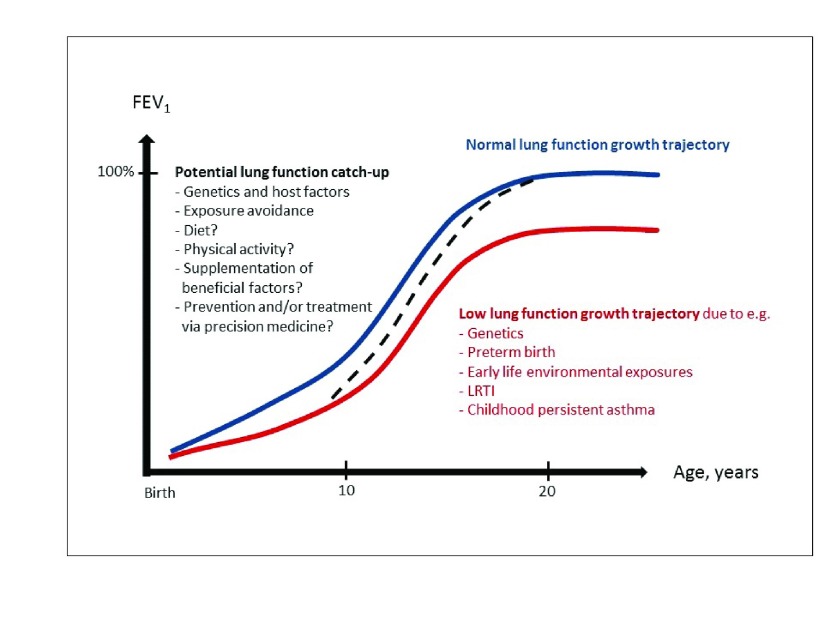
Recent years have witnessed critical contributions to our understanding of the determinants and long-term implications of lung function development. In this article, we review studies that have contributed to advances in understanding lung function development and its critical importance for lung health into adult life. In particular, we have focused on early life determinants that include genetic factors, perinatal events, environmental exposures, lifestyle, infancy lower respiratory tract infections, and persistent asthma phenotypes. Longitudinal studies have conclusively demonstrated that lung function deficits that are established by school age may track into adult life and increase the risk of adult lung obstructive diseases, such as chronic obstructive pulmonary disease. Furthermore, these contributions have provided initial evidence in support of a direct influence by early life events on an accelerated decline of lung function and an increased susceptibility to its environmental determinants well into adult life. As such, we argue that future health-care programs based on precision medicine approaches that integrate deep phenotyping with tailored medication and advice to patients should also foster optimal lung function growth to be fully effective.
Keywords: Asthma; COPD; FEV1; children; genetics; lung function; tobacco smoke; trajectories.
Conflict of interest statement
Competing interests: The authors declare that they have no competing interests.No competing interests were disclosed.No competing interests were disclosed.
Figures
References
-
- Global surveillance, prevention and control of chronic respiratory diseases: a comprehensive approach. World Health Organization;2007. Reference Source
Publication types
LinkOut - more resources
Full Text Sources
Other Literature Sources
Research Materials