


Naturally occurring and added sugar in relation to macronutrient intake and food consumption: results from a population-based study in adults
- PMID: 28620482
- PMCID: PMC5465852
- DOI: 10.1017/jns.2017.3
Naturally occurring and added sugar in relation to macronutrient intake and food consumption: results from a population-based study in adults
Abstract
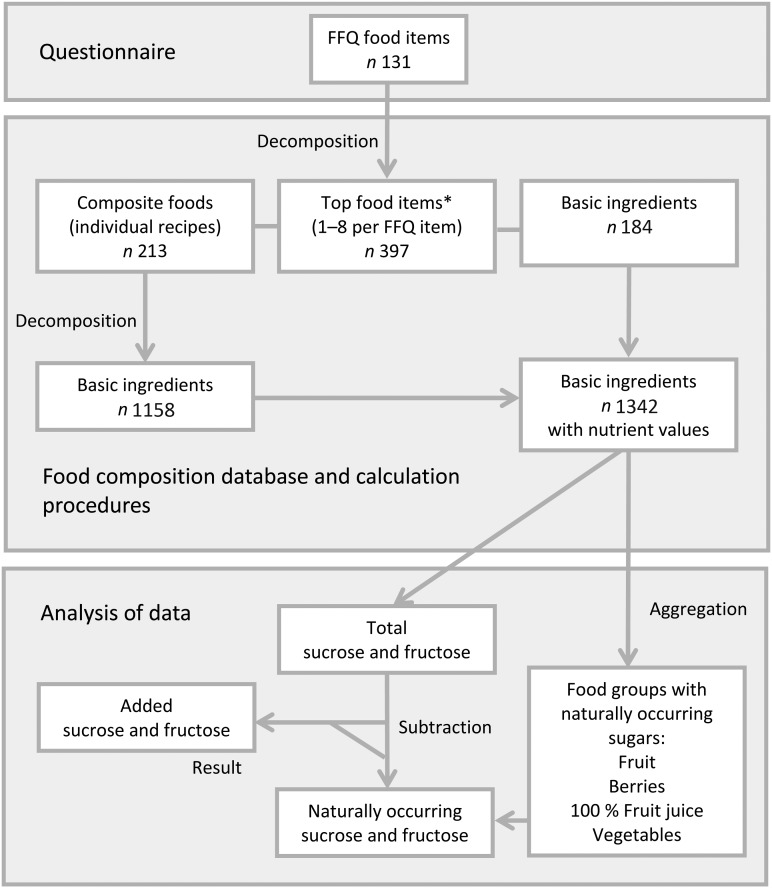
Associations between sugar intake and the remaining diet are poorly described in modern food environments. We aimed at exploring associations of high naturally occurring and added sugar intakes with sociodemographic characteristics, intake of macronutrients, fibre and selected food groups. Our data comprised 4842 Finnish adults aged 25-74 years, who participated in the population-based DIetary, Lifestyle and Genetic determinants of Obesity and Metabolic syndrome (DILGOM) study. Diet was assessed by a validated 131-item FFQ. The food item disaggregation approach was used to estimate sucrose and fructose intakes from natural sources (naturally occurring sugar) and all other sources (added sugar). Sex-specific trends in macronutrient, fibre and food group intakes across sugar type quartiles were determined with general linear modelling adjusting for age, energy intake, leisure-time physical activity, smoking, education and BMI. Overall, results were similar across sexes. Young age was found to be a determinant of higher added sugar and lower naturally occurring sugar intakes (P < 0·0001). High added sugar intake was associated with low fibre intake (P < 0·0001) accompanied with lower fruit (P < 0·0001 women; P = 0·022 men) and vegetable consumption (P < 0·0001) and higher wheat consumption (P = 0·0003 women; P < 0·0001 men). Opposite results were found for naturally occurring sugar. Butter consumption increased by 28-32 % (P < 0·0001) when shifting from the lowest to the highest added sugar intake quartile, while a decrease of 26-38 % (P < 0·0001) was found for naturally occurring sugar. Therefore, the associations of sugar types with dietary carbohydrate and fat quality seem opposing. Proper adjustments with dietary variables are needed when studying independent relationships between sugar and health.
Keywords: Added sugar; Adults; DILGOM, DIetary, Lifestyle and Genetic determinants of Obesity and Metabolic syndrome; E%, percentage energy; EI, energy intake; Food consumption; Fructose; SSB, sugar-sweetened beverages; Sucrose.
Figures
References
-
- Te Morenga L, Mallard S & Mann J (2012) Dietary sugars and body weight: systematic review and meta-analyses of randomised controlled trials and cohort studies. BMJ 346, e7492. - PubMed
-
- Huang C, Huang J, Tian Y, et al. (2014) Sugar sweetened beverages consumption and risk of coronary heart disease: a meta-analysis of prospective studies. Atherosclerosis 234, 11–16. - PubMed
-
- World Health Organization (2015) Guideline: Sugars Intake for Adults and Children. Geneva: World Health Organization. - PubMed
LinkOut - more resources
Full Text Sources
Other Literature Sources