


Testing the Amotivational Syndrome: Marijuana Use Longitudinally Predicts Lower Self-Efficacy Even After Controlling for Demographics, Personality, and Alcohol and Cigarette Use
- PMID: 28620722
- PMCID: PMC5732901
- DOI: 10.1007/s11121-017-0811-3
Testing the Amotivational Syndrome: Marijuana Use Longitudinally Predicts Lower Self-Efficacy Even After Controlling for Demographics, Personality, and Alcohol and Cigarette Use
Abstract
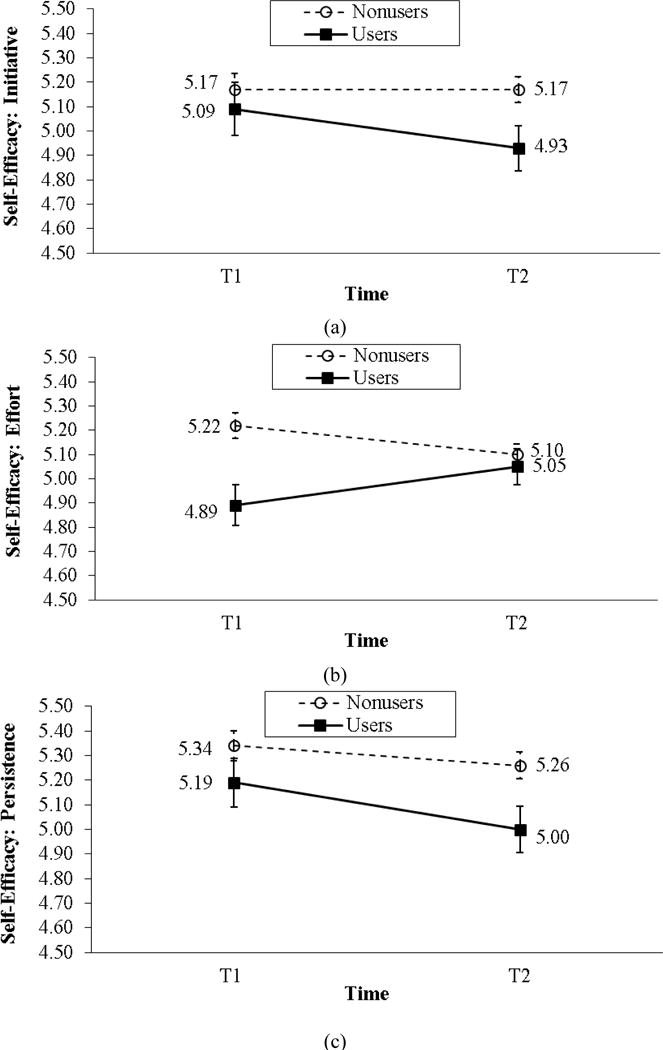
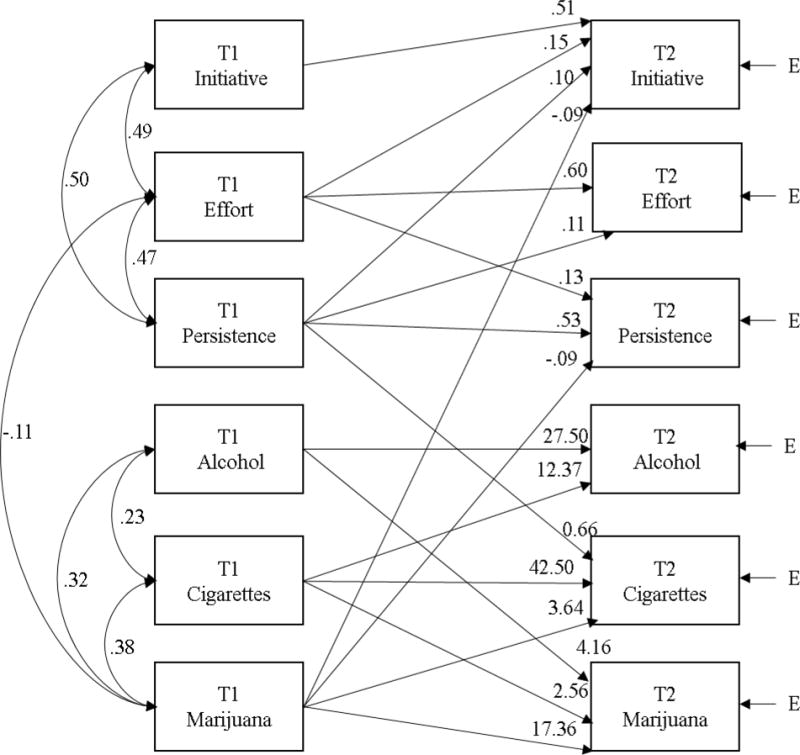
The marijuana amotivational syndrome posits that cannabis use fosters apathy through the depletion of motivation-based constructs such as self-efficacy. The current study pursued a two-round design to rule out concomitant risk factors responsible for the connection from marijuana intake to lower general self-efficacy. College students (N = 505) completed measures of marijuana use, demographics (age, gender, and race), personality (extraversion, agreeableness, conscientiousness, openness, and neuroticism), other substance use (alcohol and tobacco), and general self-efficacy (initiative, effort, and persistence) in two assessments separated by a month. Hierarchical regression models found that marijuana use forecasted lower initiative and persistence, even after statistically ruling out 13 pertinent baseline covariates including demographics, personality traits, alcohol use, tobacco use, and self-efficacy subscales. A cross-lagged panel model involving initiative, effort, persistence, alcohol use, cigarette use, and marijuana use sought to unravel the temporal precedence of processes. Results showed that only marijuana (but not alcohol or tobacco) intake significantly and longitudinally prompted lower initiative and persistence. Furthermore, in the same model, the opposite temporal direction of events from lower general self-efficacy subscales to marijuana use was untenable. Findings provide partial support for the marijuana amotivational syndrome, underscore marijuana as a risk factor for decreased general self-efficacy, and offer implications and insights for marijuana prevention and future research.
Keywords: Amotivational syndrome; Cross-lagged panel modeling; General self-efficacy; Longitudinal; Marijuana.
Conflict of interest statement
Figures
References
-
- Ajzen I. The theory of planned behavior. Organizational behavior and human decision processes. 1991;50(2):179–211.
-
- Bandura A. Self-efficacy: Toward a unifying theory of behavioral change. Psychological Review. 1977;84(2):191–215. - PubMed
Publication types
MeSH terms
Grants and funding
LinkOut - more resources
Full Text Sources
Other Literature Sources
Medical
