. 2017 Oct;69(10):1984-1995.
doi: 10.1002/art.40183. Epub 2017 Aug 31.

Intestinal Metabolites Are Profoundly Altered in the Context of HLA-B27 Expression and Functionally Modulate Disease in a Rat Model of Spondyloarthritis

Affiliations

Intestinal Metabolites Are Profoundly Altered in the Context of HLA-B27 Expression and Functionally Modulate Disease in a Rat Model of Spondyloarthritis

Mark Asquith et al. Arthritis Rheumatol. 2017 Oct.

Abstract

Objective: HLA-B27-associated spondyloarthritides are associated with an altered intestinal microbiota and bowel inflammation. We undertook this study to identify HLA-B27-dependent changes in both host and microbial metabolites in the HLA-B27/β2 -microglobulin (β2 m)-transgenic rat and to determine whether microbiota-derived metabolites could impact disease in this major model of spondyloarthritis.

Methods: Cecal contents were collected from Fischer 344 33-3 HLA-B27/β2 m-transgenic rats and wild-type controls at 6 weeks (before disease) and 16 weeks (with active bowel inflammation). Metabolomic profiling was performed by high-throughput gas and liquid chromatography-based mass spectrometry. HLA-B27/β2 m-transgenic rats were treated with the microbial metabolites propionate or butyrate in drinking water for 10 weeks, and disease activity was subsequently assessed.

Results: Our screen identified 582 metabolites, of which more than half were significantly altered by HLA-B27 expression at 16 weeks. Both microbial and host metabolites were altered, with multiple pathways affected, including those for amino acid, carbohydrate, xenobiotic, and medium-chain fatty acid metabolism. Differences were even observed at 6 weeks, with up-regulation of histidine, tyrosine, spermidine, N-acetylmuramate, and glycerate in HLA-B27/β2 m-transgenic rats. Administration of the short-chain fatty acid propionate significantly attenuated HLA-B27-associated inflammatory disease, although this was not associated with increased FoxP3+ T cell induction or with altered expression of the immunomodulatory cytokines interleukin-10 (IL-10) or IL-33 or of the tight junction protein zonula occludens 1. HLA-B27 expression was also associated with altered host expression of messenger RNA for the microbial metabolite receptors free fatty acid receptor 2 (FFAR2), FFAR3, and niacin receptor 1.

Conclusion: HLA-B27 expression profoundly impacts the intestinal metabolome, with changes evident in rats even at age 6 weeks. Critically, we demonstrate that a microbial metabolite, propionate, attenuates development of HLA-B27-associated inflammatory disease. These and other microbiota-derived bioactive mediators may provide novel treatment modalities in HLA-B27-associated spondyloarthritides.


Figures

Figure 1
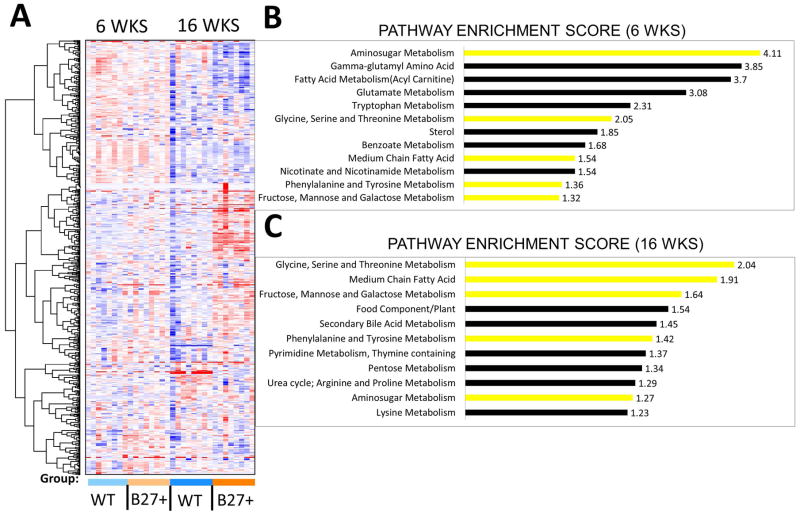
Figure 1. HLA-B27 expression significantly alters the intestinal metabolome
LC/MS analysis was used to analyze the cecal metabolome of HLA-B27/β2m rats and WT littermate controls either pre-disease (6 weeks) or in animals with active bowel inflammation (16wks). A) Hierarchical clustering analysis of WT and HLA-B27/β2m transgenic rats at each time point. N=8/genotype/age group (B–C) Pathway enrichment analysis of HLA-B27/β2m trangenic rats vs controls at 6 weeks (B) and 16 weeks (C). Yellow bars represent enrichment at both time points. Pathway enrichment scores are shown (see supplementary methods).
Figure 2
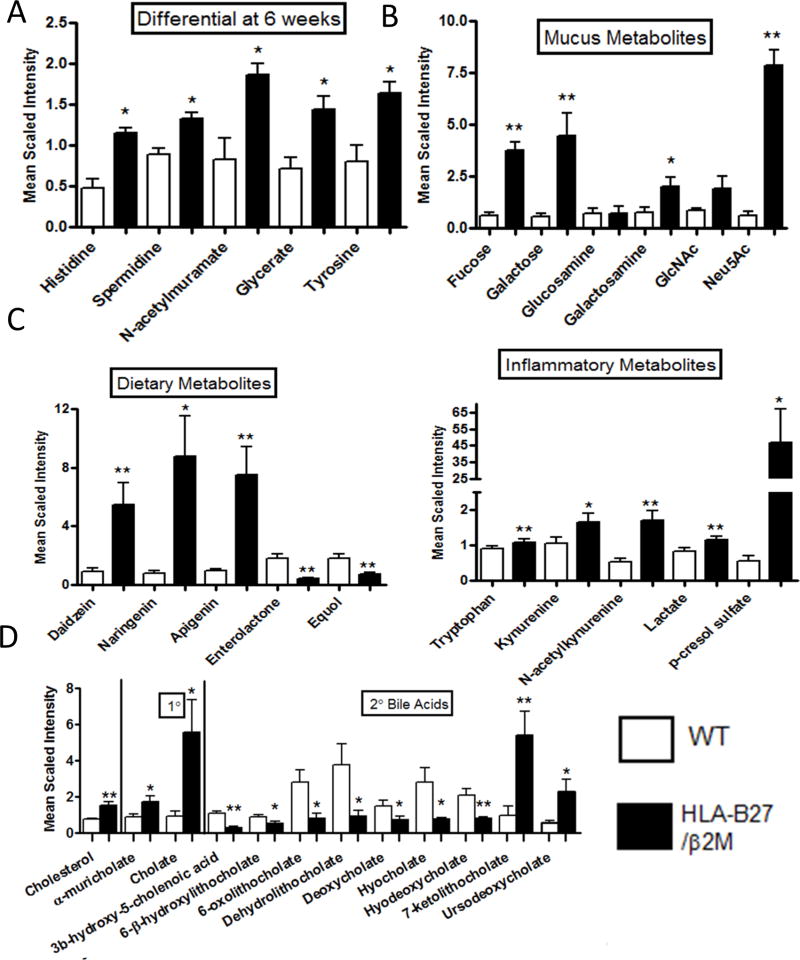
Figure 2. HLA-B27 expression significantly alters amino acids, carbohydrates and xenobiotics
The abundance of distinct metabolites classes in WT (white bars) vs HLA-B27/β2m transgenic rats (black bars) is shown as determined by UPLS/MS and GC/MS. A) Significantly altered cecal metabolites in pre-disease (6wk old animals) BE Metabolite levels of B) Mucus components; C) Dietary metabolites; D) Inflammatory metabolites and E) bile acids in 16wk animals are shown (for 6wk animals see Supp Fig 2). Bars represent group means +/− SEM. Symbols represent Benjamini-Hochberg corrected p values with a false discovery rate of 0.2 rather than conventional p values (* < 0.2, ** <0.1). N=8/group.
Figure 3
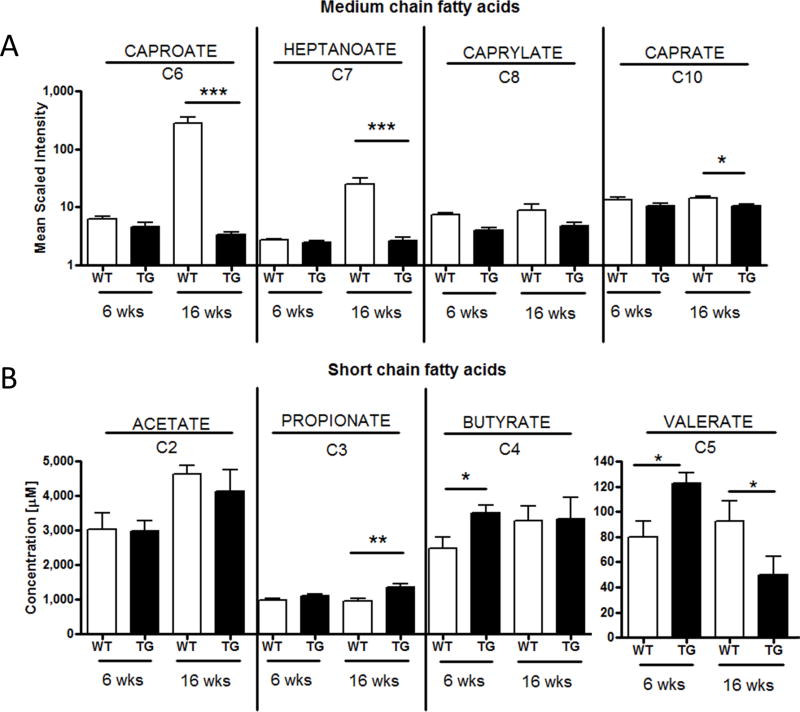
Figure 3. HLA-B27 expression significantly impacts intestinal MCFA and SCFA levels
A) Medium chain fatty acid fatty acid levels in cecal contents of WT (white bars) vs HLA-B27/β2m transgenic rats (black bars) were measured by LC/MS metabolomic screen. Significance symbols represent Benjamani-Hochberg correct p values as described in Fig 2 (* = p < 0.2, *** = p < 0.05). N=8/group B) Cecal concentration (micromolar) of acetate, propionate, butyrate and valerate as determined by GC-MS. * = p < 0.05, ** = p < 0.01 by Mann Whitney U test. N= 6–8/group. Bars represent mean +/− SEM.
Figure 4
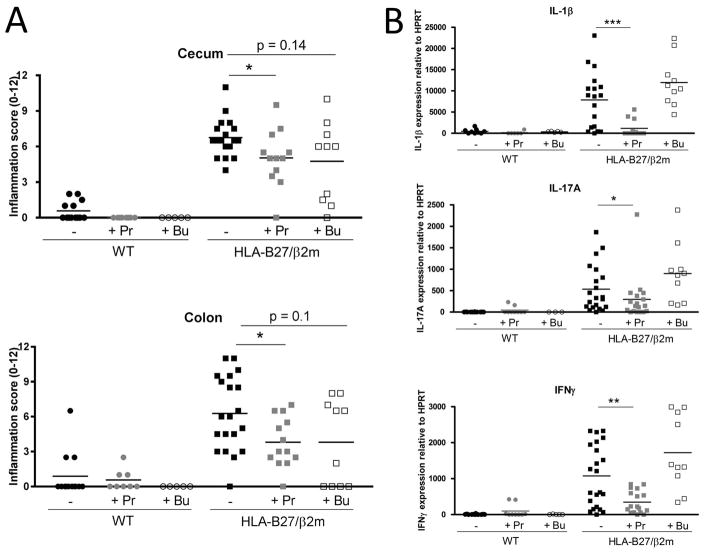
Figure 4. Administration of SCFA sodium propionate significantly attenuates HLA-B27 associated immune pathology
Six week old HLA-B27/β2m transgenic rats or WT littermate controls were treated with either sodium propionate (150mM) or sodium butyrate (150mM) for 12 weeks in drinking water. At necropsy (16 wks), cecal and colon were harvested to analyze intestinal inflammation. A) Histological assessment of intestinal inflammation in Cecum and Colon by semi-quantitative scoring system (0–12). B) Relative mRNA expression of IL-1β, IL-17A and IFNγ in colon tissue. Bars represent group means and each symbol represents an individual animal. Data is representative of 3 pooled independent experiments. Legend: ‘−’ = untreated controls, ‘P’ = propionate treated, ‘B’ = butyrate treated. * = p < 0.05, ** = p < 0.01.
Figure 5
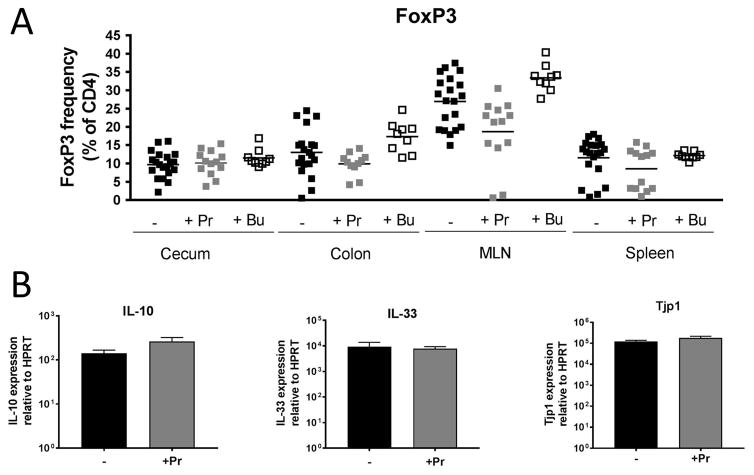
Figure 5. SCFA administration does not significantly impact FoxP3+ve Treg induction, expression of immune regulatory cytokines or tight junction components
Six week old HLA-B27/β2m transgenic rats or WT littermate controls were treated with either sodium propionate (150mM) or sodium butyrate (150mM) for 12 weeks in drinking water. A) The frequency of CD4+ FoxP3+ ve T cells in cecum, colon, mesenteric lymph node (MLN) and spleen in B27+ animals is shown (see sup fig 5 for WT animals). Each symbol represent an individual animals and horizontal bars represent group means. B) Relative colonic mRNA expression of IL-10 and IL-33. C) Relative colonic mRNA expression of tight junction protein ZO-1/Tight junction protein 1. Bars represent group mean +/− SEM. All mRNA expression data normalized to HPRT. N=8–11 animals/group. Statistical significance (p < 0.05) was not observed by Mann Whitney U test between treated and untreated groups for the parameters shown.
Figure 6
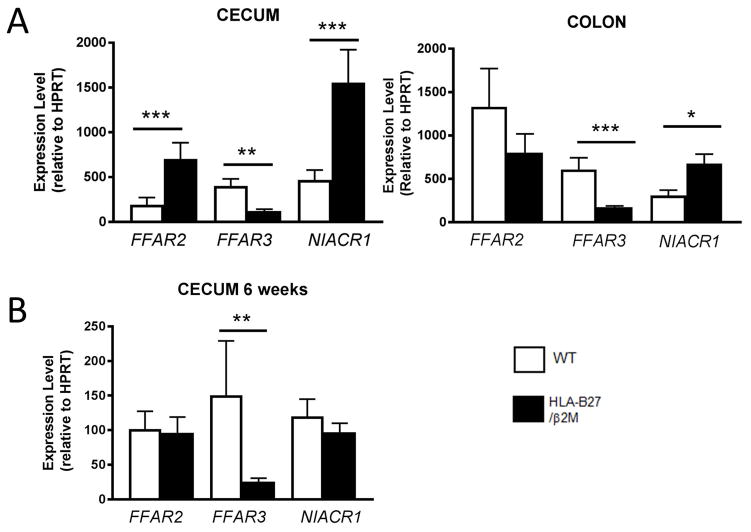
Figure 6. Intestinal Short Chain Fatty Acid Receptor Expression is significantly altered in HLA-B27/β2m transgenic rats
Cecal mRNA expression of short chain fatty acid receptors FFAR2, FFAR3 and NIACR1 was determined in unmanipulated WT (white bars) and HLA-B27/β2m transgenic rats at 16 wks of age (A) and 6wks of age (B) by qRT-PCR, Bars represent group mean +/− SEM. All mRNA expression data normalized to HPRT. N = 10–19 animals/group. * = p < 0.05, ** = p < 0.01, *** = p < 0.005 by Mann Whitney U test.

References

    1. Petersen C, Round JL. Defining dysbiosis and its influence on host immunity and disease. Cell Microbiol. 2014;16:1024–1033. - PMC - PubMed
    1. Scher JU, Littman DR, Abramson SB. Review: Microbiome in Inflammatory Arthritis and Human Rheumatic Diseases. Arthritis & rheumatology. 2016;68:35–45. - PMC - PubMed
    1. Sharon G, Garg N, Debelius J, et al. Specialized metabolites from the microbiome in health and disease. Cell metabolism. 2014;20:719–730. - PMC - PubMed
    1. Hammer RE, Maika SD, Richardson JA, et al. Spontaneous inflammatory disease in transgenic rats expressing HLA-B27 and human beta 2m: an animal model of HLA-B27-associated human disorders. Cell. 1990;63:1099–1112. - PubMed
    1. Taurog JD, Maika SD, Satumtira N, et al. Inflammatory disease in HLA-B27 transgenic rats. Immunol Rev. 1999;169:209–223. - PubMed

Publication types

MeSH terms