An Integrated Model of Chronic Whiplash-Associated Disorder
- PMID: 28622487
- PMCID: PMC7351370
- DOI: 10.2519/jospt.2017.7455
An Integrated Model of Chronic Whiplash-Associated Disorder
Abstract
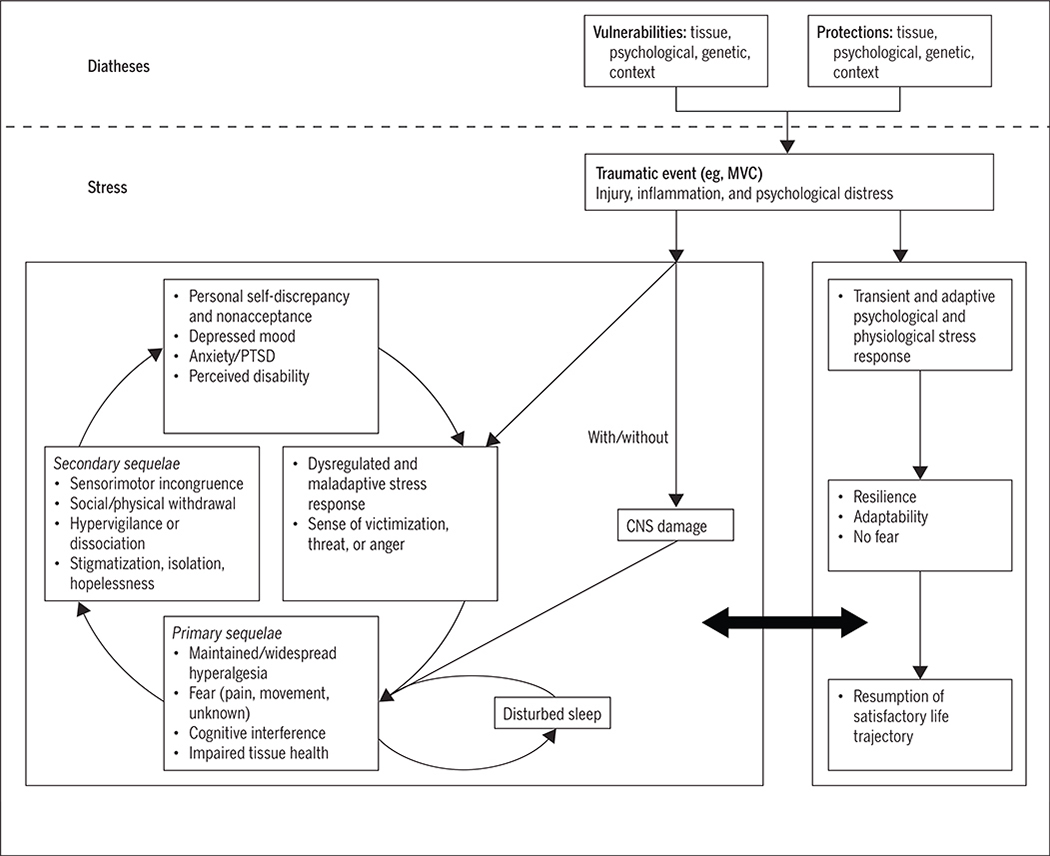
Synopsis The development of persistent symptoms following whiplash injury from a motor vehicle collision is common and contributes substantially to societal and personal costs. The popular Quebec Task Force classification system of whiplash-associated disorders (WADs) was meant to function as a prognostic and intervention decision aid, but its usefulness has been questioned. Emerging evidence highlights the heterogeneity of WAD by demonstrating physical and psychological impairments that are unique to those who develop persistent symptoms. These impairments are not recognized in the Quebec Task Force classification system. The purpose of this clinical commentary is to describe an integrated model that focuses on how psychological and neurobiological factors interact with, and are influenced by, existing personal and environmental factors to contribute to the development of chronic WAD. The model has been developed through more than 20 years of work in the field, consultation with experts, in-depth synthesis of existing evidence, and new evidence from the authors' own research programs. A subtheme is that a point of convergence currently exists between the psychological, physiological, and social determinants of health literature that can further explain the complex presentation of WAD. The new model is proposed to orient future research toward more interdisciplinary efforts across nontraditional fields, including data scientists and consumers, to clarify the WAD condition. J Orthop Sports Phys Ther 2017;47(7):462-471. Epub 16 Jun 2017. doi:10.2519/jospt.2017.7455.
Keywords: WAD; acute pain; cervical spine; chronic pain; diathesis; neck.
Figures
References
-
- Barnsley L, Lord SM, Wallis BJ. Bogduk N. The prevalence of chronic cervical zygapophysial joint pain after whiplash. Spine (Phila Pa 1976). 1995;20:20–25; discussion 26. - PubMed
MeSH terms
Grants and funding
LinkOut - more resources
Full Text Sources
Other Literature Sources
Medical
Miscellaneous