Clinical Trial
. 2017 Jun 16;7(1):3753.
doi: 10.1038/s41598-017-03573-4.

ADAMTS-7 is associated with a high-risk plaque phenotype in human atherosclerosis

Affiliations
Clinical Trial

ADAMTS-7 is associated with a high-risk plaque phenotype in human atherosclerosis

Eva Bengtsson et al. Sci Rep. .

Abstract

Several large-scale genome-wide association studies have identified single-nucleotide polymorphisms in the genomic region of A Disintegrin And Metalloproteinase with ThromboSpondin type 1 repeats (ADAMTS)-7 and associations to coronary artery disease. Experimental studies have provided evidence for a functional role of ADAMTS-7 in both injury-induced vascular neointima formation and development of atherosclerotic lesions. However, whether ADAMTS-7 is associated with a specific plaque phenotype in humans has not been investigated. Carotid plaques (n = 206) from patients with and without cerebrovascular symptoms were analyzed for expression of ADAMTS-7 by immunohistochemistry and correlated to components associated with plaque vulnerability. Plaques from symptomatic patients showed increased levels of ADAMTS-7 compared with lesions from asymptomatic patients. High levels of ADAMTS-7 correlated with high levels of CD68-staining and lipid content, but with low smooth muscle cell and collagen content, which together are characteristics of a vulnerable plaque phenotype. ADAMTS-7 levels above median were associated with increased risk for postoperative cardiovascular events. Our data show that ADAMTS-7 is associated with a vulnerable plaque phenotype in human carotid lesions. These data support previous observations of a potential proatherogenic role of ADAMTS-7.


Conflict of interest statement

The authors declare that they have no competing interests.

Figures
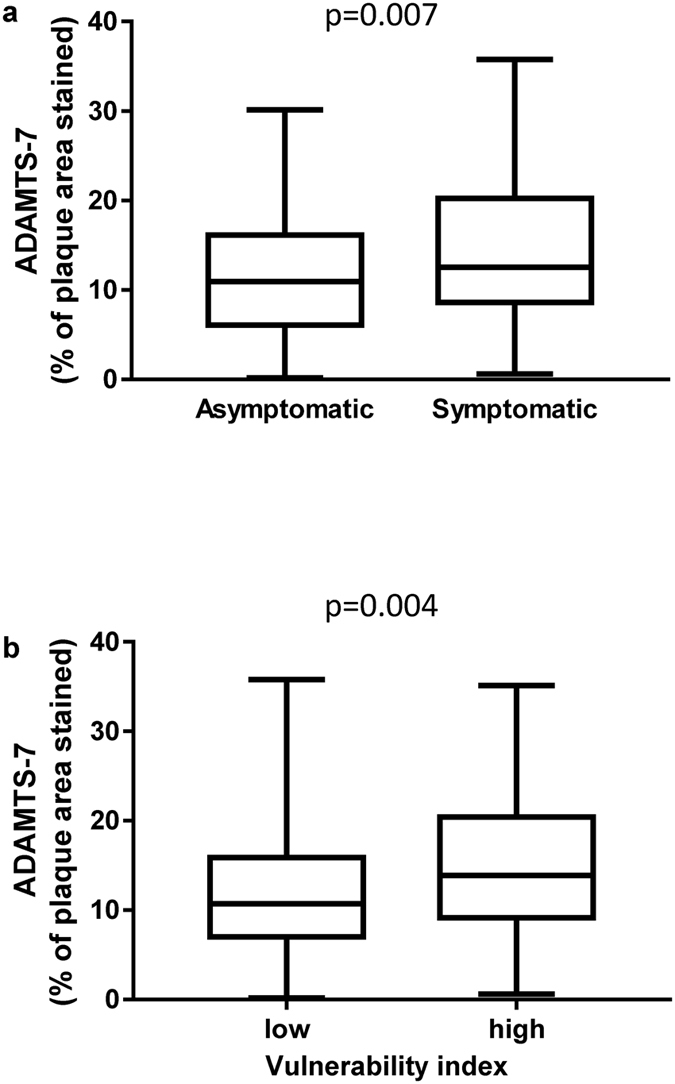
Figure 1
Figure 1
ADAMTS-7 is increased in symptomatic and vulnerable lesions. ADAMTS-7 (% of plaque area stained) is increased in carotid lesions removed by endarterectomy from symptomatic patients compared to lesions from asymptomatic patients (a). ADAMTS-7 is increased in lesions with a high vulnerability index (above median) (b). Vulnerability index was calculated based on lipid-, CD68-, hemorrhage-, SMC-, and collagen-staining (% of plaque areas stained). Values are presented as boxplots. Number of plaques = 206; Mann-Whitney test.
Figure 2
Figure 2
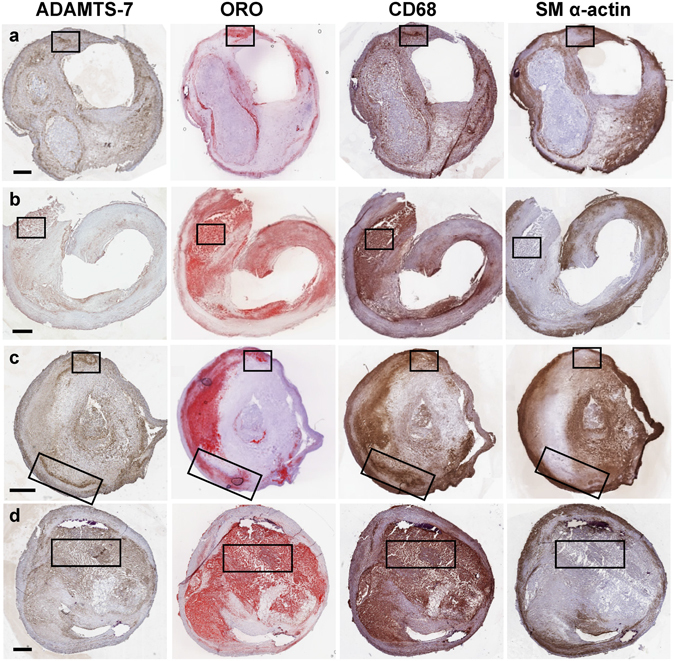
ADAMTS-7 is localized to areas staining positive for CD68 and lipids in human advanced carotid atherosclerotic plaques. Representative images are shown for staining of ADAMTS-7, lipids (Oil Red O, ORO), CD68, SMCs (SM α–actin) in four different atherosclerotic plaques (a–d). Examples of regions positive for ADAMTS-7, lipids, and CD68-staining are boxed. Scale bar: 1000 μm.
Figure 3
Figure 3
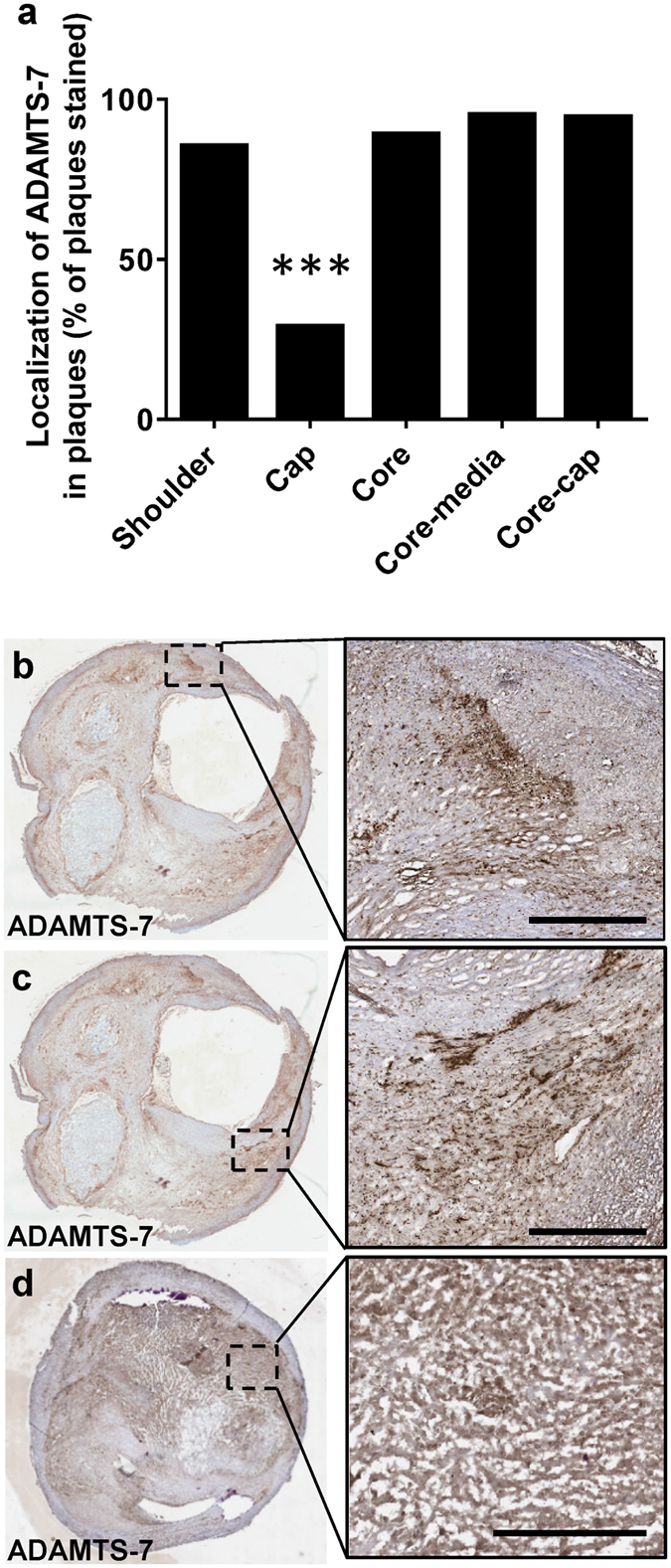
Localization of ADAMTS-7 in human carotid plaques. The presence of ADAMTS-7 (% of plaques stained) in different regions of the plaque were analysed (a). Representative images are shown for staining of ADAMTS-7 in shoulder regions (b–c), and in the core (d) of the plaques. Scale bars: 500 μm. p < 0.0001 (cap region compared to all of the other regions); Chi-square test.
Figure 4
Figure 4
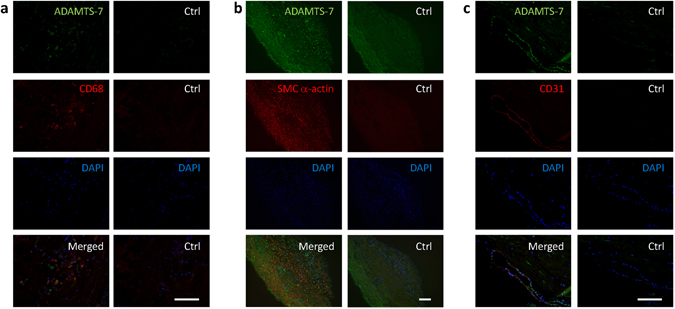
ADAMTS-7 co-stainings with CD68 (a), SMC α-actin (b), and CD31 (c). Human carotid plaque stained for ADAMTS-7 (green) and CD68 (a), SMC a-actin (b) or CD31 (c) (red), DAPI (blue) and merged together. Control sections are stained with isotype controls, DAPI, and merged. Scale bars: 10 µm.
Figure 5
Figure 5
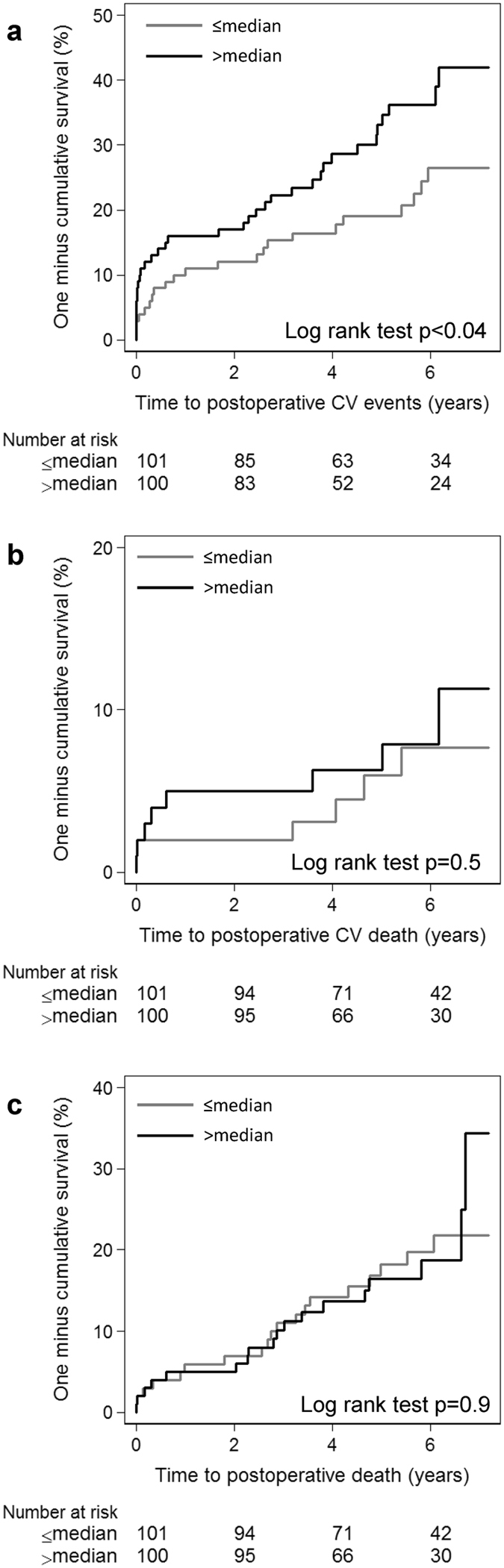
Association between ADAMTS-7 (% of plaque area stained) in lesions and risk of a future CV event. Kaplan-Meier curves illustrating risk for postoperative CV events (a), CV deaths (b) and all causes deaths (c) across ADAMTS-7 above or below the median.
Figure 6
Figure 6
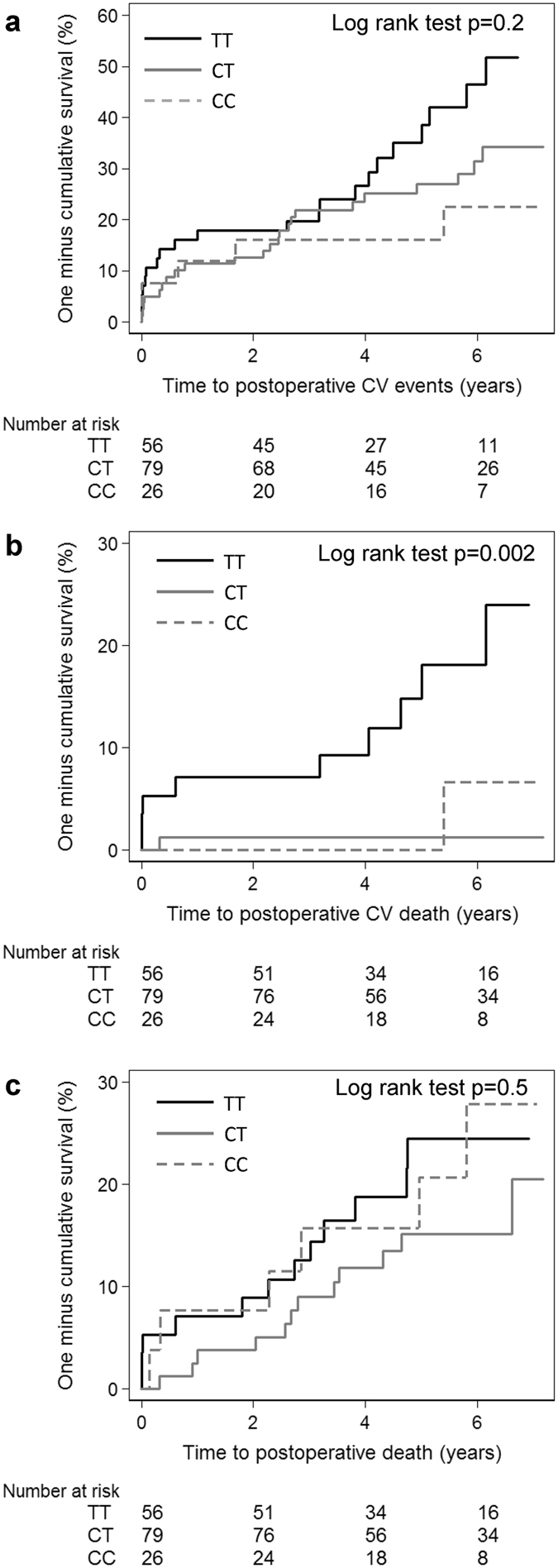
SNP rs7177699 in the ADAMTS-7 locus is associated with increased risk for a future CV death. Kaplan-Meier curves illustrating risk for postoperative CV events (a), CV deaths (b) and all causes deaths (c) across ADAMTS-7 genotypes in SNP rs7177699.

References

    1. Coronary Artery Disease Genetics, C A genome-wide association study in Europeans and South Asians identifies five new loci for coronary artery disease. Nature genetics. 2011;43:339–344. doi: 10.1038/ng.782. - DOI - PubMed
    1. Reilly MP, et al. Identification of ADAMTS7 as a novel locus for coronary atherosclerosis and association of ABO with myocardial infarction in the presence of coronary atherosclerosis: two genome-wide association studies. Lancet. 2011;377:383–392. doi: 10.1016/S0140-6736(10)61996-4. - DOI - PMC - PubMed
    1. Schunkert H, et al. Large-scale association analysis identifies 13 new susceptibility loci for coronary artery disease. Nature genetics. 2011;43:333–338. doi: 10.1038/ng.784. - DOI - PMC - PubMed
    1. Hanby, H. A. & Zheng, X. L. Biochemistry and physiological functions of ADAMTS7 metalloprotease. Adv Biochem1, doi:10.11648/j.ab.20130103.11 (2013). - PMC - PubMed
    1. Lai Y, et al. ADAMTS-7 forms a positive feedback loop with TNF-alpha in the pathogenesis of osteoarthritis. Annals of the rheumatic diseases. 2014;73:1575–1584. doi: 10.1136/annrheumdis-2013-203561. - DOI - PMC - PubMed

Publication types

MeSH terms