


Clinical Efficacy and Post-Treatment Seromarkers Associated with the Risk of Hepatocellular Carcinoma among Chronic Hepatitis C Patients
- PMID: 28623331
- PMCID: PMC5473811
- DOI: 10.1038/s41598-017-02313-y
Clinical Efficacy and Post-Treatment Seromarkers Associated with the Risk of Hepatocellular Carcinoma among Chronic Hepatitis C Patients
Abstract
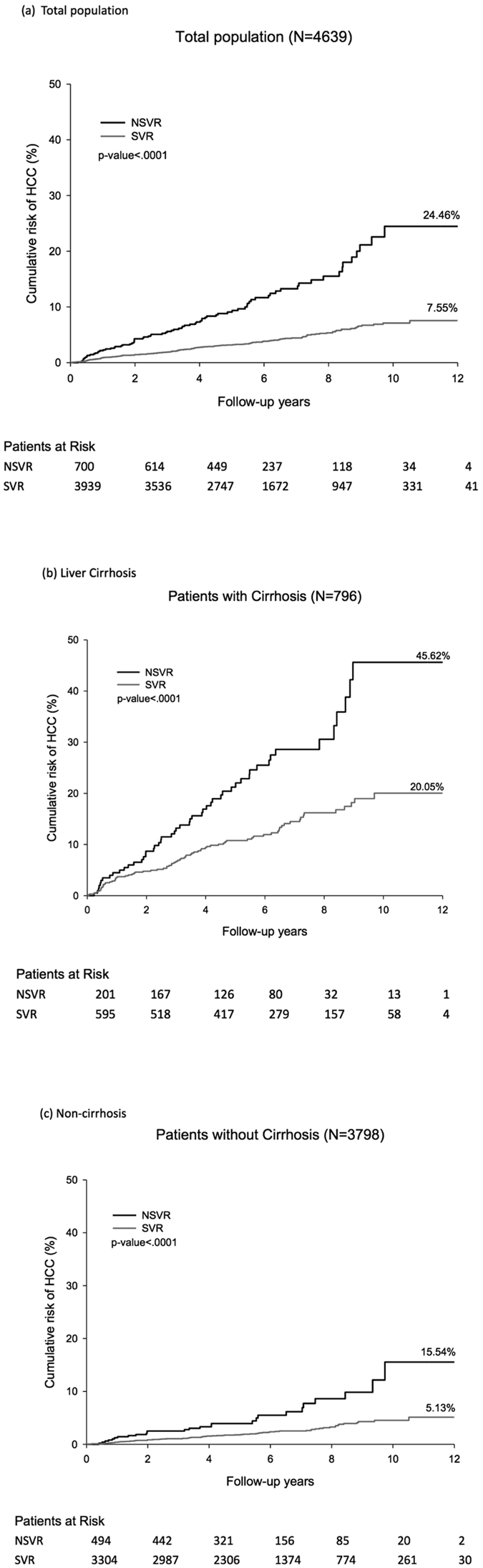
This follow-up study enrolled chronic hepatitis C patients to evaluate the treatment efficacy and to identify post-treatment seromarkers associated with risk of hepatocellular carcinoma (HCC) among patients with a sustained virological response (SVR) or nonsustained virological response (NSVR). A total of 4639 patients who received pegylated interferon and ribavirin during 2004-2013 were followed until December 2014. HCC was confirmed through health examinations and data linkage with a national database. A total of 233 HCC cases were reported after 26,163 person-years of follow-up, indicating an incidence of 8.9 per 1000 person-years: 6.9 for SVR and 21.6 for NSVR per 1000 person-years. The associated risk of HCC in patients with SVR was 0.37 (0.22-0.63) for those without cirrhosis and 0.54 (0.31-0.92) for those with cirrhosis compared with their respective counterparts with NSVR. Among patients with SVR, advanced age, male gender, cirrhosis, decreased platelet count, and increased aspartate aminotransferase and α-fetoprotein levels were associated with HCC (p < 0.001). The treatment of chronic hepatitis C patients before they developed cirrhosis showed a higher efficacy than did the treatment of those who had already developed cirrhosis. Patients with SVR may still have a risk of HCC and need to be regularly monitored.
Conflict of interest statement
The authors declare that they have no competing interests.
Figures
References
Publication types
MeSH terms
Substances
LinkOut - more resources
Full Text Sources
Other Literature Sources
Medical
Molecular Biology Databases
