


Hemoglobin concentrations and RBC transfusion thresholds in patients with acute brain injury: an international survey
- PMID: 28623949
- PMCID: PMC5473997
- DOI: 10.1186/s13054-017-1748-4
Hemoglobin concentrations and RBC transfusion thresholds in patients with acute brain injury: an international survey
Abstract
Background: The optimal hemoglobin (Hb) threshold at which to initiate red blood cell (RBC) transfusion in patients with acute brain injury is unknown. The aim of this survey was to investigate RBC transfusion practices used with these patients.
Methods: We conducted a web-based survey within various societies of critical care medicine for intensive care unit (ICU) physicians who currently manage patients with primary acute brain injury.
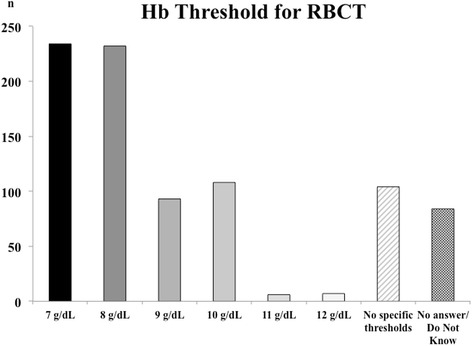
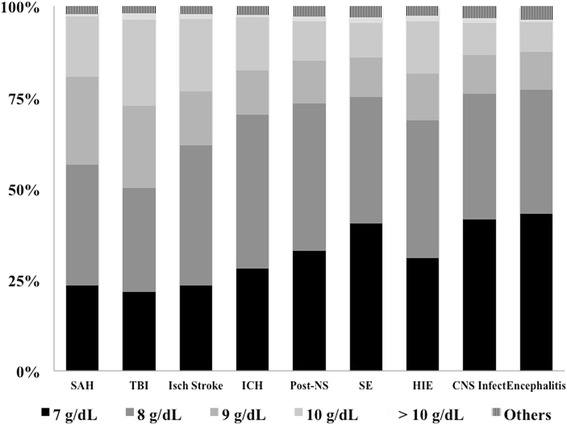
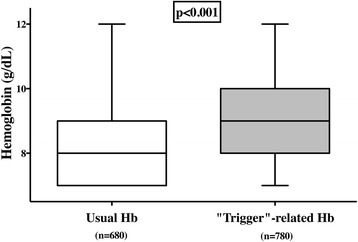
Results: A total of 868 responses were obtained from around the world, half of which (n = 485) were from European centers; 204 (24%) respondents had a specific certificate in neurocritical care, and most were specialists in anesthesiology or intensive care and had less than 15 years of practice experience. Four hundred sixty-six respondents (54%) said they used an Hb threshold of 7-8 g/dl to initiate RBC transfusion after acute brain injury, although half of these respondents used a different threshold (closer to 9 g/dl) in patients with traumatic brain injury, subarachnoid hemorrhage, or ischemic stroke. Systemic and cerebral factors were reported as influencing the need for higher Hb thresholds. Most respondents agreed that a randomized clinical trial was needed to compare two different Hb thresholds for RBC transfusion, particularly in patients with traumatic brain injury, subarachnoid hemorrhage, and ischemic stroke.
Conclusions: The Hb threshold used for RBC transfusion after acute brain injury was less than 8 g/dl in half of the ICU clinicians who responded to our survey. However, more than 50% of these physicians used higher Hb thresholds in certain conditions.
Keywords: Brain injury; Hemoglobin; Outcome; Threshold; Transfusion.
Figures
References
MeSH terms
Substances
LinkOut - more resources
Full Text Sources
Other Literature Sources
