


The Effect of Diaphragmatic Breathing on Attention, Negative Affect and Stress in Healthy Adults
- PMID: 28626434
- PMCID: PMC5455070
- DOI: 10.3389/fpsyg.2017.00874
The Effect of Diaphragmatic Breathing on Attention, Negative Affect and Stress in Healthy Adults
Abstract
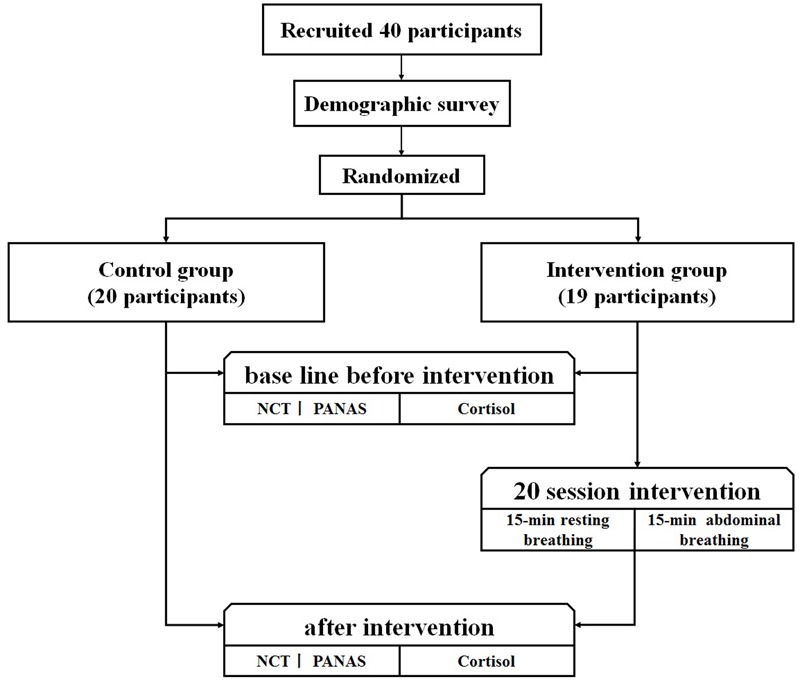
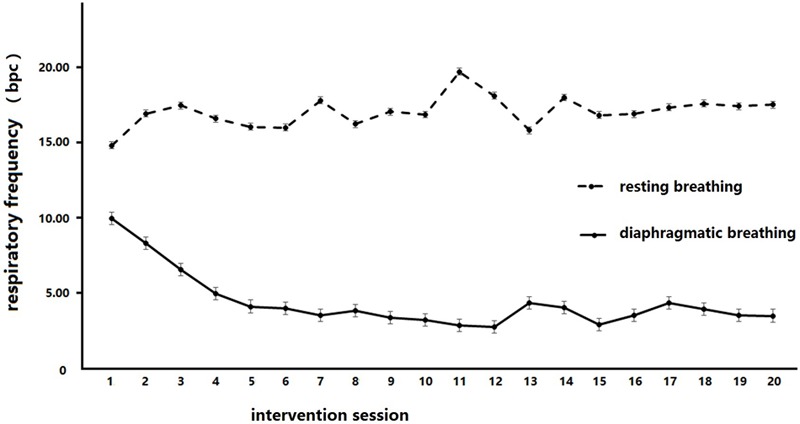
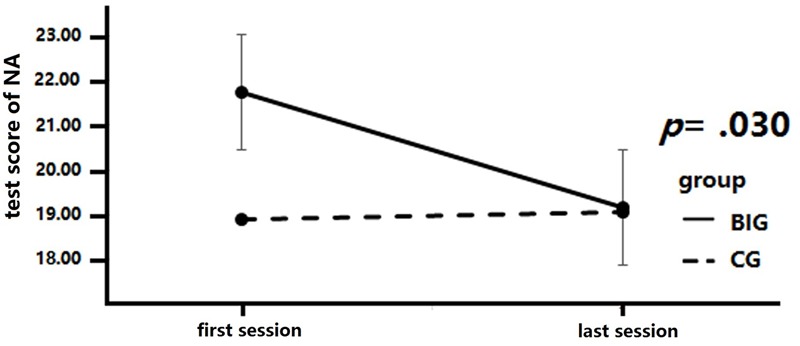
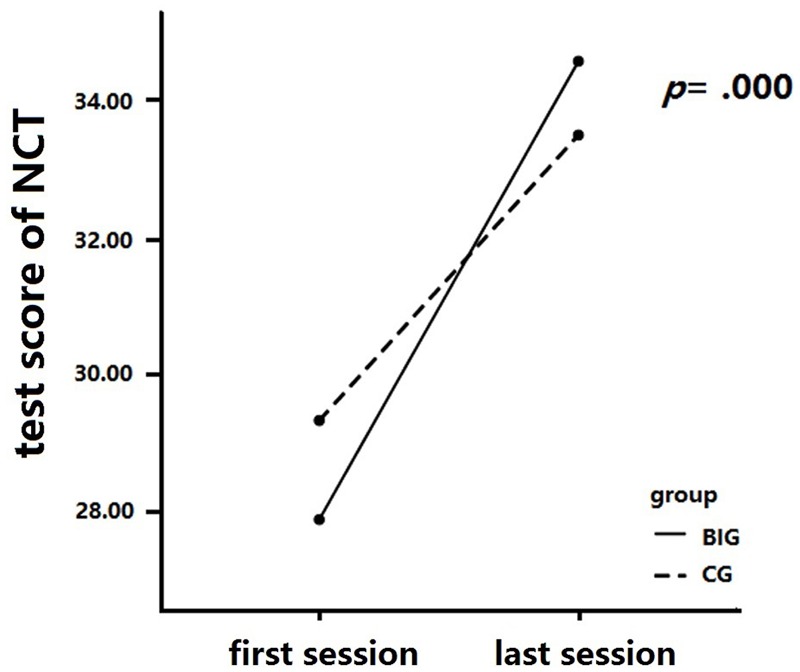
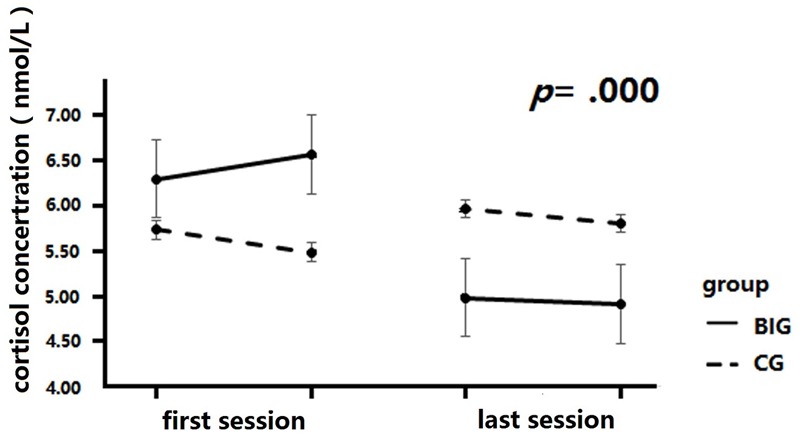
A growing number of empirical studies have revealed that diaphragmatic breathing may trigger body relaxation responses and benefit both physical and mental health. However, the specific benefits of diaphragmatic breathing on mental health remain largely unknown. The present study aimed to investigate the effect of diaphragmatic breathing on cognition, affect, and cortisol responses to stress. Forty participants were randomly assigned to either a breathing intervention group (BIG) or a control group (CG). The BIG received intensive training for 20 sessions, implemented over 8 weeks, employing a real-time feedback device, and an average respiratory rate of 4 breaths/min, while the CG did not receive this treatment. All participants completed pre- and post-tests of sustained attention and affect. Additionally, pre-test and post-test salivary cortisol concentrations were determined in both groups. The findings suggested that the BIG showed a significant decrease in negative affect after intervention, compared to baseline. In the diaphragmatic breathing condition, there was a significant interaction effect of group by time on sustained attention, whereby the BIG showed significantly increased sustained attention after training, compared to baseline. There was a significant interaction effect of group and time in the diaphragmatic breathing condition on cortisol levels, whereby the BIG had a significantly lower cortisol level after training, while the CG showed no significant change in cortisol levels. In conclusion, diaphragmatic breathing could improve sustained attention, affect, and cortisol levels. This study provided evidence demonstrating the effect of diaphragmatic breathing, a mind-body practice, on mental function, from a health psychology approach, which has important implications for health promotion in healthy individuals.
Keywords: breathing technique; mental health; real-time feedback; relaxation; sustained attention.
Figures
References
-
- Amon K., Campbell A. (2008). Biofeedback video games to teach ADHD children relaxation skills to help manage symptoms. Patoss Bull. 34–38. Available at: http://www2.fhs.usyd.edu.au/arow/biofeedback4adhd/Amon_Campbell_2008.pdf (accessed January 21, 2011).
LinkOut - more resources
Full Text Sources
Other Literature Sources
Medical
