


Understanding mSOS: A qualitative study examining the implementation of a text-messaging outbreak alert system in rural Kenya
- PMID: 28628629
- PMCID: PMC5476271
- DOI: 10.1371/journal.pone.0179408
Understanding mSOS: A qualitative study examining the implementation of a text-messaging outbreak alert system in rural Kenya
Abstract
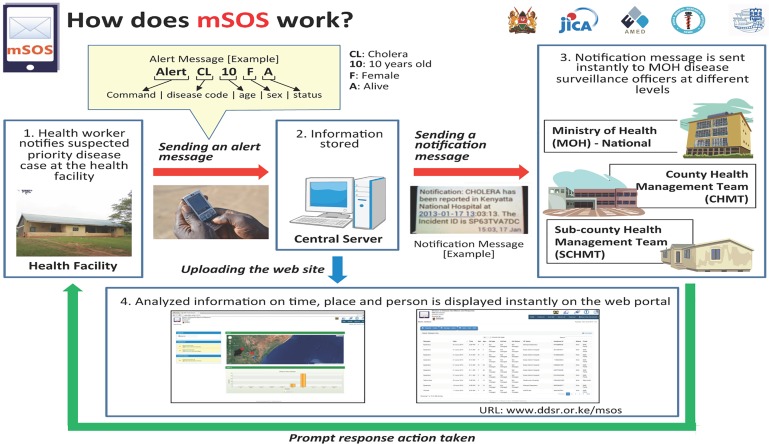
Outbreaks of epidemic diseases pose serious public health risks. To overcome the hurdles of sub-optimal disease surveillance reporting from the health facilities to relevant authorities, the Ministry of Health in Kenya piloted mSOS (mobile SMS-based disease outbreak alert system) in 2013-2014. In this paper, we report the results of the qualitative study, which examined factors that influence the performances of mSOS implementation. In-depth interviews were conducted with 11 disease surveillance coordinators and 32 in-charges of rural health facilities that took part in the mSOS intervention. Drawing from the framework analysis, dominant themes that emerged from the interviews are presented. All participants voiced their excitement in using mSOS. The results showed that the technology was well accepted, easy to use, and both health workers and managers unanimously recommended the scale-up of the system despite challenges encountered in the implementation processes. The most challenging components were the context in which mSOS was implemented, including the lack of strong existing structure for continuous support supervision, feedback and response action related to disease surveillance. The study revealed broader health systems issues that should be addressed prior to and during the intervention scale-up.
Conflict of interest statement
References
-
- Gates B. The next epidemic—lessons from Ebola. The New England journal of medicine. 2015;372(15):1381–4. doi: 10.1056/NEJMp1502918 . - DOI - PubMed
-
- Bogoch II, Brady OJ, Kraemer MU, German M, Creatore MI, Kulkarni MA, et al. Anticipating the international spread of Zika virus from Brazil. Lancet. 2016;387(10016):335–6. doi: 10.1016/S0140-6736(16)00080-5 ; PubMed Central PMCID: PMC4873159. - DOI - PMC - PubMed
-
- World Health Organization. International Health Regulations (2005). 2008.
-
- Ministry of Public Health and Sanitation. Integrated Disease Surveillance and Response in Kenya: Technical Guidelines 2012. 2012.
-
- Toda M, Njeru I, Zurovac D, Tipo SO, Kareko D, Mwau M, et al. Effectiveness of a Mobile Short-Message-Service-Based Disease Outbreak Alert System in Kenya. Emerging infectious diseases. 2016;22(4):711–5. doi: 10.3201/eid2204.151459 ; PubMed Central PMCID: PMC4806970. - DOI - PMC - PubMed
MeSH terms
LinkOut - more resources
Full Text Sources
Other Literature Sources
Molecular Biology Databases
