


Birds of a feather flock together: Insights into starling murmuration behaviour revealed using citizen science
- PMID: 28628640
- PMCID: PMC5476259
- DOI: 10.1371/journal.pone.0179277
Birds of a feather flock together: Insights into starling murmuration behaviour revealed using citizen science
Abstract
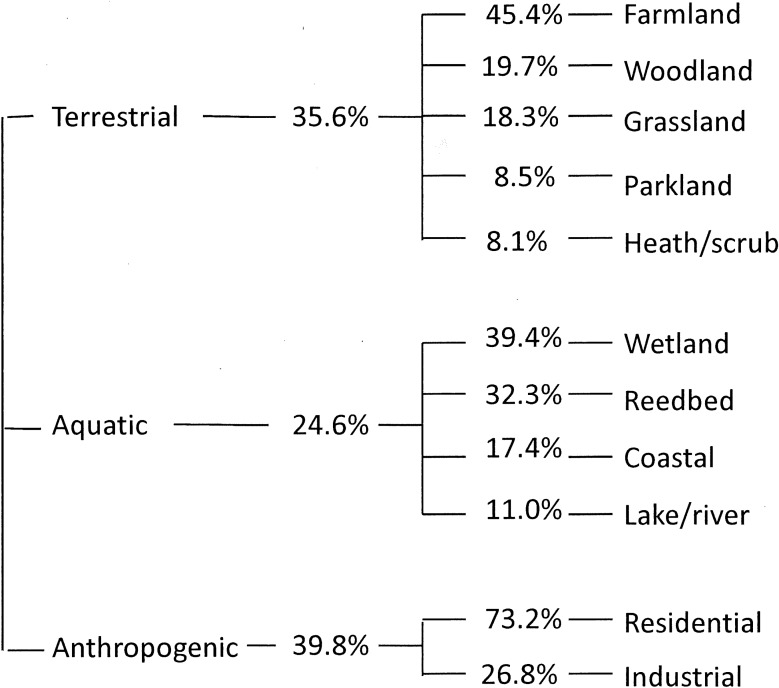
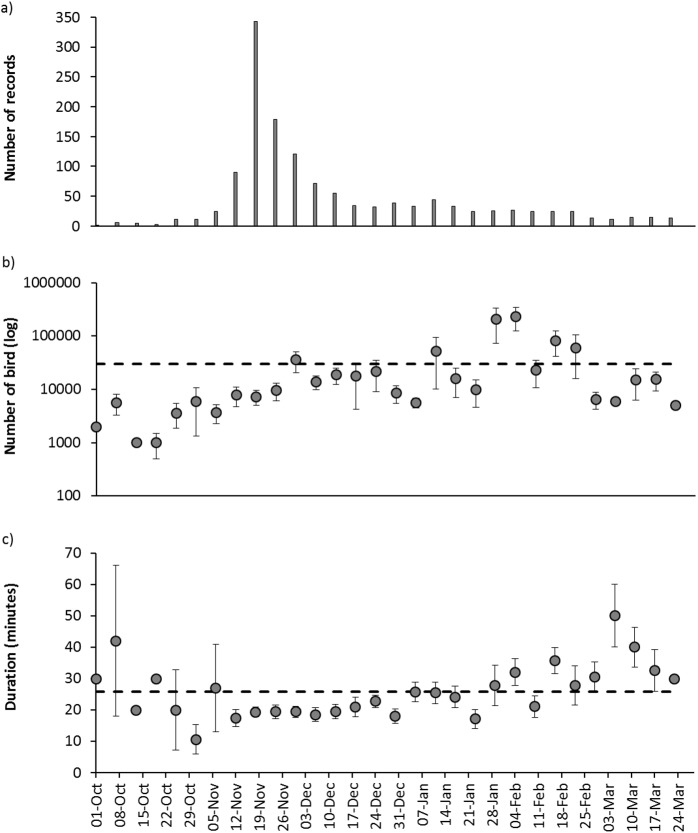
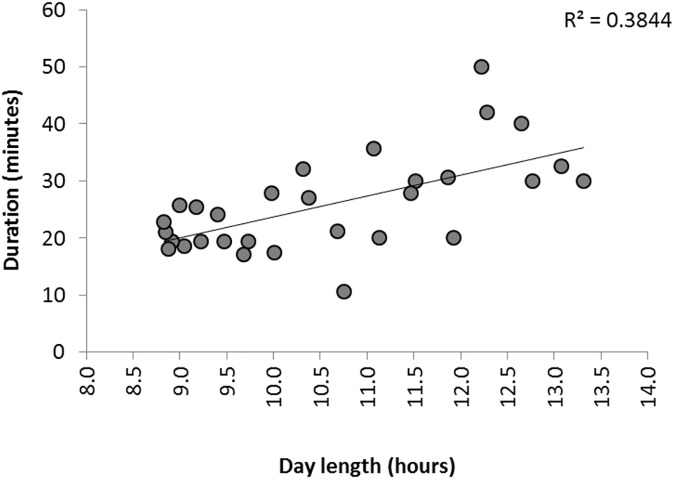
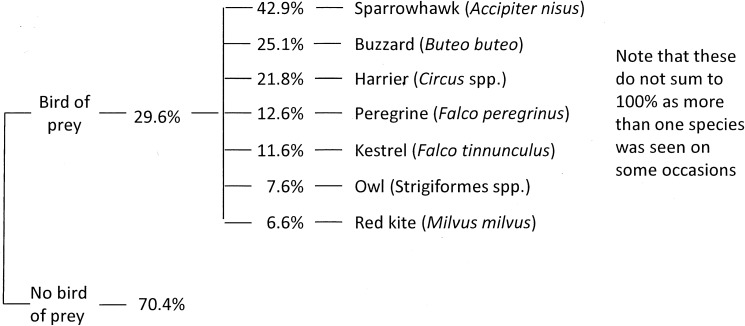
Pre-roost murmuration displays by European starlings Sturnus vulgaris are a spectacular example of collective animal behaviour. To date, empirical research has focussed largely on flock movement and biomechanics whereas research on possible causal mechanisms that affect flock size and murmuration duration has been limited and restricted to a small number of sites. Possible explanations for this behaviour include reducing predation through the dilution, detection or predator confusion effects (the "safer together" hypotheses) or recruiting more birds to create larger (warmer) roosts (the "warmer together" hypothesis). We collected data on size, duration, habitat, temperature and predators from >3,000 murmurations using citizen science. Sightings were submitted from 23 countries but UK records predominated. Murmurations occurred across a range of habitats but there was no association between habitat and size/duration. Size increased significantly from October to early February, followed by a decrease until the end of the season in March (overall mean 30,082 birds; maximum 750,000 birds). Mean duration was 26 minutes (± 44 seconds SEM). Displays were longest at the start/end of the season, probably due to a significant positive relationship with day length. Birds of prey were recorded at 29.6% of murmurations. The presence of predators including harrier Circus, peregrine Falco peregrinus, and sparrowhawk Accipiter nisus was positively correlated with murmuration size (R2 = 0.401) and duration (R2 = 0.258), especially when these species were flying near to, or actively engaging with, starlings. Temperature was negatively correlated with duration but the effect was much weaker than that of day length. When predators were present, murmurations were statistically more likely to end with all birds going down en masse to roost rather than dispersing from the site. Our findings suggest that starling murmurations are primarily an anti-predator adaptation rather than being undertaken to attract larger numbers of individuals to increase roost warmth.
Conflict of interest statement
Figures

References
-
- Sumpter DJ. The principles of collective animal behaviour. Philosophical Transactions of the Royal Society of London B: Biological Sciences. 2006; 361(1465):5–22. doi: 10.1098/rstb.2005.1733 - DOI - PMC - PubMed
-
- Krause J, Godin JGJ. Shoal choice in the banded killifish (Fundulus diaphanus, Teleostei, Cyprinodontidae): effects of predation risk, fish size, species composition and size of shoals. Ethology. 1994; 98: 128–136.
-
- Hart A, Jackson DE. U-turns on ant pheromone trails. Current Biol. 2006; 16: 42–43. - PubMed
-
- Thirgood S, Mosser A, Tham S, Hopcraft G, Mwangomo E, Mlengeya T, et al. Can parks protect migratory ungulates? The case of the Serengeti wildebeest. Anim Conserv. 2004; 7: 113–120.
-
- Nicolis G, Prigogine I. Self-organization in nonequilibrium systems New York, New York: Wiley; 1977.
MeSH terms
LinkOut - more resources
Full Text Sources
Other Literature Sources
Research Materials
